Robotic Arm Wire Harness: The Ultimate Guide to High-Flex Solutions
Robotic Arm Wire Harness: The Essential "Neural Network" of Industrial Automation
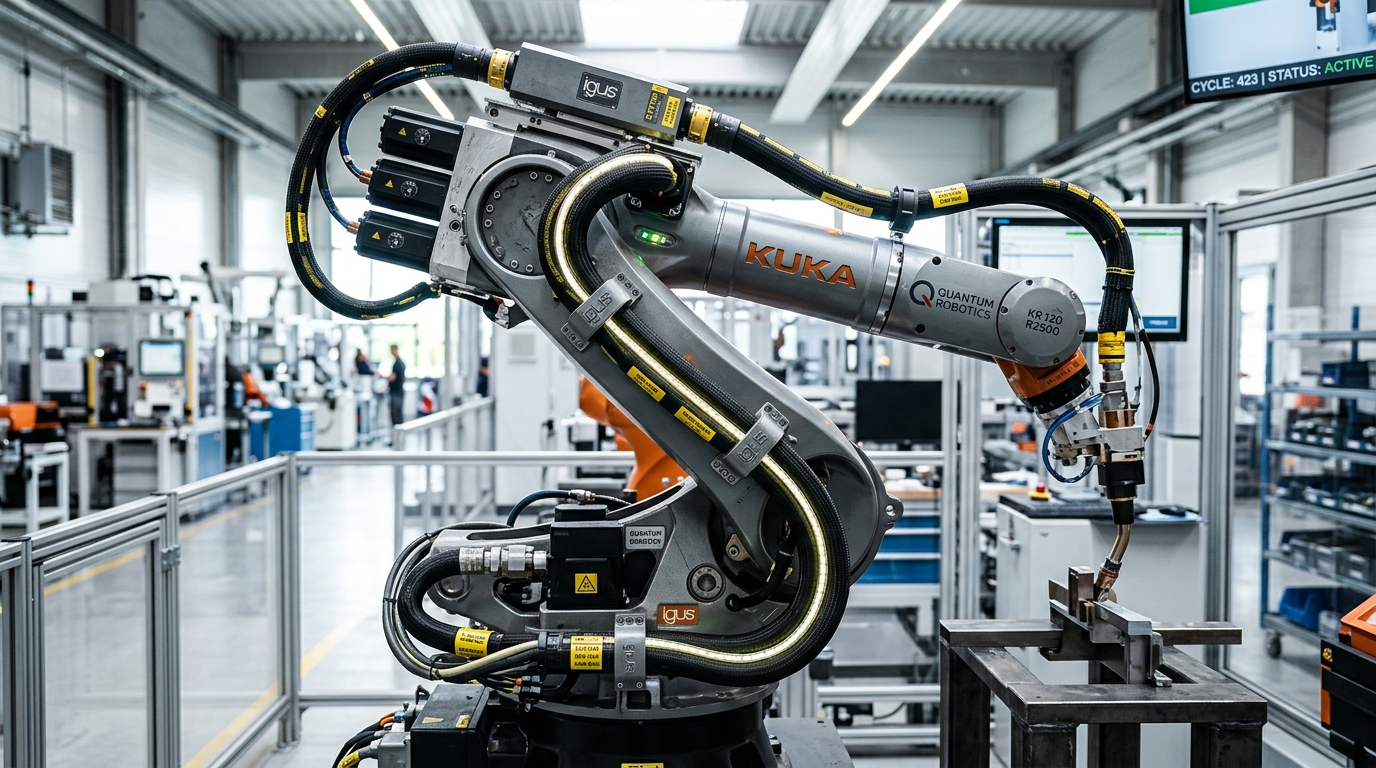
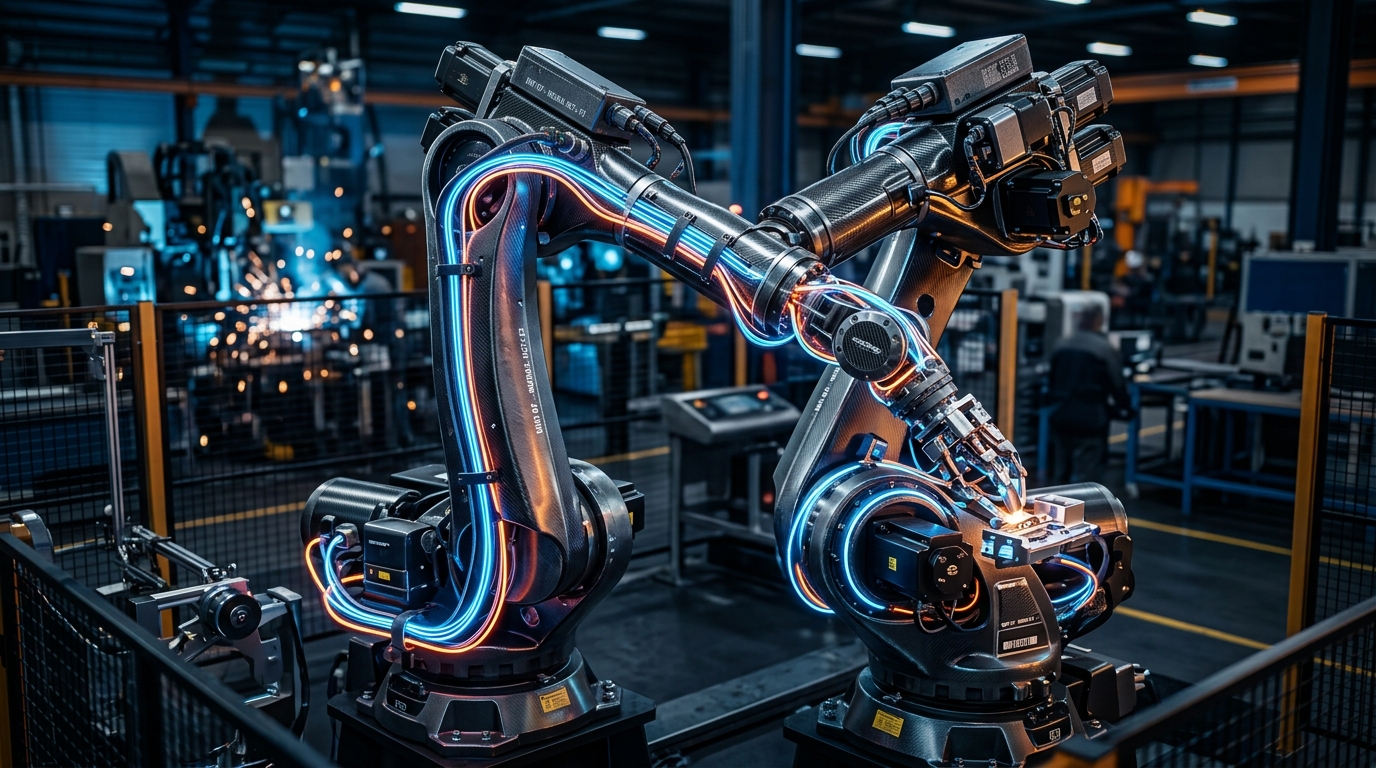
In the era of Industry 4.0 and advanced manufacturing, industrial robots are undertaking increasingly complex and precise tasks. If the motors and mechanical joints act as the muscles and skeleton of an industrial robot, the robotic arm wire harness is undoubtedly its intricate "neural network."
Operating in demanding environments characterized by continuous, high-frequency reciprocating motion, standard cables quickly succumb to wear and tear, leading to catastrophic system failures and costly production downtime. The engineering of a specialized robotic wire harness is critical. It ensures the flawless, uninterrupted transmission of electrical power, control signals, and vital data across controllers, joint motors, and sensors, bridging the gap between raw mechanical power and intelligent automation.
The Core Roles and Working Principle in Robotic Systems
Working Principle
At its core, a robotic arm wire harness operates as a sophisticated transmission conduit engineered to withstand dynamic physical stress. As the multi-axis robotic arm twists, bends, and extends, the internal copper conductors and shielding layers within the harness flex in unison without compromising their structural integrity. The harness maintains low electrical resistance and high signal fidelity, allowing the central control unit (PLC or robot controller) to send microsecond-level commands to servo motors while simultaneously receiving real-time feedback from vision systems and tactile sensors.
Essential Functions
- Power Distribution: Safely delivers high-voltage power to drive multi-axis servo motors and actuators.
- Signal Routing: Ensures the precise delivery of low-voltage control signals to dictate movement and speed.
- Data Communication: Facilitates high-speed, zero-latency data transfer from end-of-arm tooling (EOAT), cameras, and proximity sensors to the central controller.
Classifications of Robotic Arm Wire Harnesses
Robotic wire harnesses can be categorized based on their functional integration and physical placement within the robotic unit:
- Internal Routing Harnesses: Completely enclosed within the robot's mechanical casting. These harnesses require ultra-compact profiles and exceptional torsion resistance to navigate tight internal cavities during multi-axis movements.
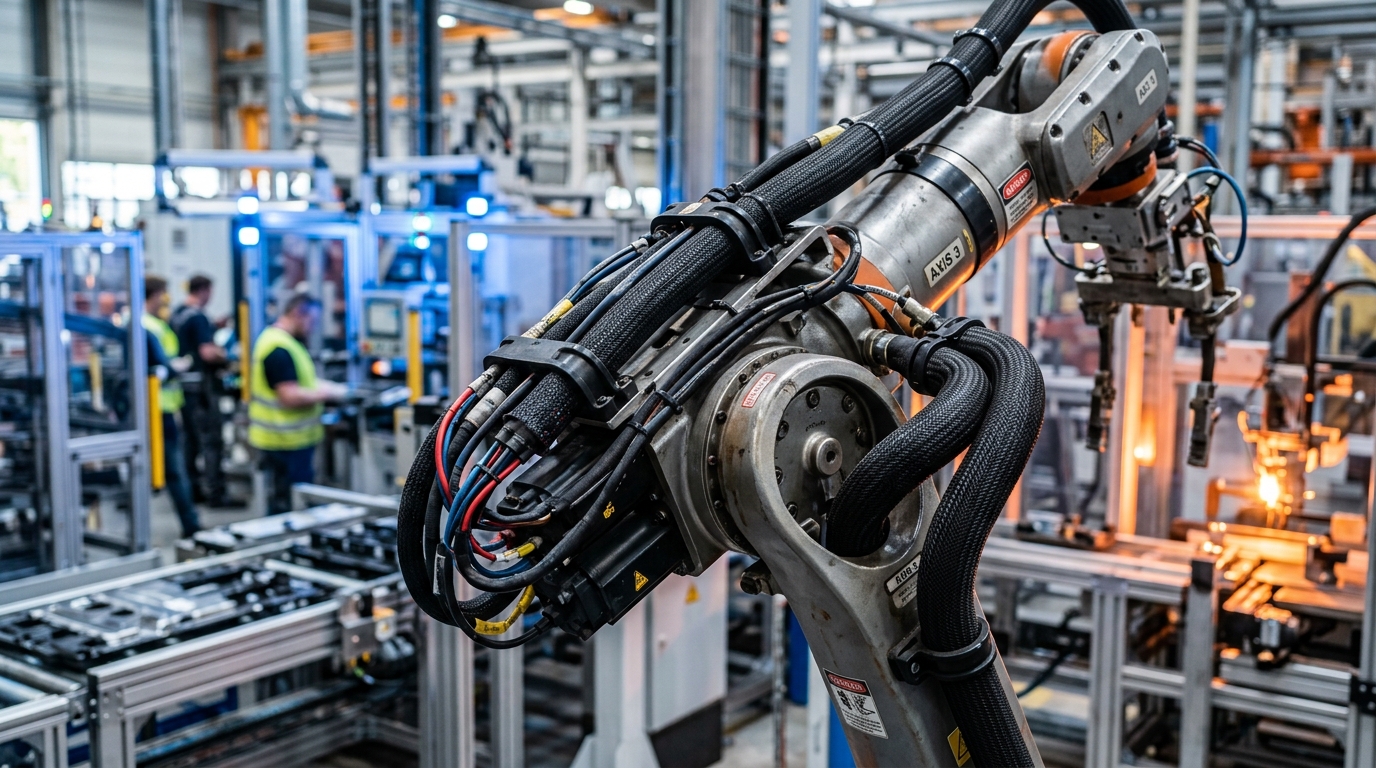
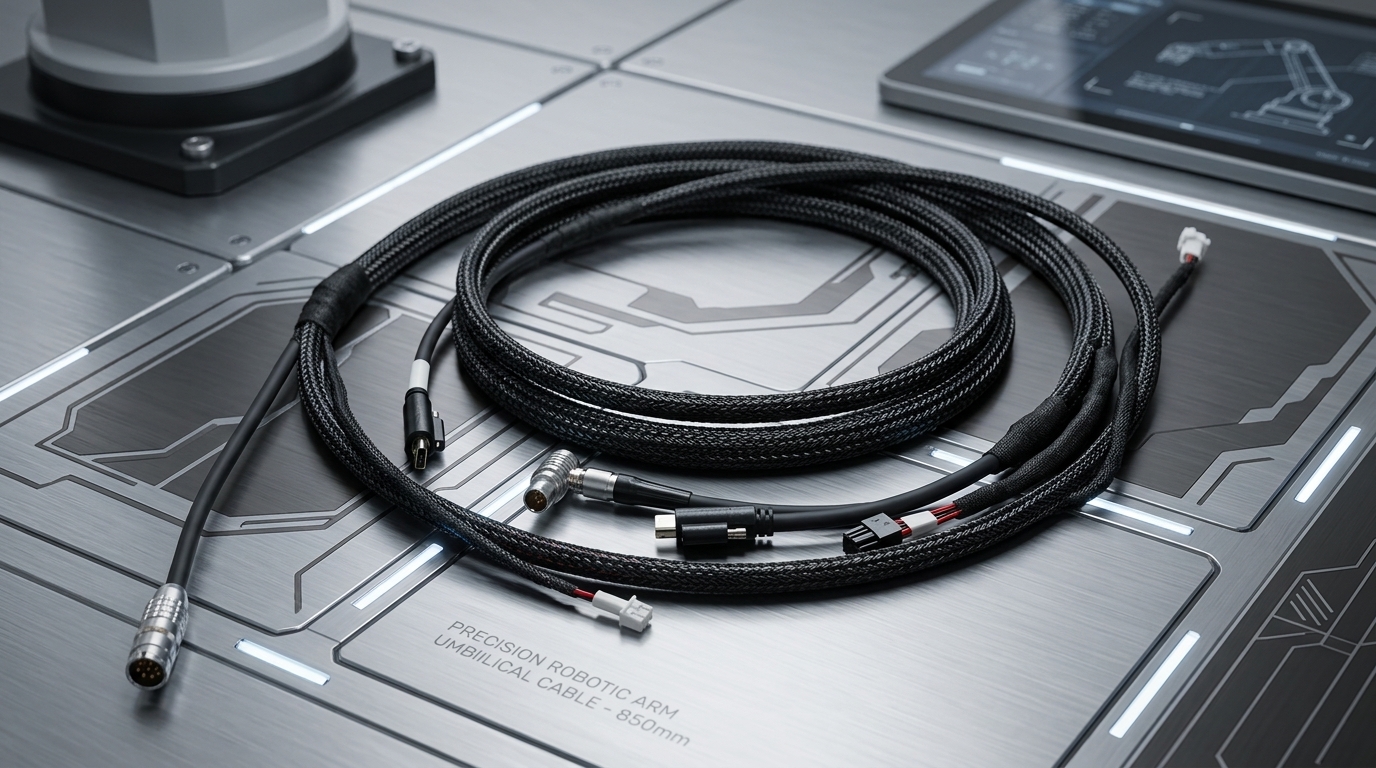
- External Dresspacks (Umbilical Cables): Attached to the exterior of the robotic arm. These harnesses are heavily reinforced with corrugated tubing or high-grade polyurethane (PUR) jackets to resist external abrasions, welding spatter, and harsh industrial chemicals.
- Hybrid Composite Cables: A singular, heavily engineered cable that combines power lines, signal wires, and Ethernet/EtherCAT data cables, significantly reducing space and weight requirements.
Key Features & Unmatched Advantages
The defining characteristic of a premium robotic arm wire harness is its ability to survive high-frequency reciprocating motion. To achieve this, several advanced features are engineered into the assembly:
- Extreme High-Flexibility (Millions of Cycles): Utilizing ultra-fine stranded bare copper or tinned copper wire, these harnesses can endure tens of millions of bending and torsional cycles without conductor snapping or fatigue.
- Torsion & Bending Resistance: Specially designed PTFE or modified PUR insulation minimizes internal friction between wire cores during complex 3D movements.
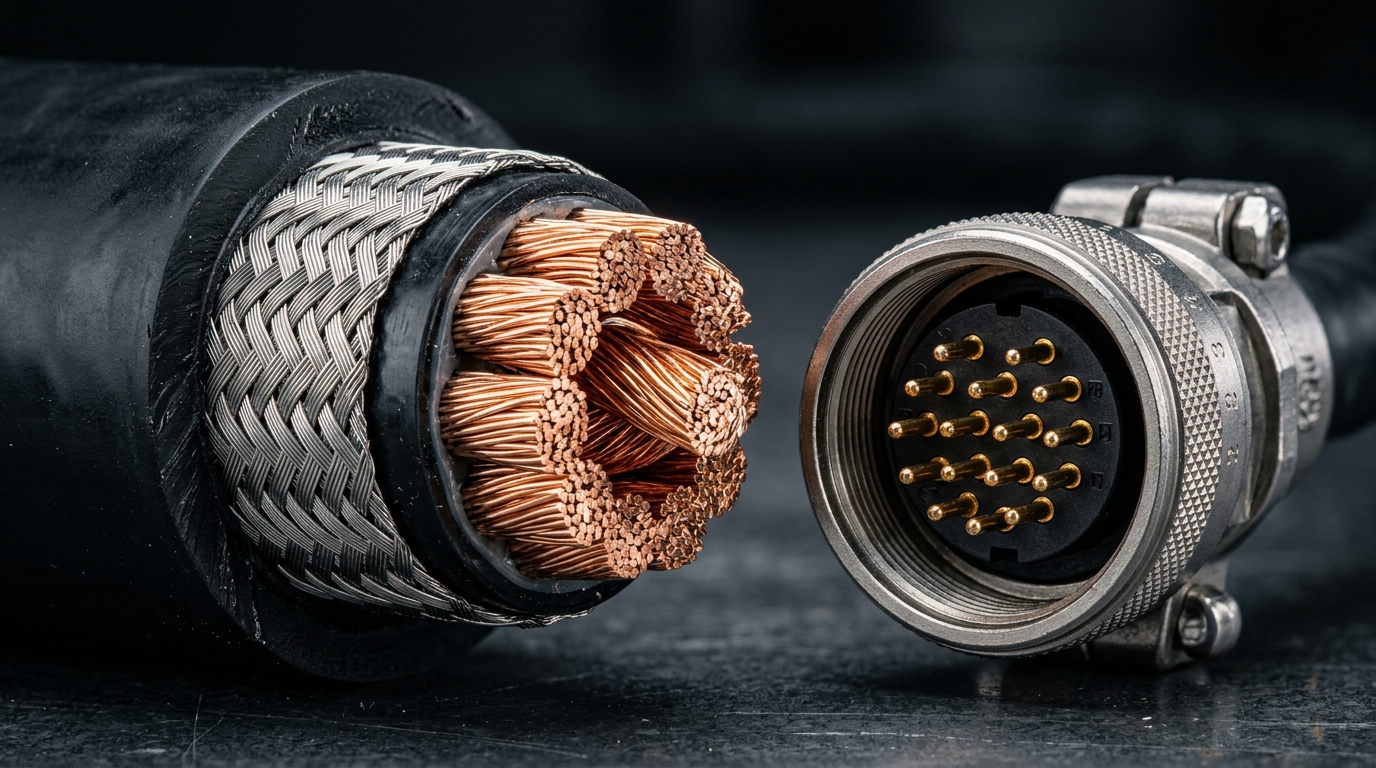
- Robust EMI/RFI Shielding: Heavy-duty tinned copper braided shielding prevents electromagnetic interference, ensuring that high-voltage power lines do not corrupt sensitive data signals running adjacent to them.
- Harsh Environment Durability: The outer jackets are highly resistant to industrial lubricants, hydraulic oils, extreme temperatures, and mechanical abrasion.
Applications and Use Cases
Robotic wire harnesses are the lifeblood of numerous industrial applications:
- Automotive Welding Robots: Requiring heavy-duty external harnesses that can withstand extreme heat, sparks, and repetitive movements on fast-paced assembly lines.
- High-Speed Pick-and-Place: SCARA robots and delta robots in electronics manufacturing rely on ultra-lightweight, highly flexible harnesses for rapid, precise, and continuous motion.
- Collaborative Robots (Cobots): Utilizing compact, aesthetically integrated internal harnesses to maintain a sleek profile while ensuring safety and precise human-robot interaction.
- Medical & Pharmaceutical Robotics: Demanding bio-compatible, easily sterilizable cable jackets with flawless signal integrity for surgical robotics and automated dispensing.
Technical Specifications
To ensure maximum reliability, precision engineering dictates rigorous technical parameters. Below are the standard specifications for our professional-grade robotic arm wire harnesses.
Wire and Cable Specifications
| Parameter | Technical Specification / Material |
|---|---|
| Conductor Material | Ultra-fine stranded bare copper / Tinned copper (OFC) |
| Wire Gauge (AWG) | 30 AWG to 4 AWG (Customizable based on power/data needs) |
| Insulation & Jacket Material | PUR (Polyurethane), PTFE (Teflon), TPE, or specialized PVC |
| Bending Radius (Dynamic) | 5x to 7.5x the outer diameter (OD) of the cable |
| Torsion Angle | ±180° to ±360° per meter |
| Operating Temperature | -40°C to +90°C (Standard) / Up to +200°C (High-temp PTFE) |
| Flex Cycle Life | 10,000,000 to 20,000,000+ continuous cycles |
| Shielding Effectiveness | >85% coverage, tinned copper braid with aluminum foil |
Connector and Hardware Specifications
| Parameter | Technical Specification / Component Details |
|---|---|
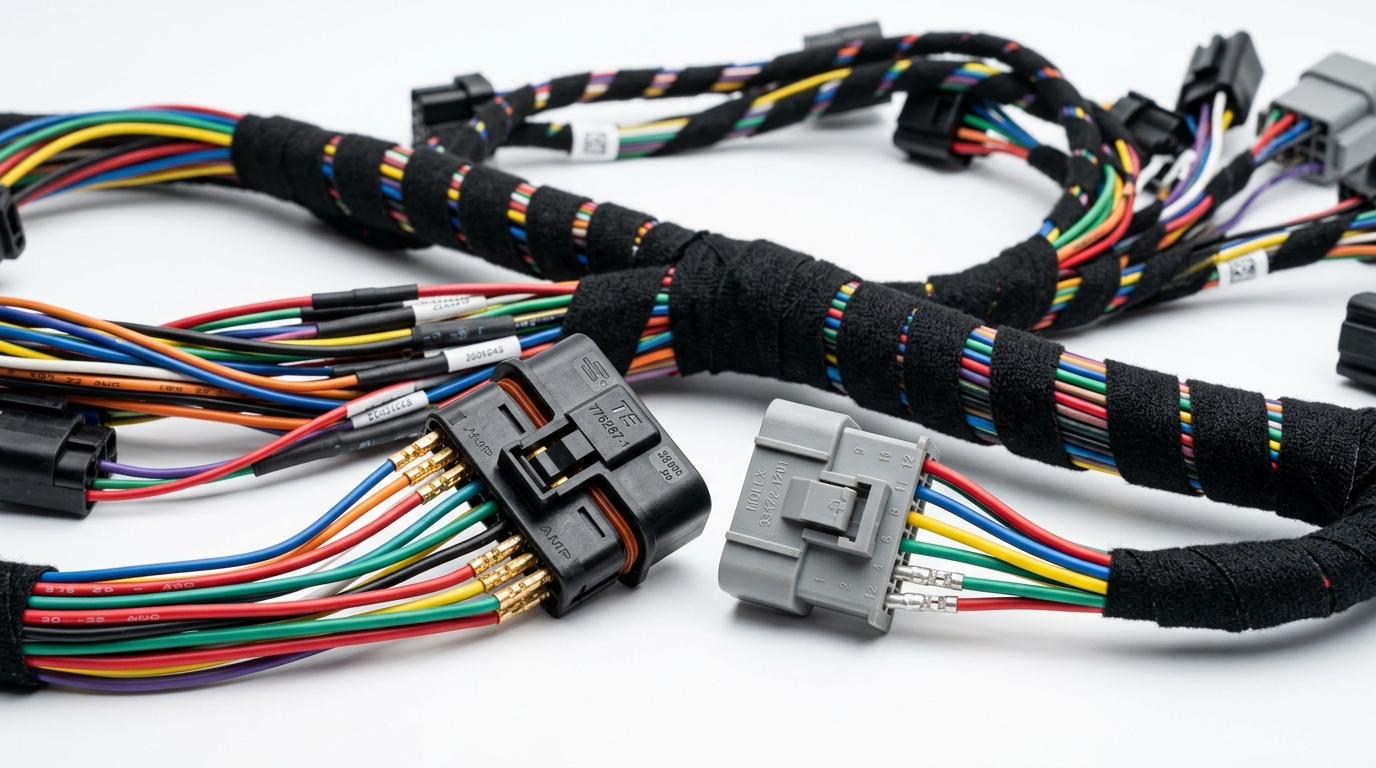
| Connector Brands | TE Connectivity, Molex, Amphenol, Harting, JST, or Custom equivalents |
| Ingress Protection (IP Rating) | IP65, IP67, IP68, or IP69K (Water, dust, and oil proof) |
| Pin Counts / Configurations | Ranging from 2-pin power connectors to 50+ pin high-density layouts |
| Locking Mechanisms | Push-pull, threaded coupling, bayonet lock for secure vibration resistance |
| Housing Material | Die-cast zinc alloy, ruggedized thermoplastic, or stainless steel |
Your Trusted Partner for Custom Robotic Wiring Solutions
Developing the right "neural network" for your automated systems requires unparalleled expertise. As an ISO9001 certified manufacturing facility, we specialize in delivering high-performance, custom robotic arm wire harnesses tailored to your exact operational parameters.
Whether you are in the R&D phase requiring low-volume manufacturing support or scaling up for mass production, our professional design team is equipped to provide end-to-end solutions—from initial 3D routing and prototyping to rigorous flex-cycle testing and final assembly.
We eliminate connectivity bottlenecks so your robots can operate at peak efficiency. Contact our engineering team today to discuss your project requirements and request a custom quote.