Custom Micro Drone Cable & FPV Wire Harness Manufacturer
The Ultimate Guide to Micro Drone Cables: Optimizing Power & Signal for FPVs
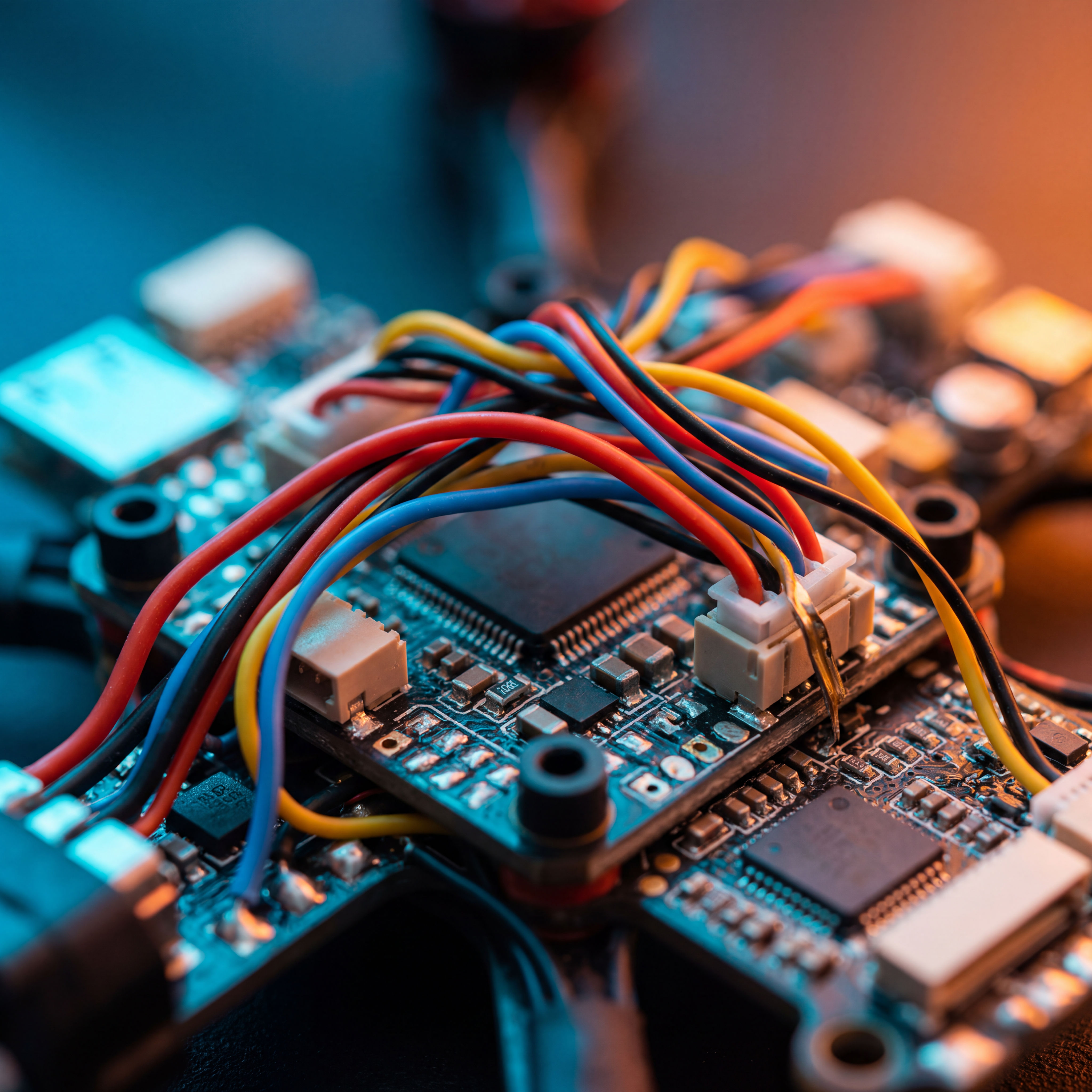
In the rapidly evolving world of micro drones and FPV (First Person View) quads, every gram matters. Whether you are manufacturing nimble "Tiny Whoops," high-performance Cinewhoops, or commercial micro-UAVs, the physical components dictating your drone's reliability are the wires connecting its brain to its muscles.
A high-quality micro drone cable is not just a basic accessory; it is the lifeline of the aircraft. For engineers and B2B procurement managers, selecting the right lightweight FPV wire is critical to ensuring seamless flight controller data transmission, stable video feeds, and explosive power delivery without the risk of overheating.
The Working Principle: How Cables Drive Micro Drones
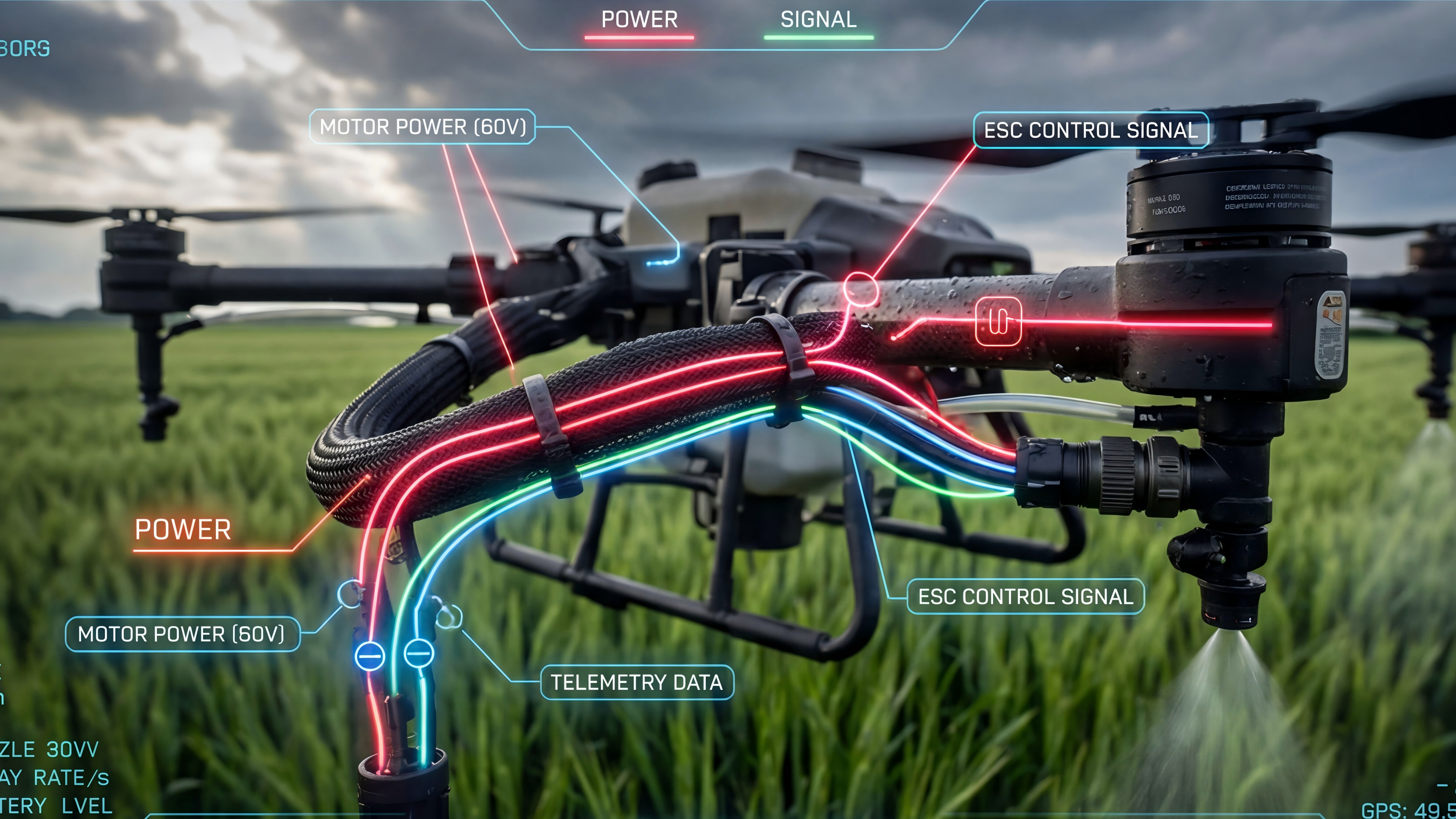
At its core, a micro drone operates through a continuous, high-speed loop of electrical power and digital signals. The wiring system functions in two primary ways:
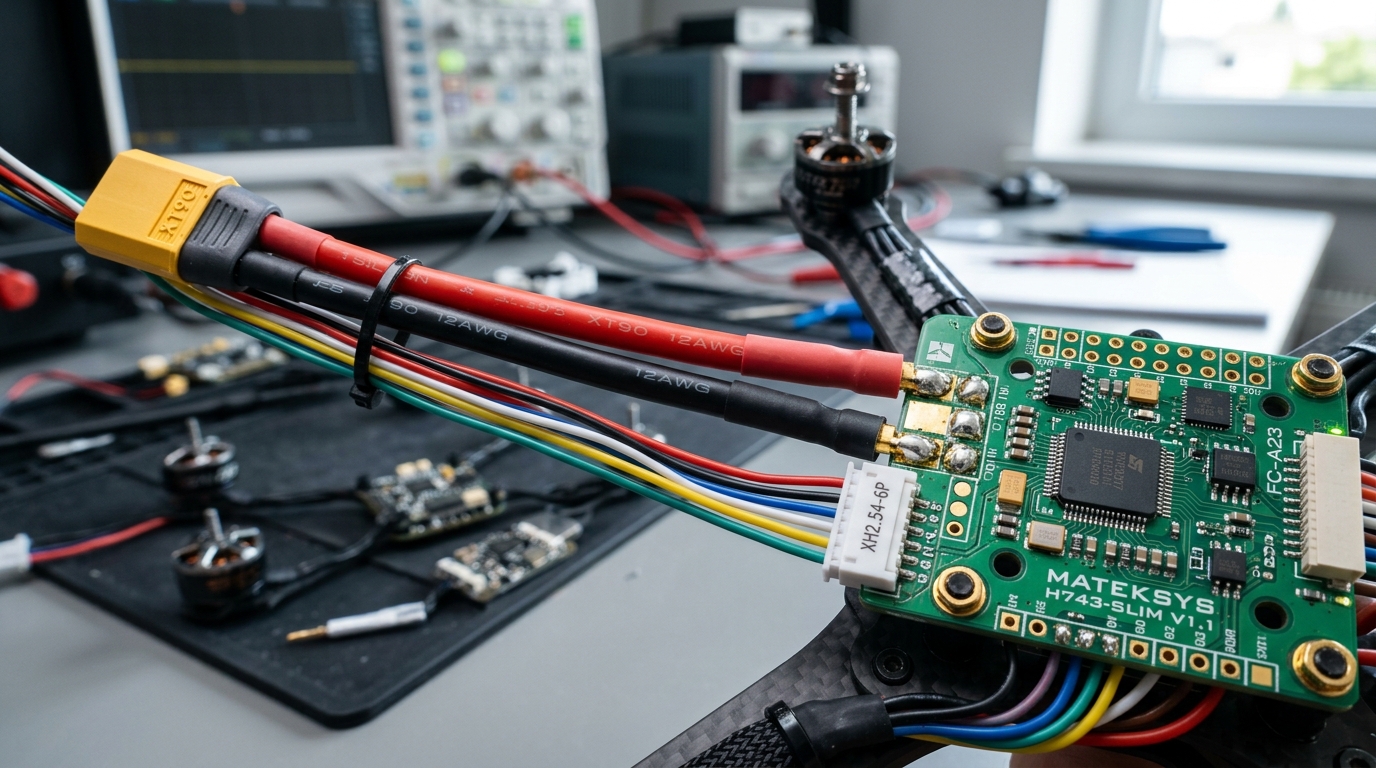
- Power Delivery: High-burst currents travel from the LiPo battery through the power distribution board (PDB) to the Electronic Speed Controllers (ESCs) and motors. The cables must boast ultra-low internal resistance to handle voltage spikes without melting.
- Signal Transmission: The flight controller cable sends microsecond-level data to the ESCs, while the video transmitter (VTX) relies on pristine signal pathways to send latency-free video to the pilot's goggles.
To achieve this, drone wires must employ high-purity tinned copper or silver-plated cores, wrapped in premium insulators that shield against Electromagnetic Interference (EMI) while offering maximum flexibility to survive high-G impacts.
Essential Categories of Micro Drone Cables
To meet the complex demands of modern drone architecture, wires are engineered for specific modules. Here is a detailed breakdown of the three fundamental types of cables every manufacturer and drone builder must know.
High-Gain Antenna Cables (VTX & RX)
When it comes to FPV flying, video loss is not an option. High-gain antenna cables are specialized coaxial cables (such as RG178 or RG1.13) used to connect the Video Transmitter (VTX) or Radio Receiver (RX) to their respective antennas.
- Characteristics: These cables feature a multi-layered structure with a central conductor, dielectric insulator, metallic shield, and outer jacket.
- Function: They are designed to minimize high-frequency signal attenuation (loss) and block external EMI from motors.
- Applications: Connecting IPEX/U.FL ports on micro VTX boards to SMA/RP-SMA antenna mounts, ensuring ultra-low latency and crystal-clear analog or digital HD video feeds.
General RC Silicone Cables
The unsung heroes of drone assembly, general RC silicone cables, are primarily used for internal module communication.
- Characteristics: Made from hundreds of ultra-fine (0.08mm) tinned copper strands and wrapped in high-grade silicone rubber. This makes them incredibly soft, heat-resistant (up to 200°C), and highly flexible.
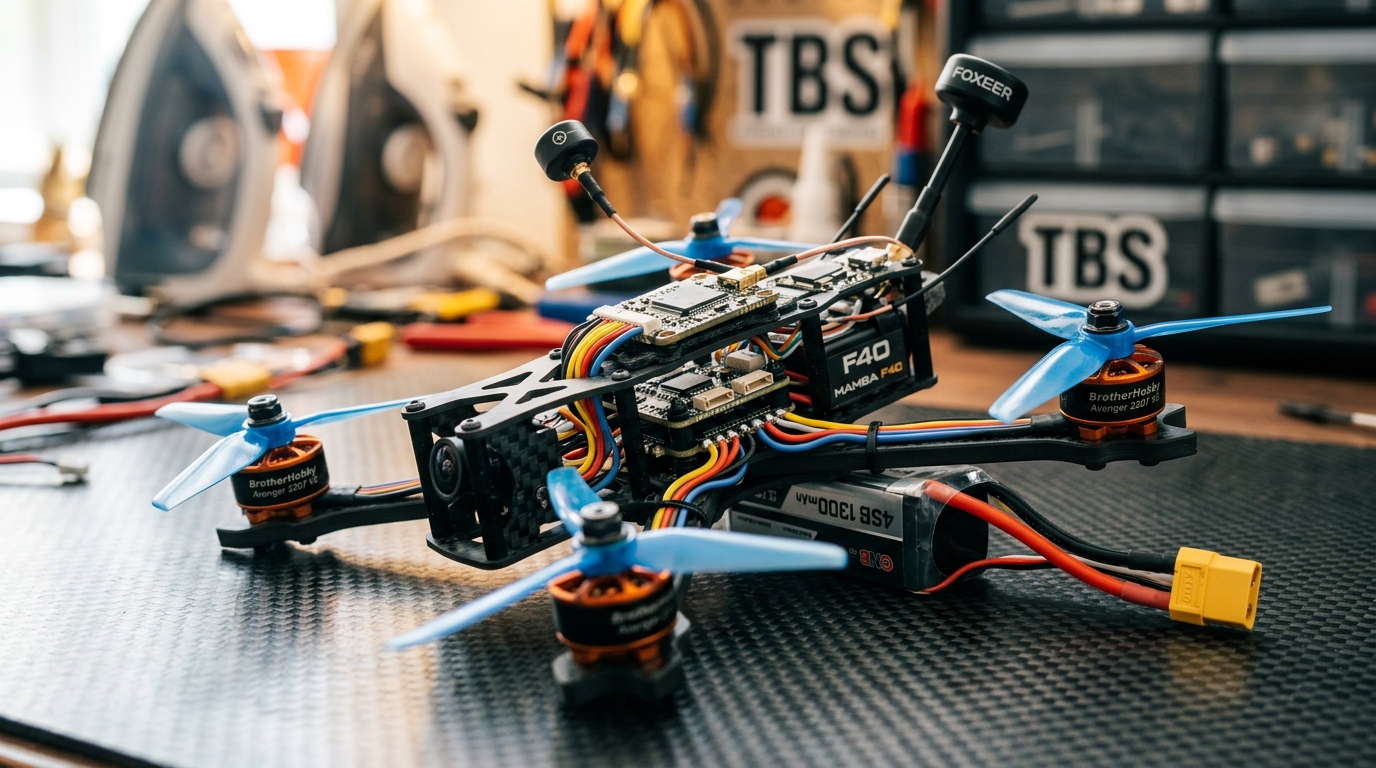
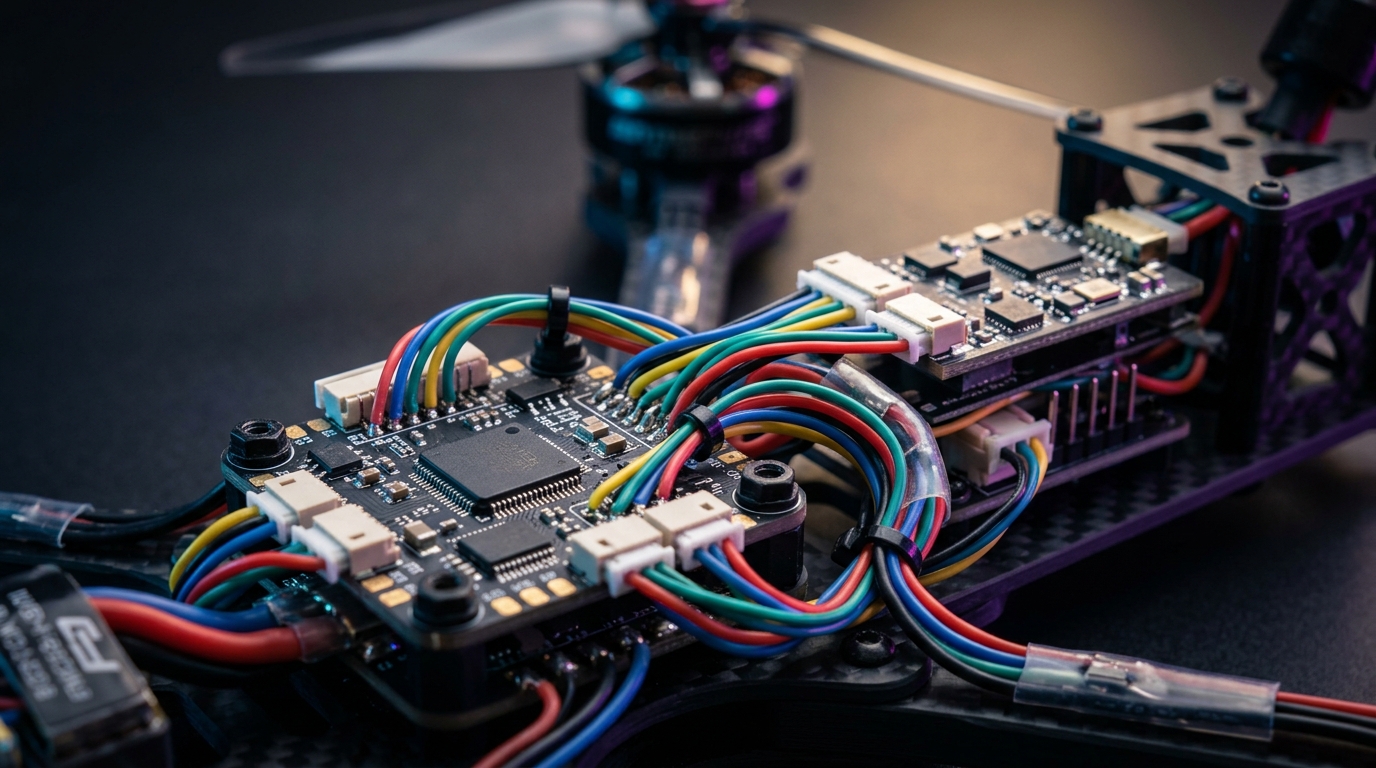
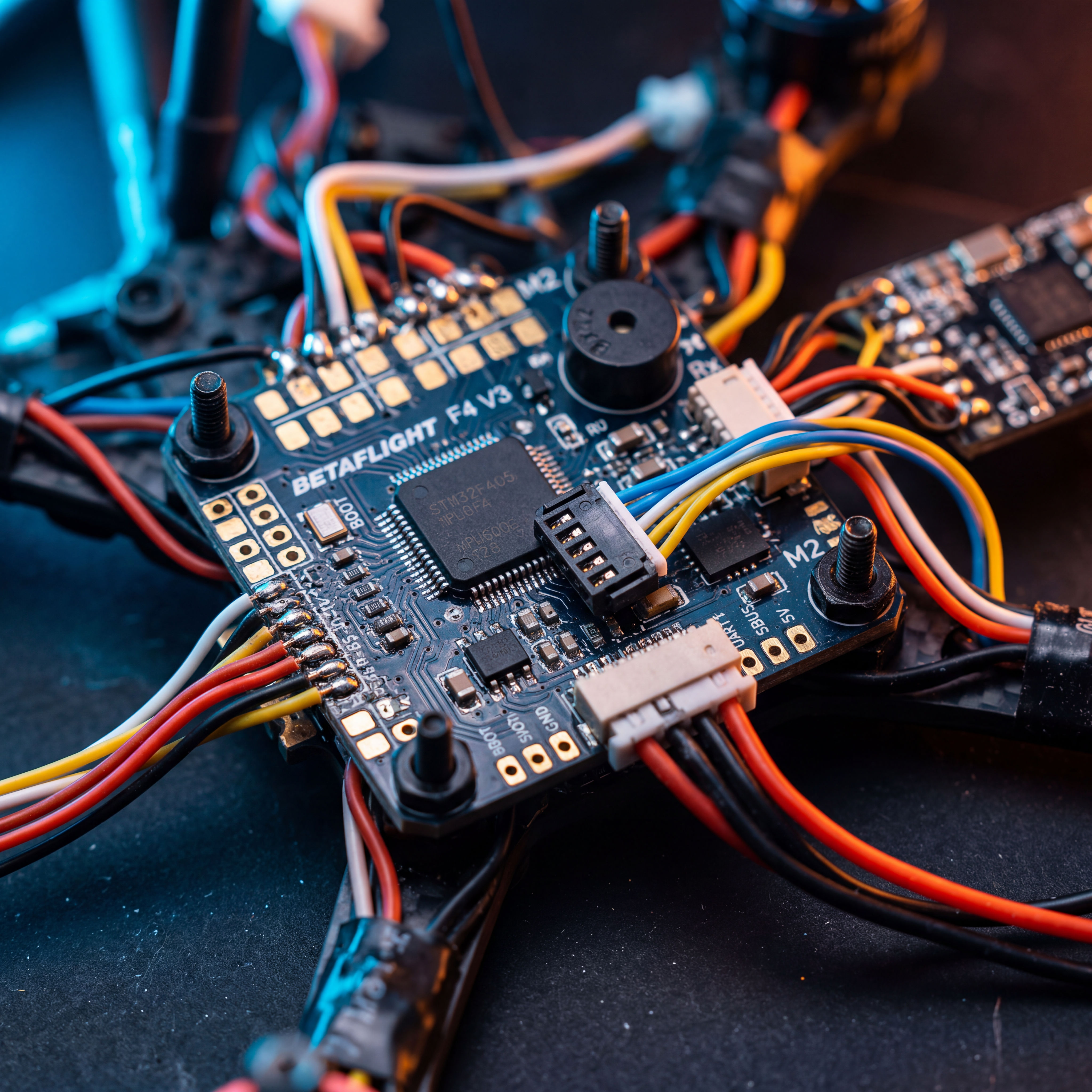
- Function: They act as the nervous system, bending easily around tight carbon fiber frames without stressing the solder pads on delicate PCBs.
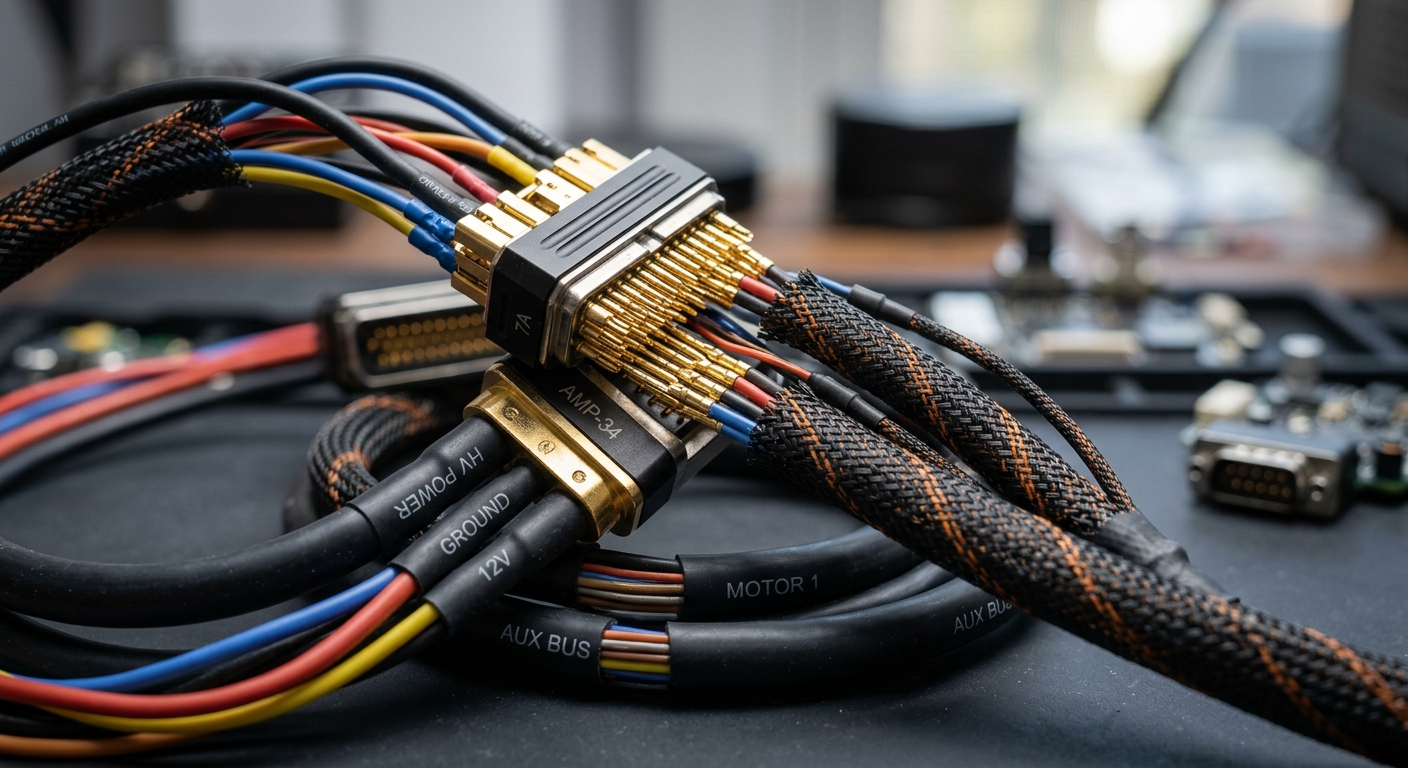
- Applications: Ideal for flight controller cables, ESC signal wires, camera connections, and LED wiring. They typically utilize micro-connectors like SH1.0, GH1.25, or JST-XH.
Power Connection Harnesses
Micro drones require explosive thrust, meaning the battery leads must handle massive current bursts relative to their size.
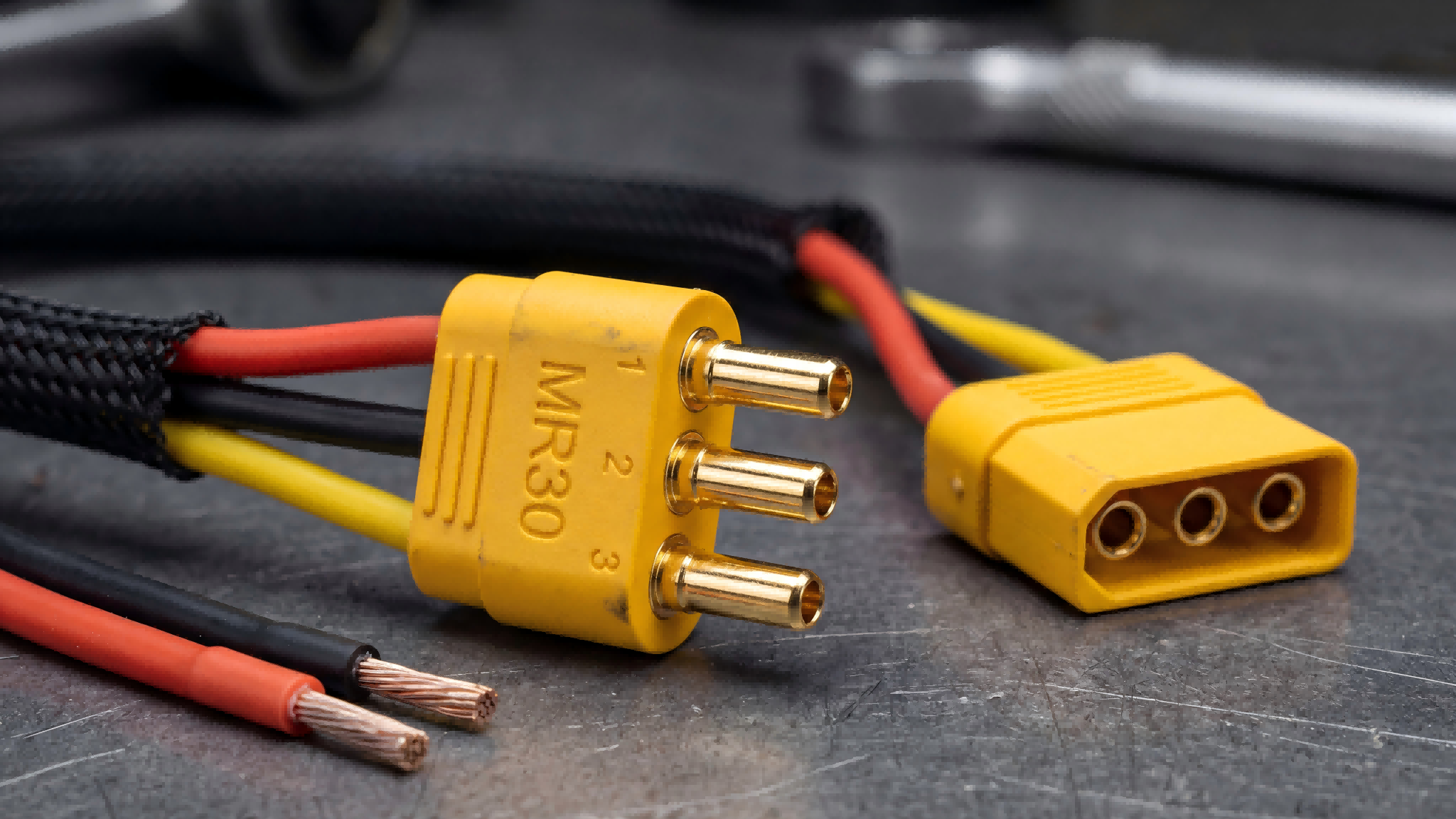
- Characteristics: These custom drone wire harnesses use lower AWG (thicker) silicone wires paired with specialized high-current micro-connectors.
- Function: To deliver raw battery power to the drone's ESCs safely, minimizing voltage sag and preventing the connectors from melting under high amp draw.
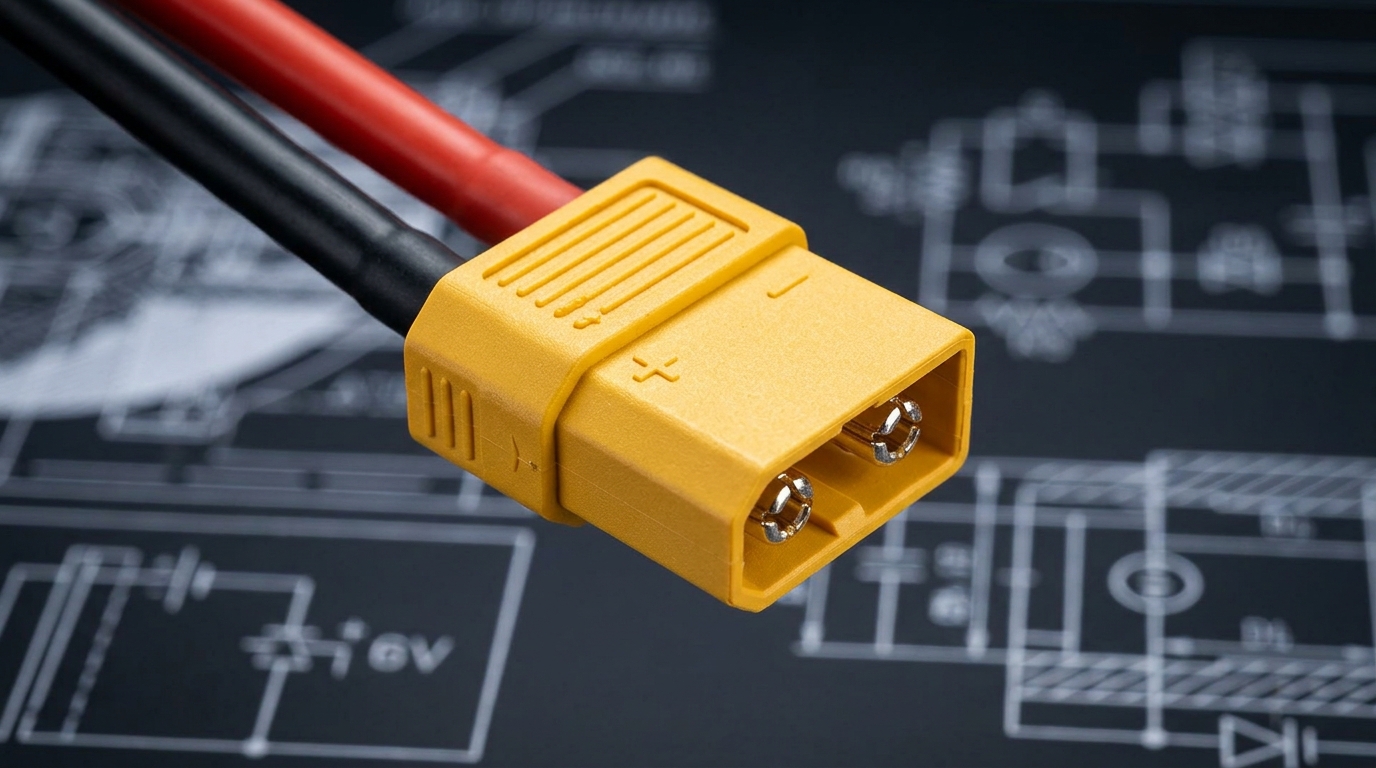
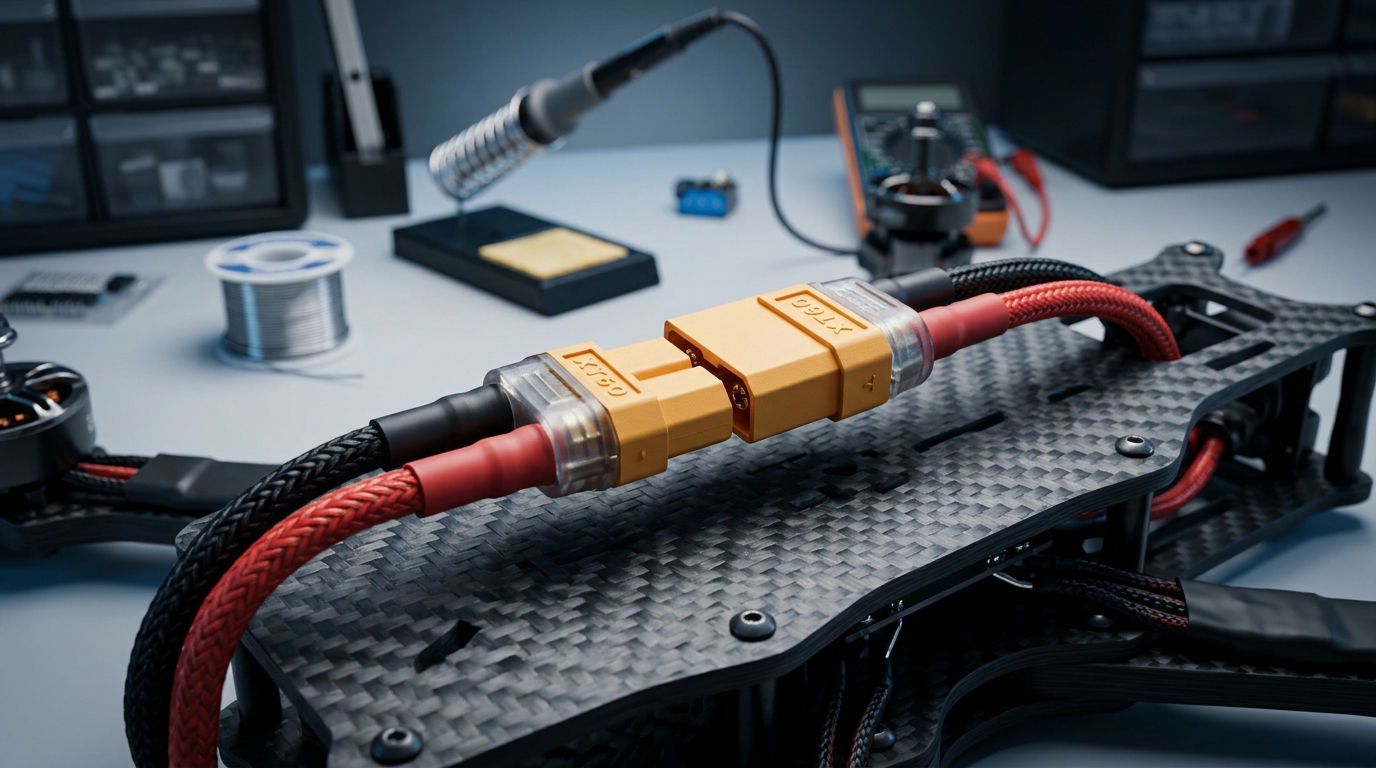
- Applications: Battery pigtails utilizing solid-pin connectors like BT2.0, A30, or XT30, heavily favored in 1S to 4S micro drone setups.
Technical Specifications for Micro Drone Wiring
To assist hardware R&D engineers and buyers in specifying the right components, below is a standardized technical reference for micro drone wiring systems:
| Application / Category | Wire Gauge (AWG) | Common Connector Types | Voltage / Current Rating | Core Material & Jacket |
|---|---|---|---|---|
| Main Power (1S-2S) | 18 AWG - 22 AWG | BT2.0, PH2.0, GNB27 | 3.7V-7.4V / 9A-15A | High-strand Tinned Copper / Silicone (200°C) |
| Main Power (3S-4S) | 16 AWG - 18 AWG | XT30, XT30U | 11.1V-14.8V / 30A Peak | High-strand Tinned Copper / Silicone (200°C) |
| Flight Controller Signal | 28 AWG - 32 AWG | JST-SH1.0, GH1.25, MX1.25 | 3.3V-5V / 1A - 2A | Tinned Copper / Silicone or PVC |
| VTX / Camera Video | 26 AWG - 30 AWG | SH1.0 (4-6 Pin), Solder | 5V-9V / 1A - 2A | Twisted Pair Tinned Copper / Silicone |
| Antenna Extension | Coaxial (RG178) | IPEX (U.FL), MMCX, SMA | RF Signal Transmission | Silver-plated Copper / PTFE |
Why Choose Us: Your Trusted Custom Micro Drone Cable Manufacturer
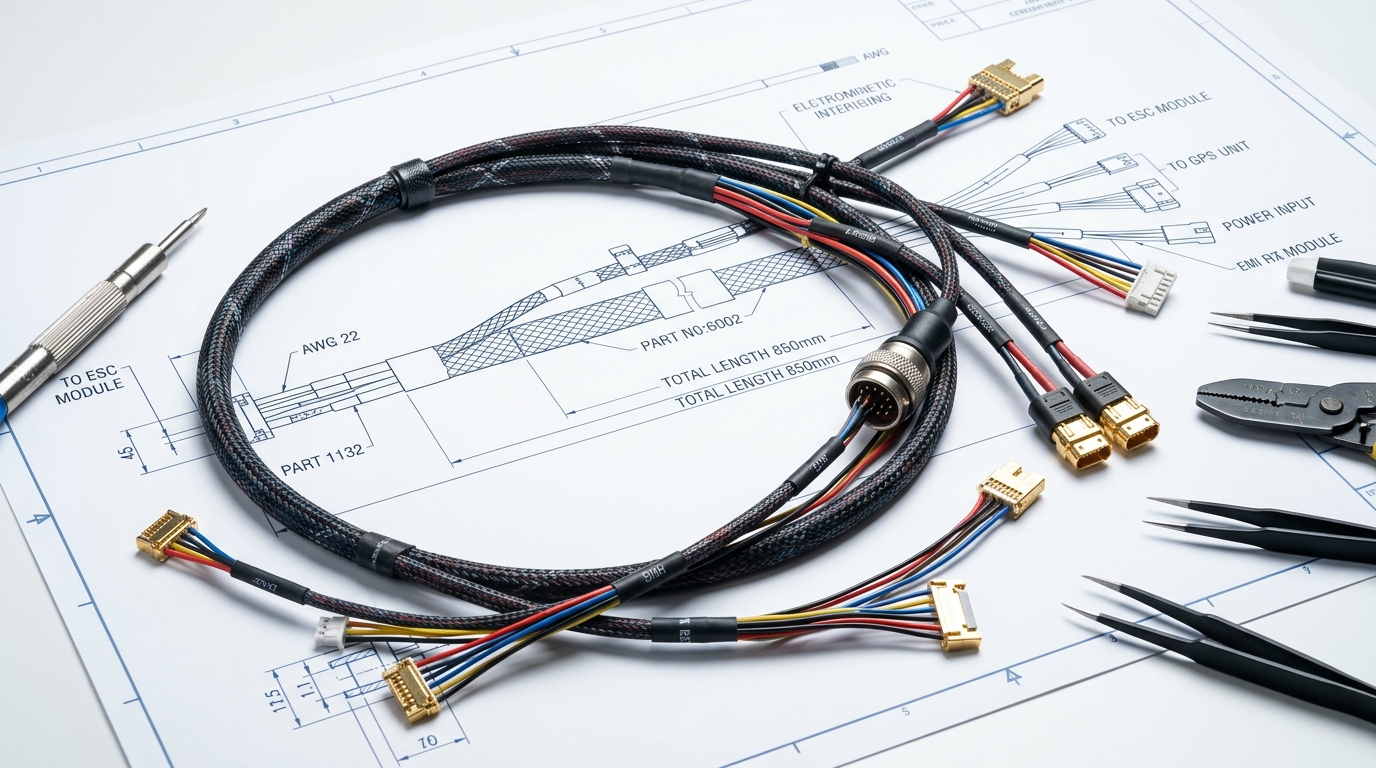
Sourcing off-the-shelf wires might work for hobbyists, but commercial micro drone manufacturing requires precision, consistency, and reliability. As a leading B2B wire harness manufacturer, we bridge the gap between complex engineering needs and mass production.
- ISO9001 Certified Factory: Our manufacturing processes adhere to stringent international quality management standards, ensuring every RC silicone cable and connector meets aerospace-grade reliability.
- Professional Design Team: Unsure which AWG or connector your new flight controller needs? Our experienced R&D engineers provide free structural reviews and layout suggestions to optimize your drone’s internal space.
- True Customization & Low MOQ: We understand the agile nature of the tech hardware industry. We proudly support small batch production (Low MOQ) for prototyping, while possessing the scalability to handle massive global orders. Whether you need custom lengths, specific color coding, or unique heat-shrink branding, we have you covered.
- Comprehensive Testing: Every custom drone wire harness undergoes rigorous pull-force testing, continuity checks, and high-voltage resistance tests before leaving our facility.
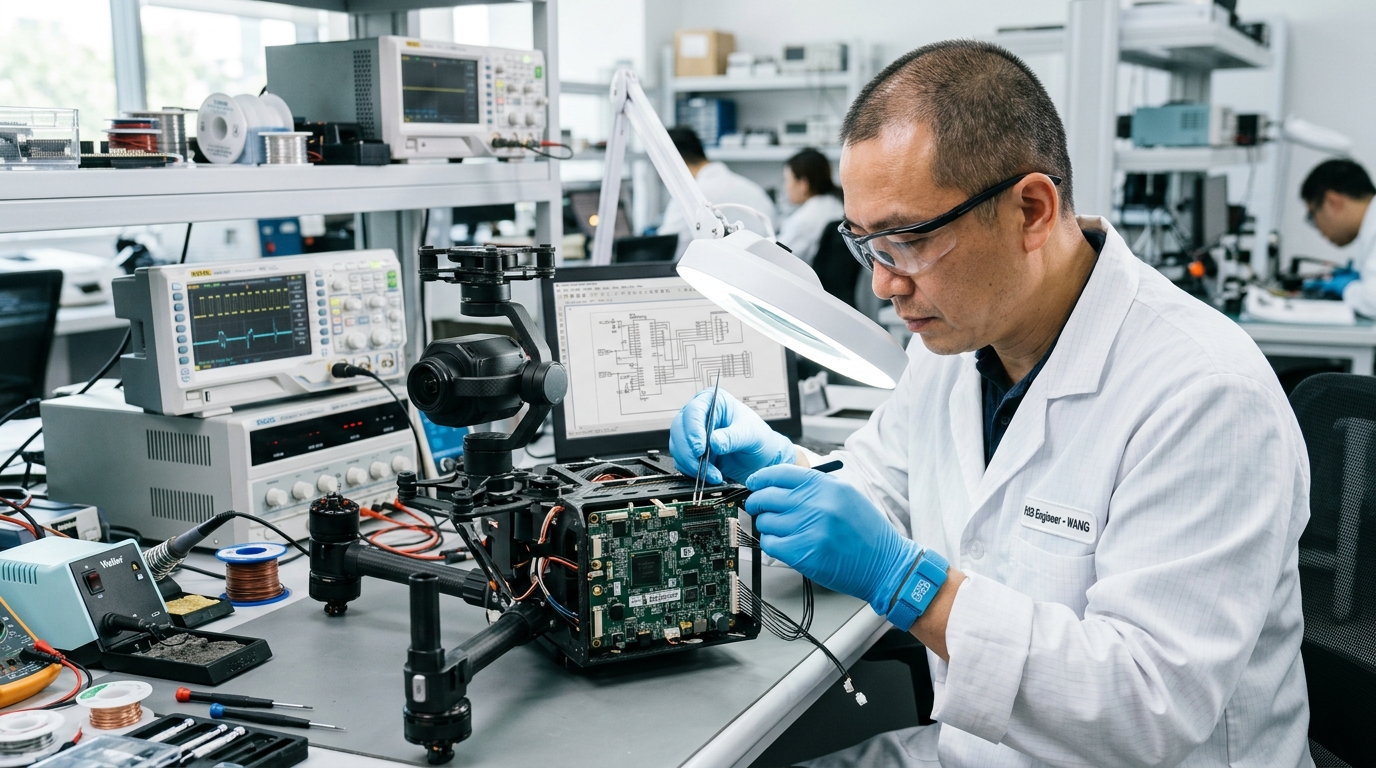
Ready to elevate your micro drone's performance? Don't let subpar wiring ground your next innovative product. Partner with a factory that understands the rigorous demands of FPV and UAV hardware.
Contact our engineering team today for a free consultation, custom technical drawings, and an instant quote on your custom micro drone cables!