The Ultimate FPV Drone Wiring Guide & Custom Cable Solutions
The Ultimate FPV Drone Wiring Guide: From Bench Setup to Custom Harness Solutions
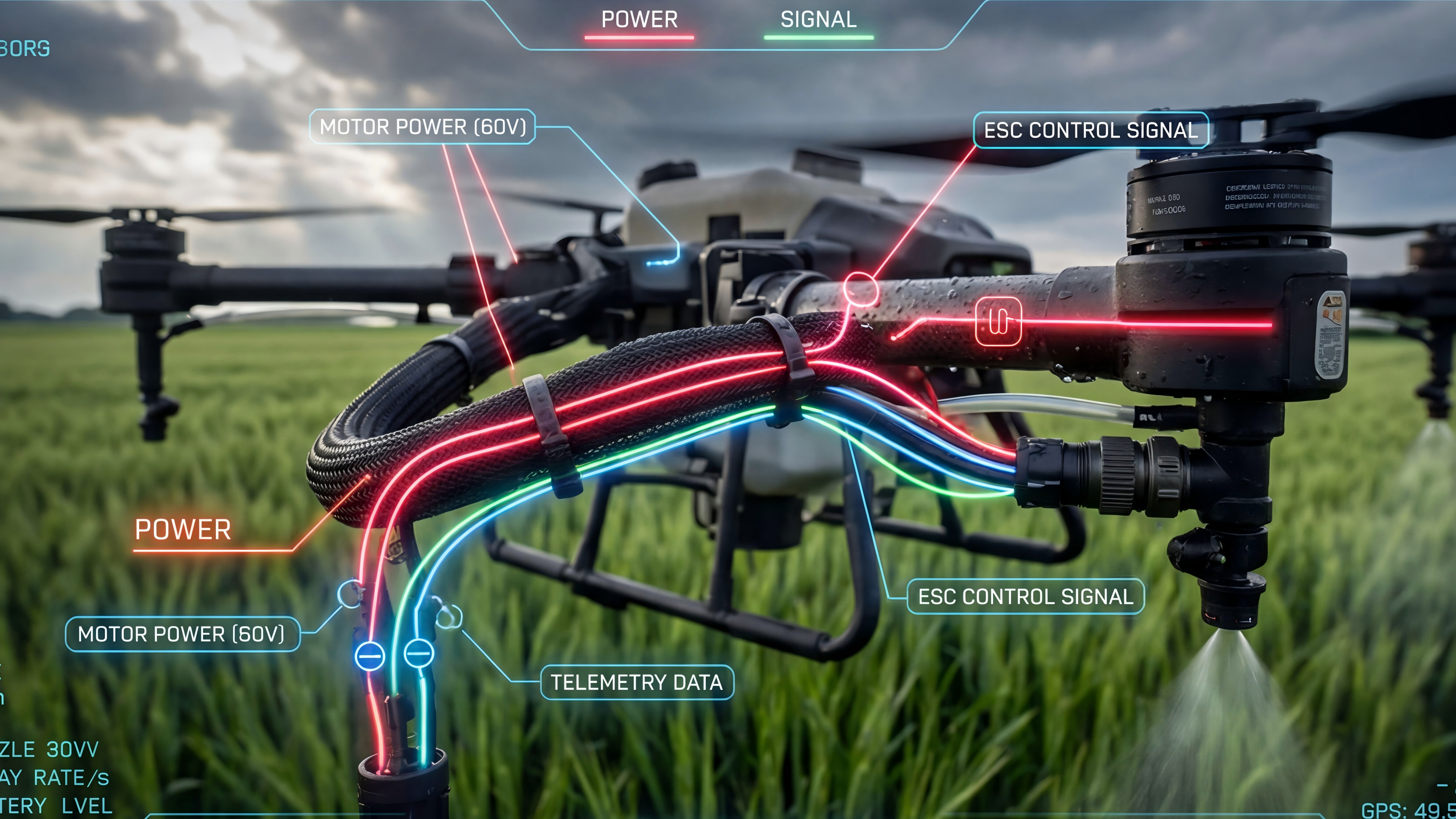
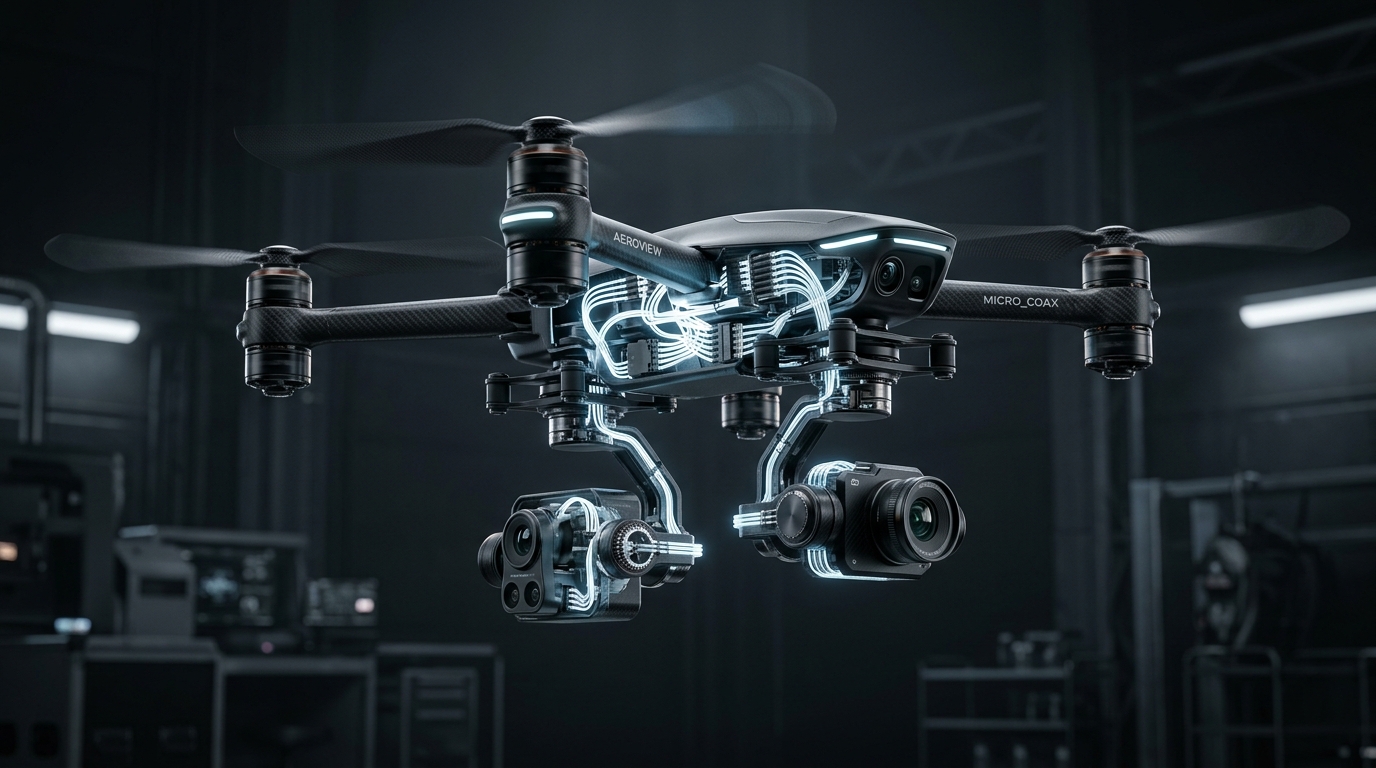
First Person View (FPV) drones are engineering marvels defined by extreme speed, high maneuverability, and instantaneous control. Whether you are diving buildings in a freestyle session, hitting gates on a racing track, or capturing cinematic shots for a Hollywood production, the reliability of your quadcopter hinges on one critical, often overlooked factor: wiring.
A single cold solder joint, improper wire gauge, or lack of shielding can lead to catastrophic crashes, video noise (EMI), or mid-air desyncs. In this comprehensive guide, we will break down the essential FPV drone wiring diagrams and principles, ensuring your electronics communicate flawlessly.
Core Technical Breakdown: The Anatomy of FPV Wiring
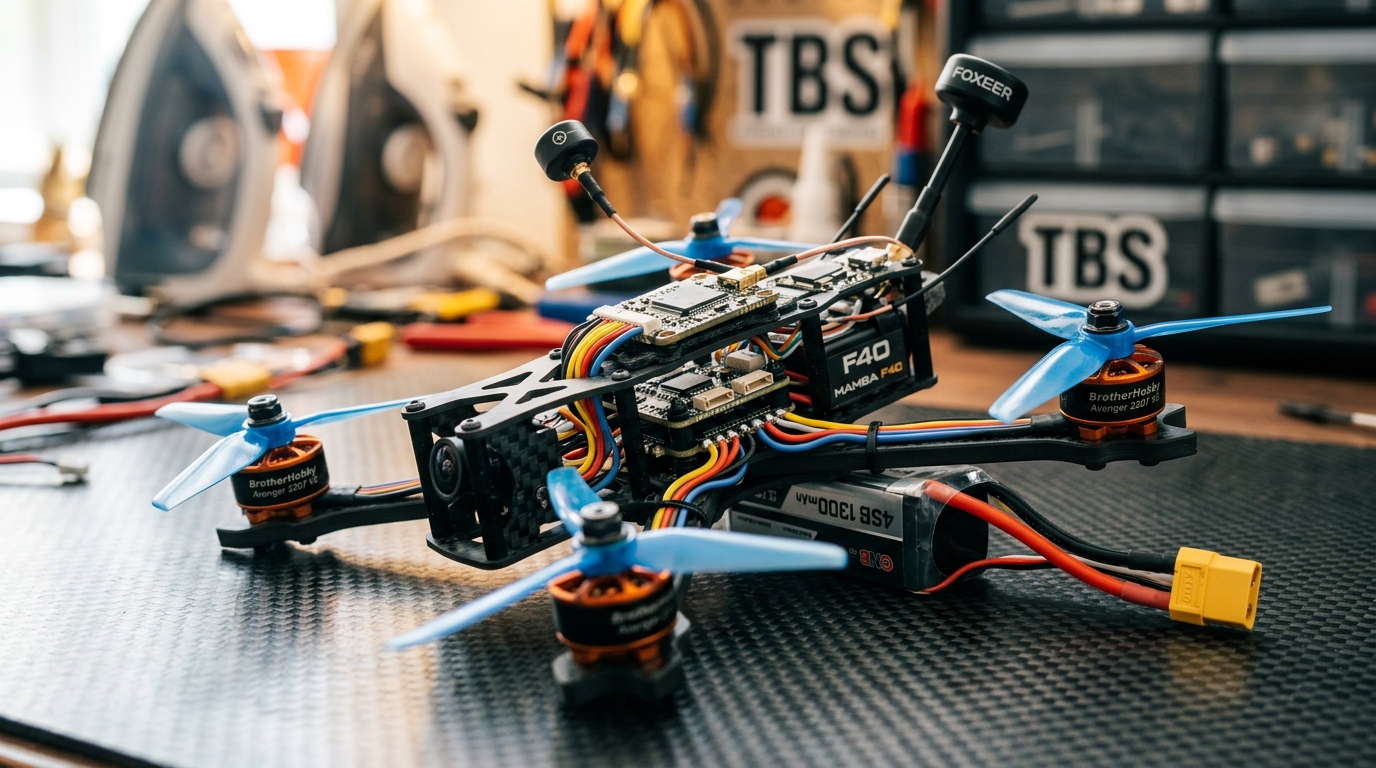
Understanding how to route and connect your electronics is the foundation of drone building. Here is a detailed breakdown of the six primary wiring categories in modern FPV systems.
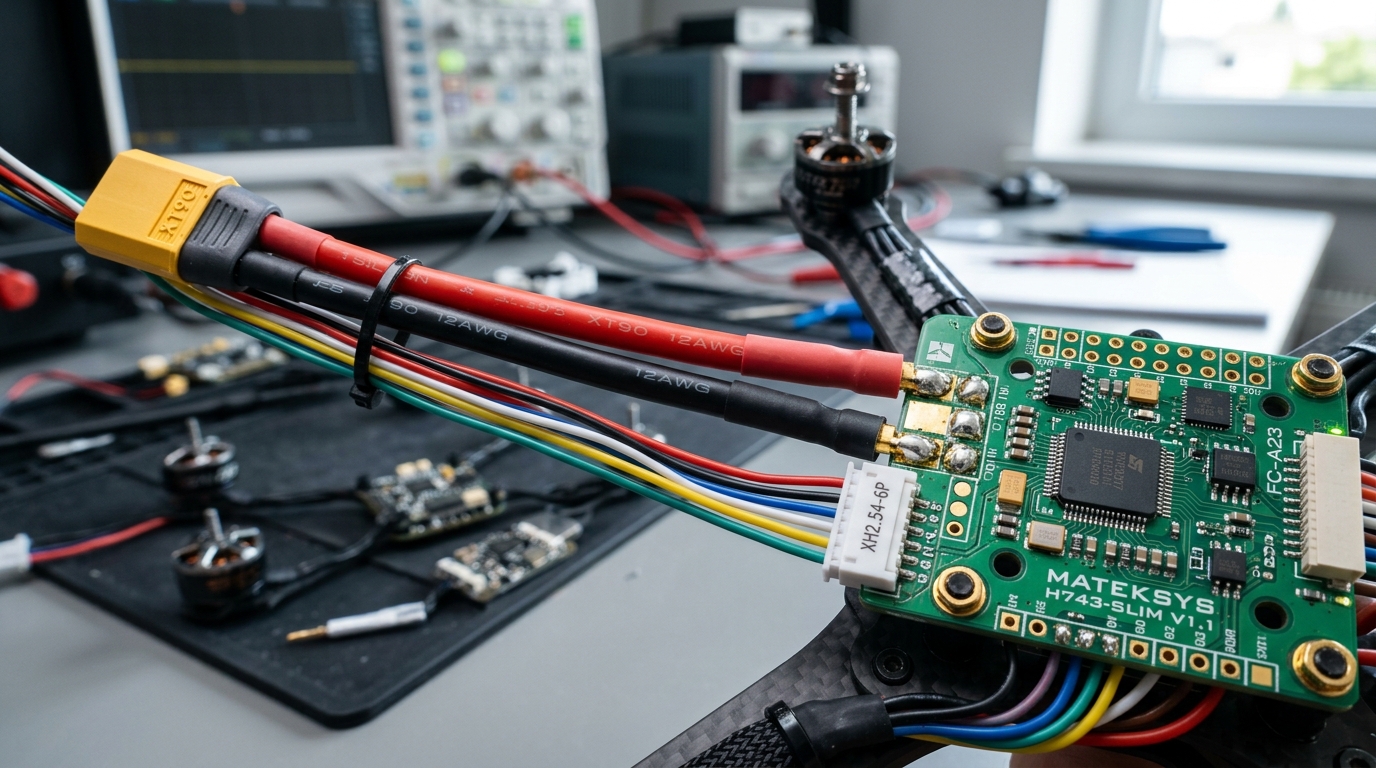
Flight Controller (FC) to Electronic Speed Controller (ESC) Wiring
The FC and ESC are the brain and muscles of the drone, respectively. In modern stacks, they are usually connected via a dedicated wire harness.
- Function & Principle: The FC sends motor protocol data (like DShot600) to the ESC, while the ESC provides battery voltage (VBAT) and current sensor data back to the FC.
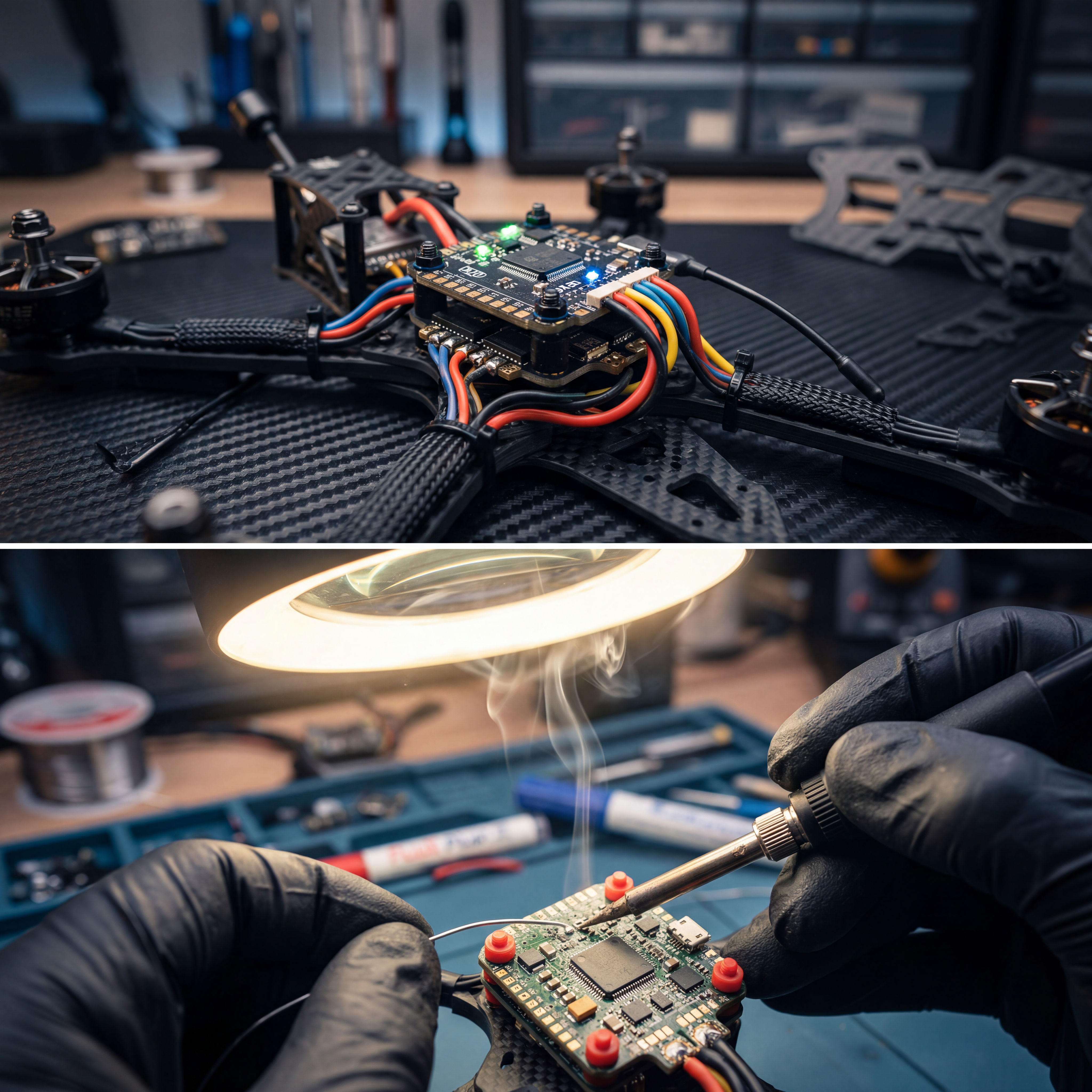
- Wiring Logic: Standard connections include Ground (GND), VBAT, Current (CRT), and Motor signals (M1, M2, M3, M4). While 8-pin SH1.0 plug-and-play cables are convenient, serious racers often direct-solder these connections to eliminate the risk of the connector dislodging during a high-impact crash.
Radio Receiver (RX) Wiring
The receiver translates your transmitter's radio waves into control inputs. Today, protocols like ExpressLRS (ELRS) and TBS Crossfire dominate the market.
- Function & Principle: These are serial-based receivers operating on UART ports.
- Wiring Logic: Wiring requires four specific connections: 5V, Ground, TX (Transmit), and RX (Receive). Crucial rule: The TX on the receiver must wire to the RX on the Flight Controller, and the RX on the receiver wires to the TX on the Flight Controller.
Video Transmitter (VTX) Wiring
Whether you are using analog systems or digital powerhouses like DJI O3, Walksnail Avatar, or HDZero, VTX wiring must be flawless to guarantee a clear video feed.
- Function & Principle: The VTX transmits the camera's visual data to your goggles. It draws significant power and generates high heat.
- Wiring Logic: Digital systems usually connect via custom 6-pin harnesses (VBAT, GND, TX, RX for OSD data, etc.). Because the VTX is highly susceptible to electrical noise, wires should be kept as short as possible and routed away from high-current battery leads to prevent video interference.
FPV Camera Wiring
The camera is your eye in the sky.
- Function & Principle: Captures real-time video. In digital systems, the camera is tethered directly to the VTX via a fragile, high-speed MIPI cable. In analog setups, it wires to the FC for On-Screen Display (OSD) overlay.
- Wiring Logic: Analog cameras typically use 5V, GND, and Video-Out. Flexible, high-strand-count silicone wire is essential here to absorb the high-frequency vibrations of the drone frame and prevent metal fatigue in the wire.
GPS & Buzzer Wiring
Essential for long-range cruising and cinematic drones, these modules are your insurance policy against losing a rig.
- Function & Principle: The GPS provides return-to-home capabilities, while a self-powered buzzer emits a loud >100dB beep if the main battery is ejected during a crash.
- Wiring Logic: GPS modules utilize UARTs (TX/RX) for satellite data and I2C pads (SCL/SDA) for the built-in magnetometer (compass). Active buzzers require 5V, GND, and a Buzzer- signal pad on the FC.
Battery & Pigtail Wiring
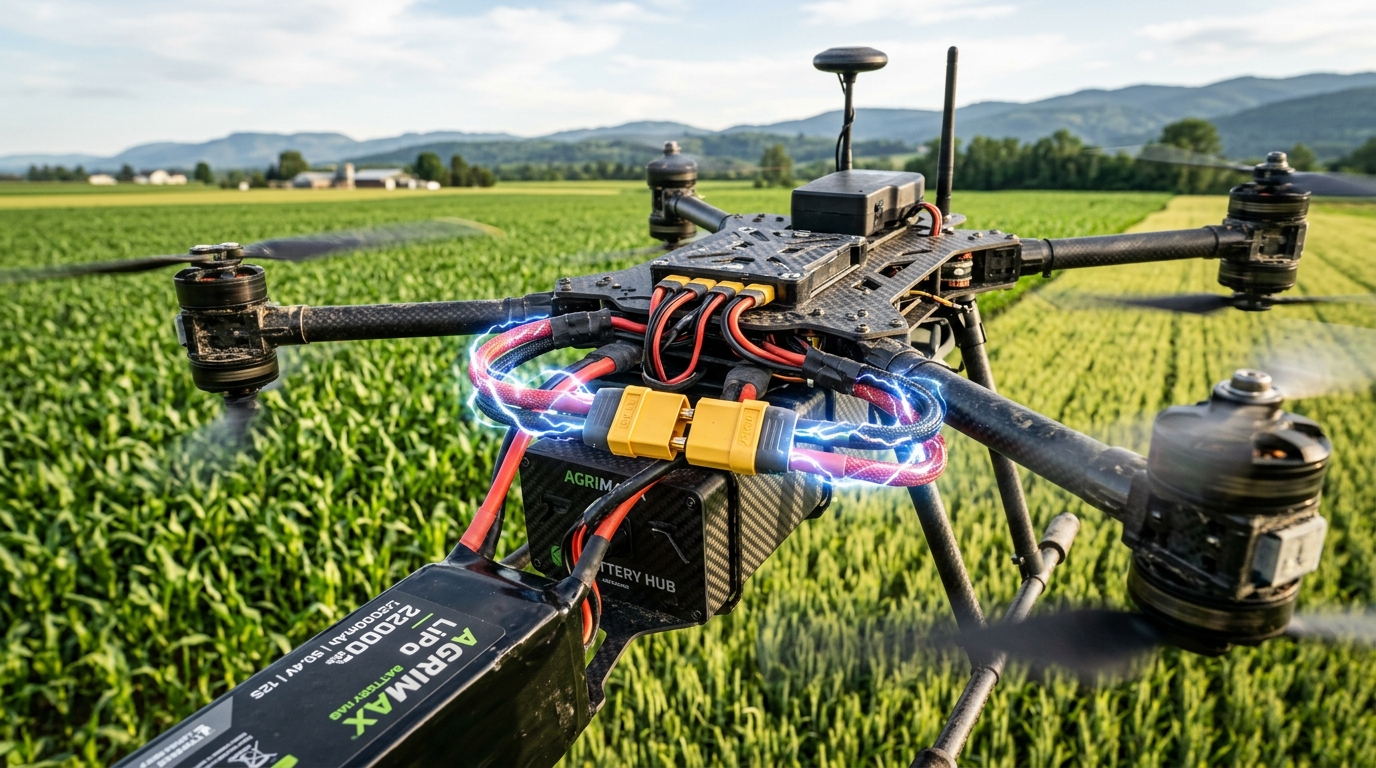
This is the main artery of your drone, carrying the raw, unfiltered power from your LiPo or Li-ion pack.
- Function & Principle: FPV drones can pull immense bursts of current—sometimes exceeding 100 amps during a punch-out.
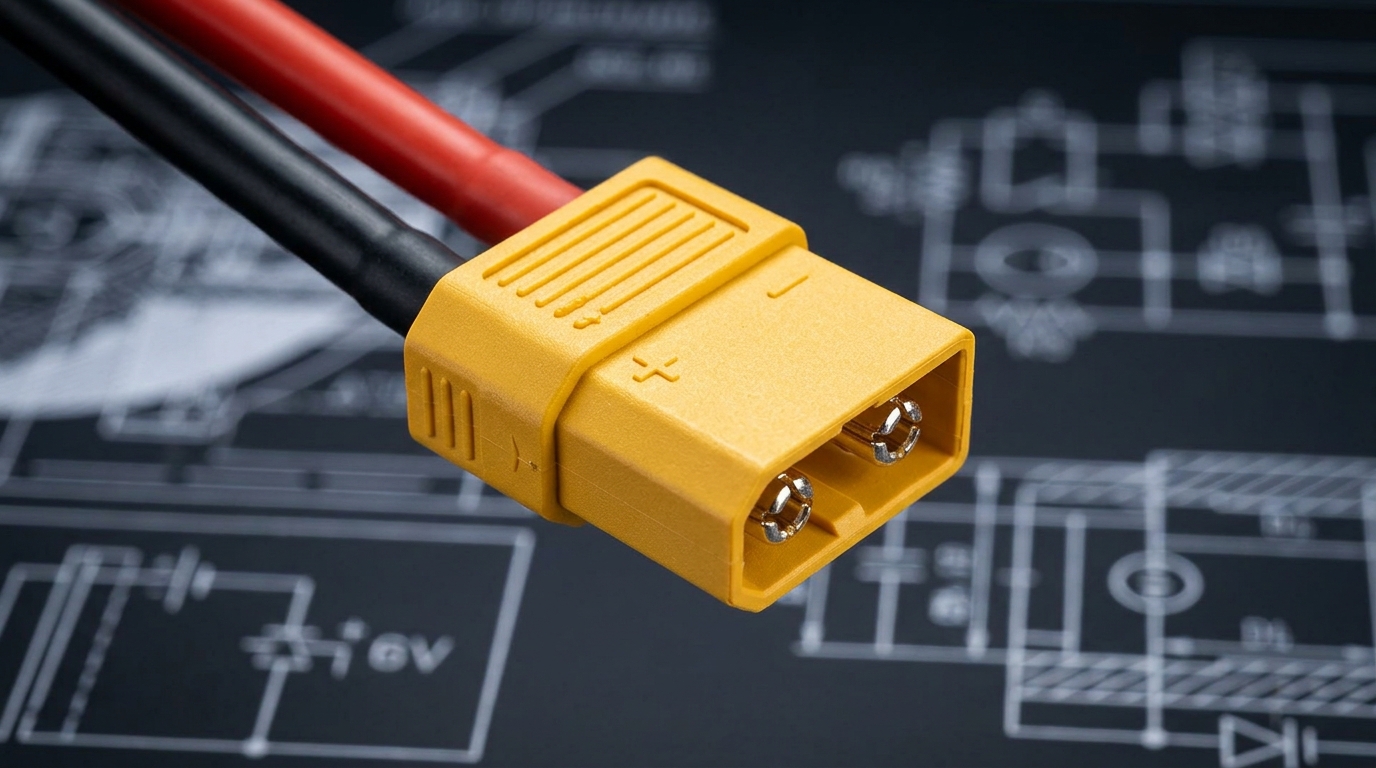
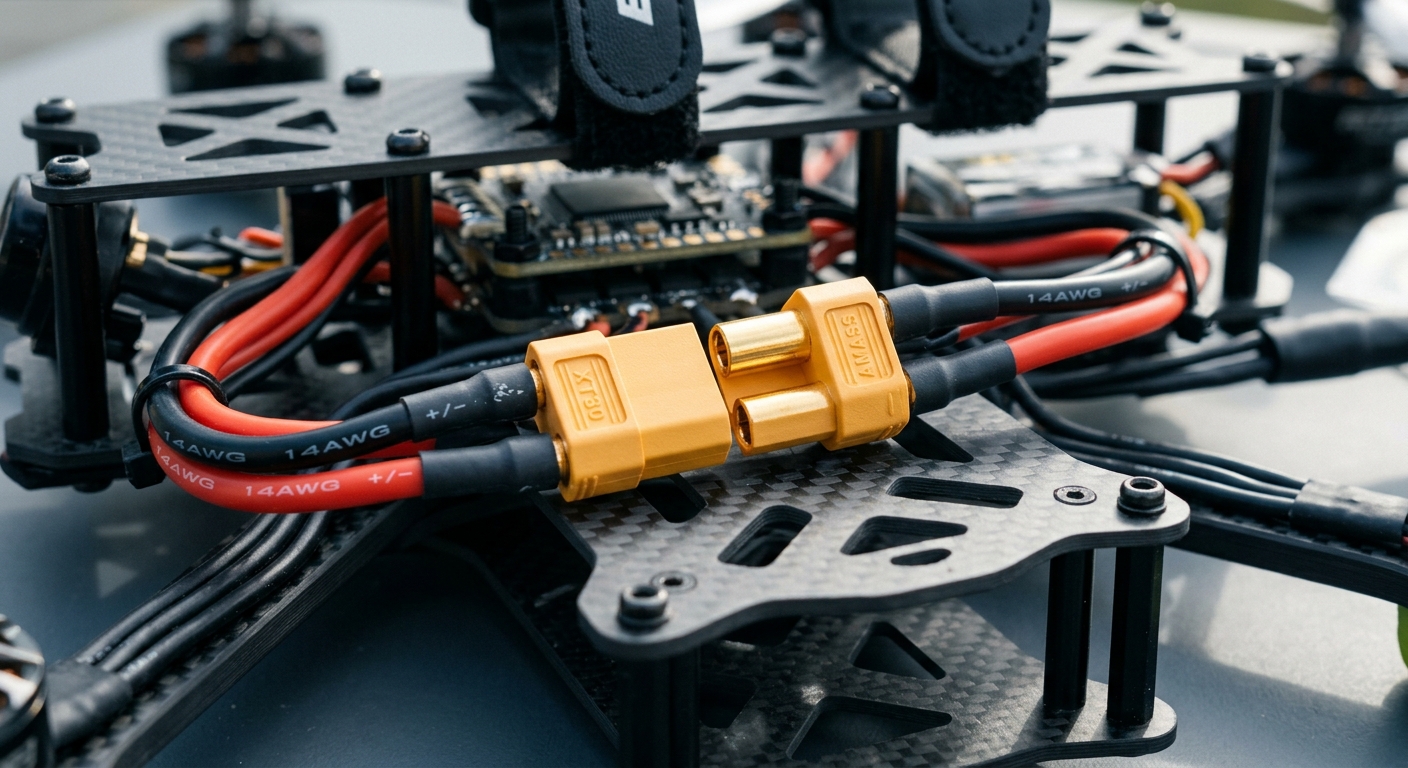
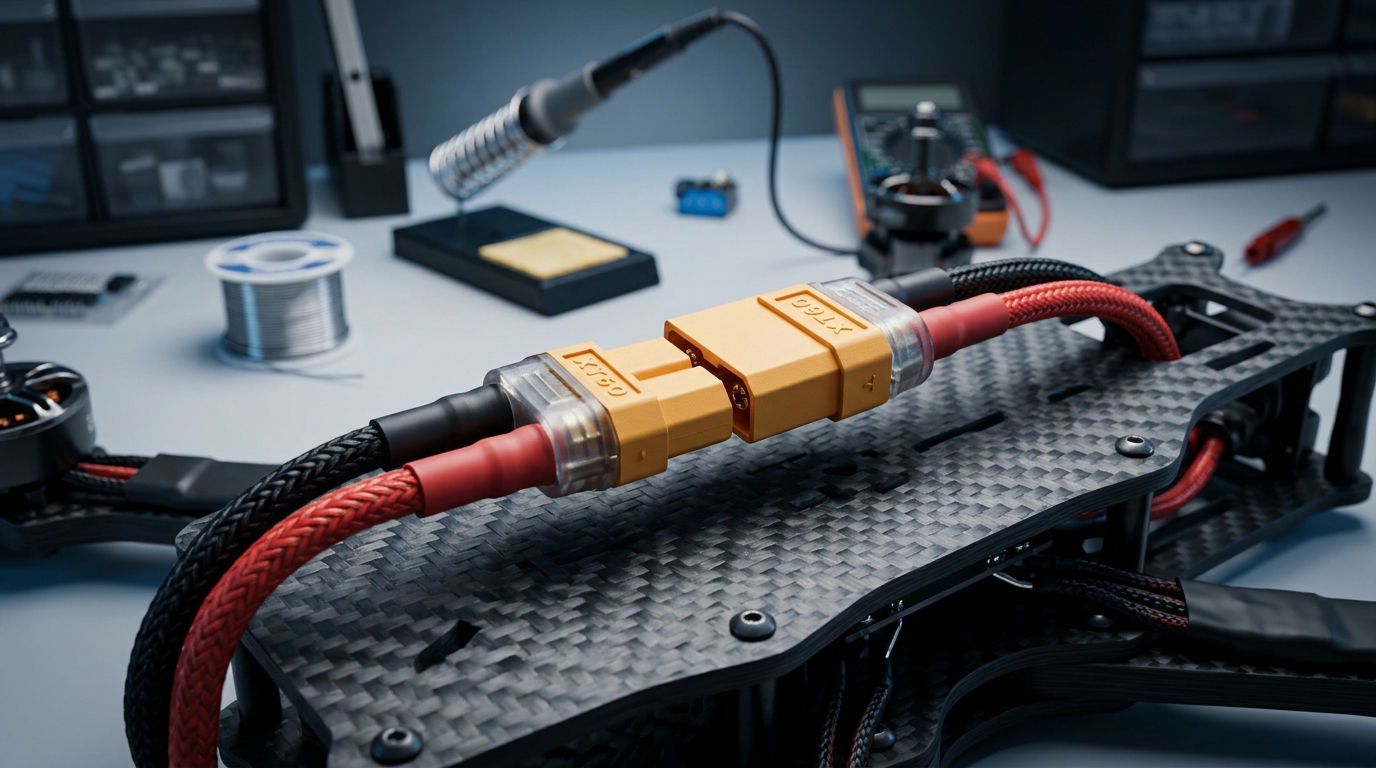
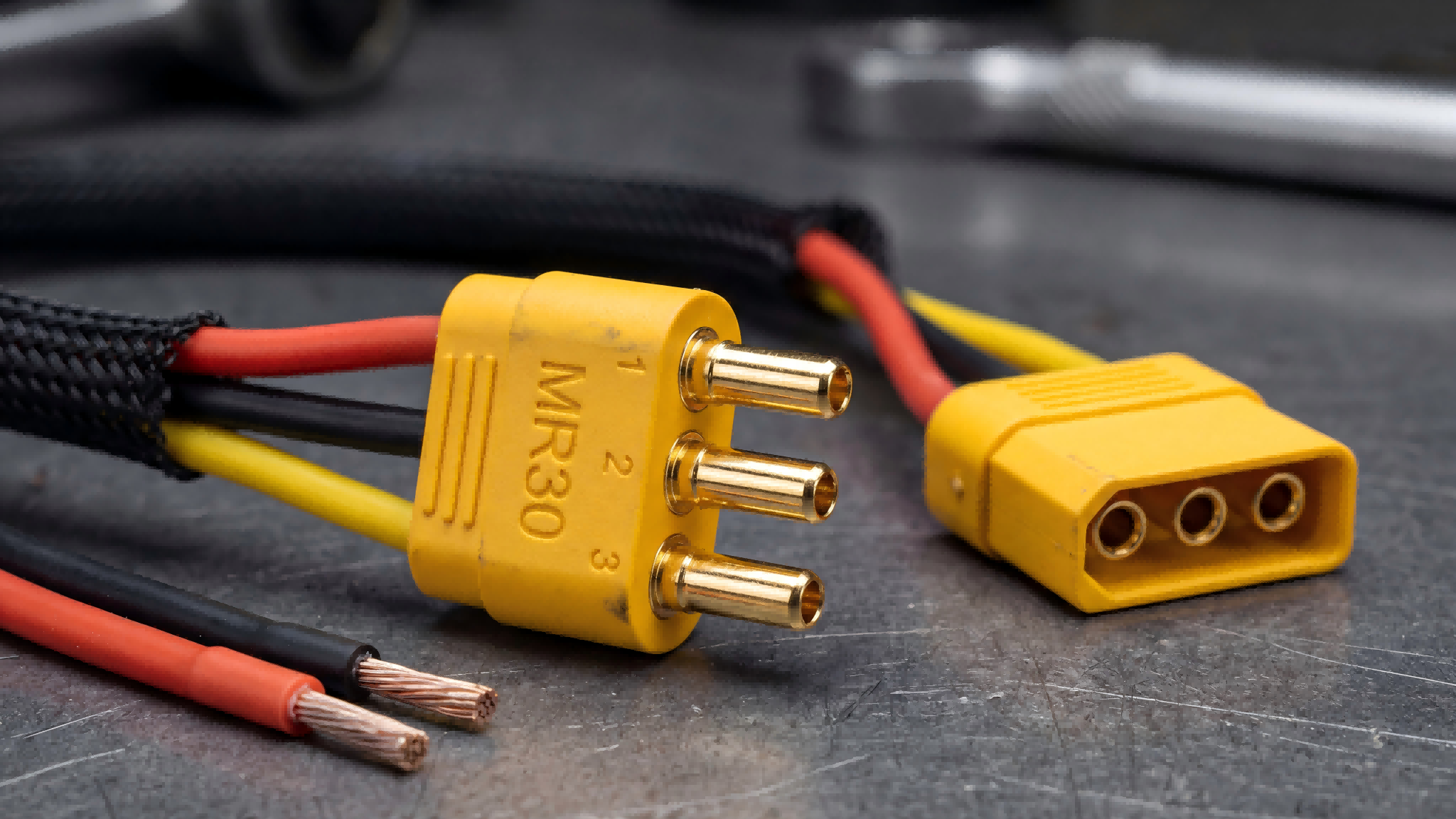
- Wiring Logic: The pigtail must be soldered directly to the ESC's main battery pads alongside a Low ESR Capacitor (e.g., 1000uF 35V) to absorb voltage spikes and prevent the ESC from frying. Heavy-duty wire and solid solder joints are non-negotiable here.
FPV Wiring Specifications Table
Choosing the correct wire gauge and connector is vital for both performance and safety. Below is the industry-standard specification matrix for FPV wiring:
| Module Name | Wire Gauge (AWG) | Common Connector Type |
|---|---|---|
| FC to ESC Data | 28 AWG - 30 AWG | JST-SH1.0 (8-pin) or Direct Solder |
| Radio Receiver (RX) | 28 AWG - 30 AWG | Direct Solder, Dupont, or SH1.0 |
| Digital VTX (e.g., DJI O3) | 26 AWG - 28 AWG | JST-SH1.0 (6-pin) |
| FPV Camera (Analog) | 28 AWG | JST-SH1.25 or Direct Solder |
| GPS & Buzzer | 28 AWG - 30 AWG | JST-SH1.0 or Direct Solder |
| Battery / Pigtail (5" Quad) | 12 AWG - 14 AWG | Amass XT60 / XT60E-M |
| Battery (Micro/Toothpick) | 16 AWG - 18 AWG | Amass XT30 |
Elevate Your Production: Why Choose Our Custom Wire Harness Factory?
For DIY hobbyists, spending hours stripping, tinning, and crimping tiny 30 AWG wires is a rite of passage. However, for FPV drone build studios, commercial drone manufacturers, and B2B electronics buyers, inconsistent manual wiring is a massive bottleneck. Poorly crimped JST connectors or improperly shielded VTX cables lead to high failure rates and frustrated end-users.
This is where we step in. As a premier electronics manufacturer, we specialize in custom FPV drone wiring solutions designed to scale your business.
Our Core Manufacturing Advantages:
- ISO9001 Certified Quality: Every wire harness we produce undergoes rigorous quality control, including continuity testing and pull-force checks, ensuring 100% reliability right out of the box. No more mid-flight desyncs due to faulty pins.
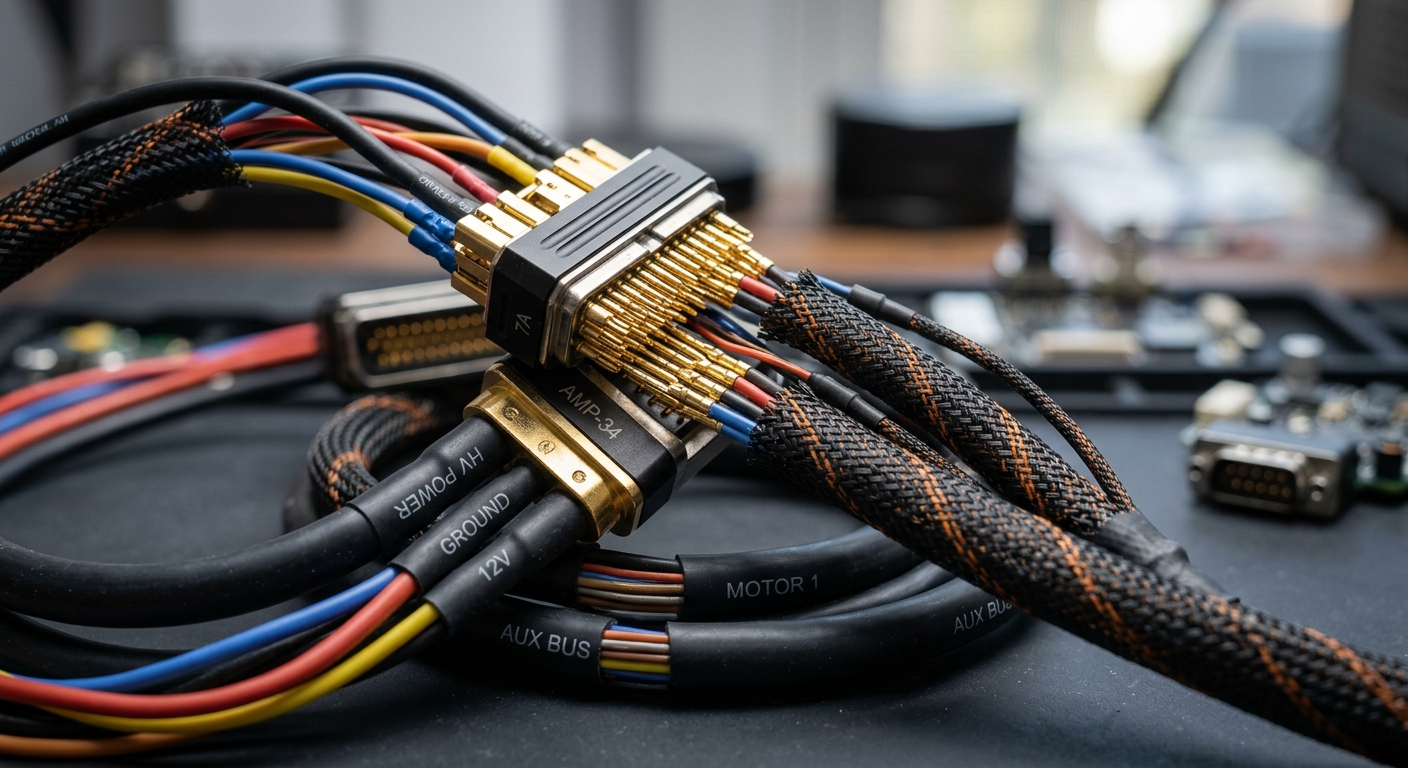
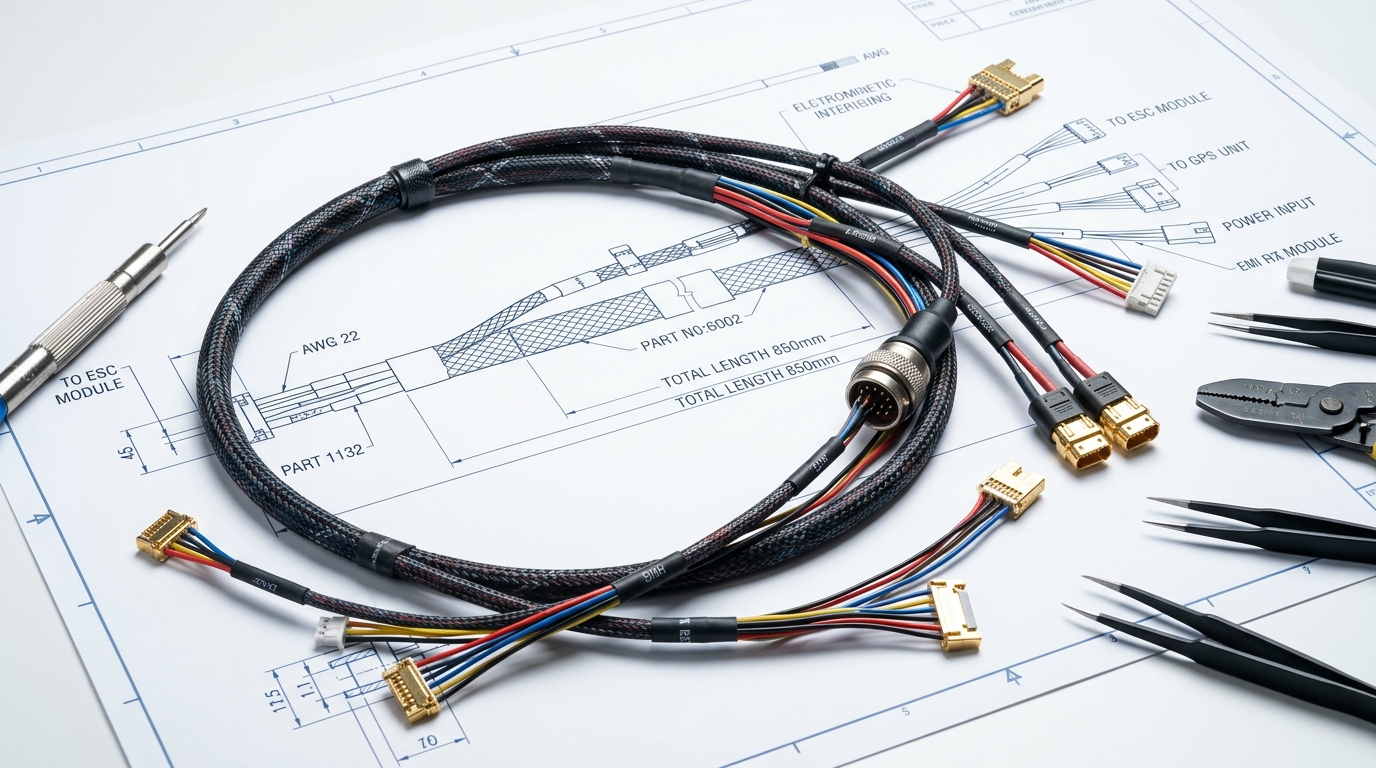
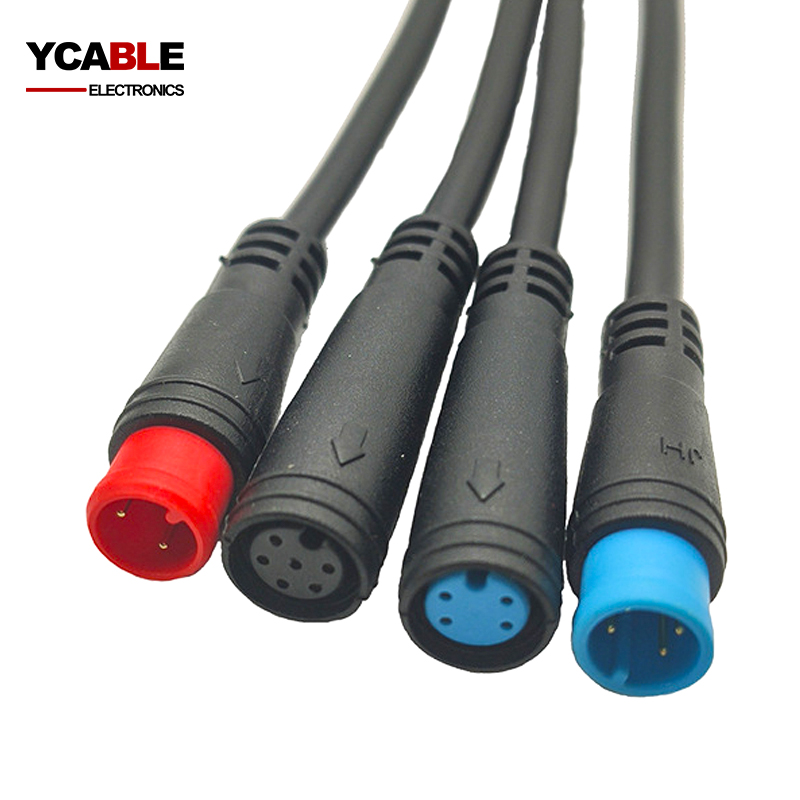
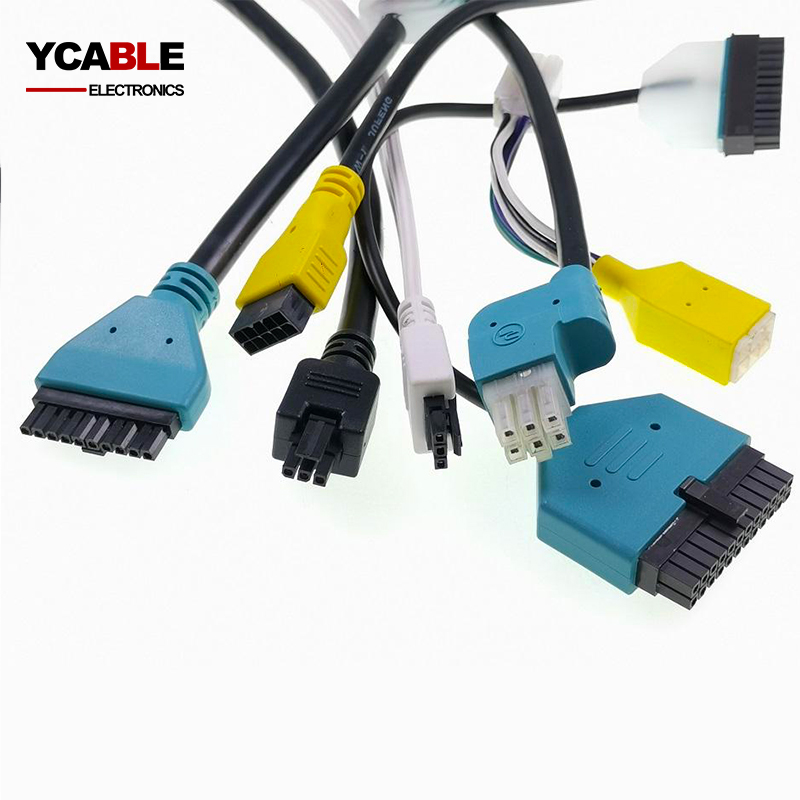
- Fully Custom FPV Cables: Need a specific length for a Cinelifter frame? Require shielded MIPI cables, or custom JST-to-solder-pad harnesses? We tailor wire gauges, lengths, shielding, and connectors to your exact blueprint.
- Support Low-Volume Production (Low MOQ): We understand the boutique nature of the FPV industry. We support small to medium batch orders (Low Minimum Order Quantity), allowing indie drone studios and startups to access factory-grade wiring without massive upfront investments.
- Professional Design Team: Not sure which connector or wire spec is best for your new flight controller stack? Our in-house electronic engineers act as your extended R&D team, providing expert consulting to optimize your drone wire harness diagram.
Ready to Streamline Your Drone Manufacturing?
Stop wasting time on tedious manual crimping and start building fleets with confidence. Whether you need standard SH1.0 cables for FC-to-ESC connections or heavy-duty XT60 pigtails, we are your trusted manufacturing partner.
[Contact Us Today for a Free Quote] – Let our professional design team build the perfect custom wiring solution for your next FPV project!