Ultimate Guide to Robot Communication Harnesses: Custom Cable Assembly Manufacturer
Ultimate Guide to Robot Communication Harnesses: The Neural Network of Industry 4.0
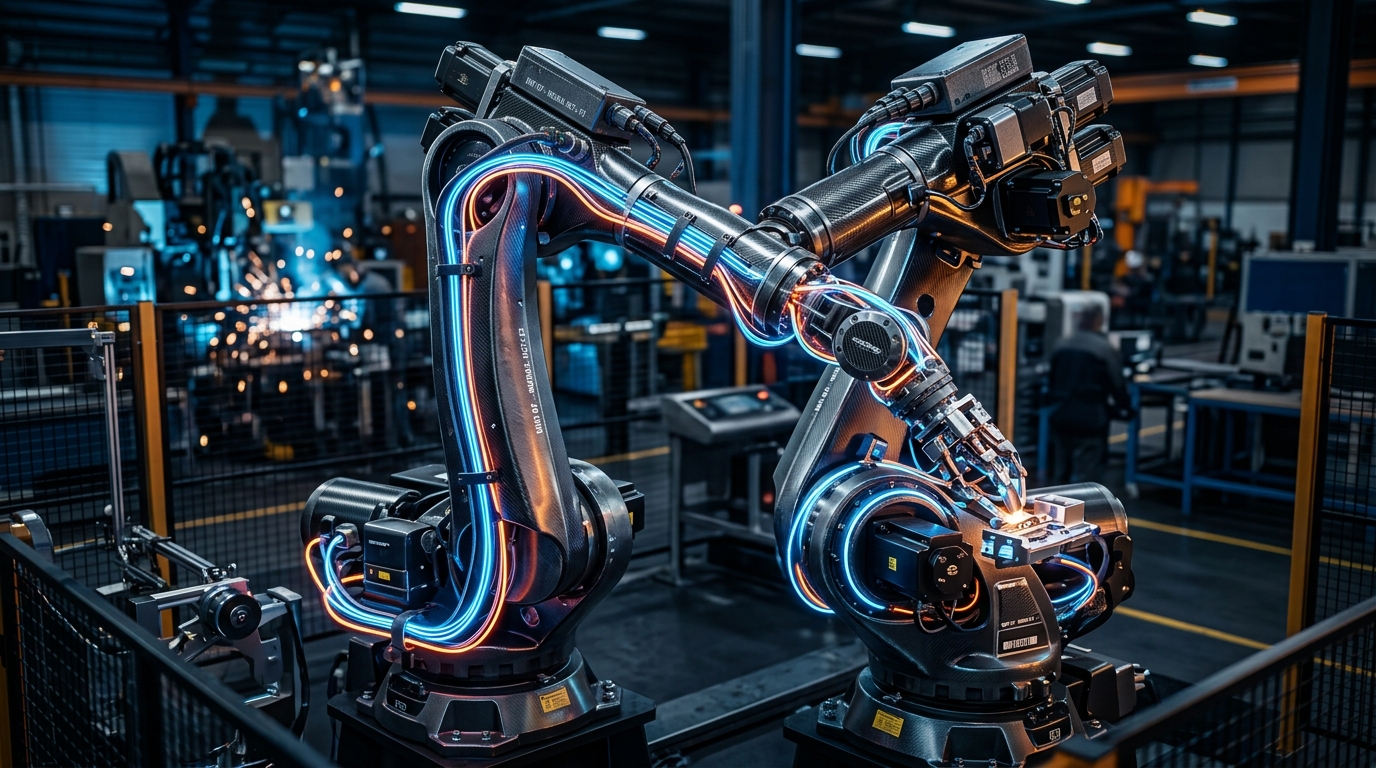
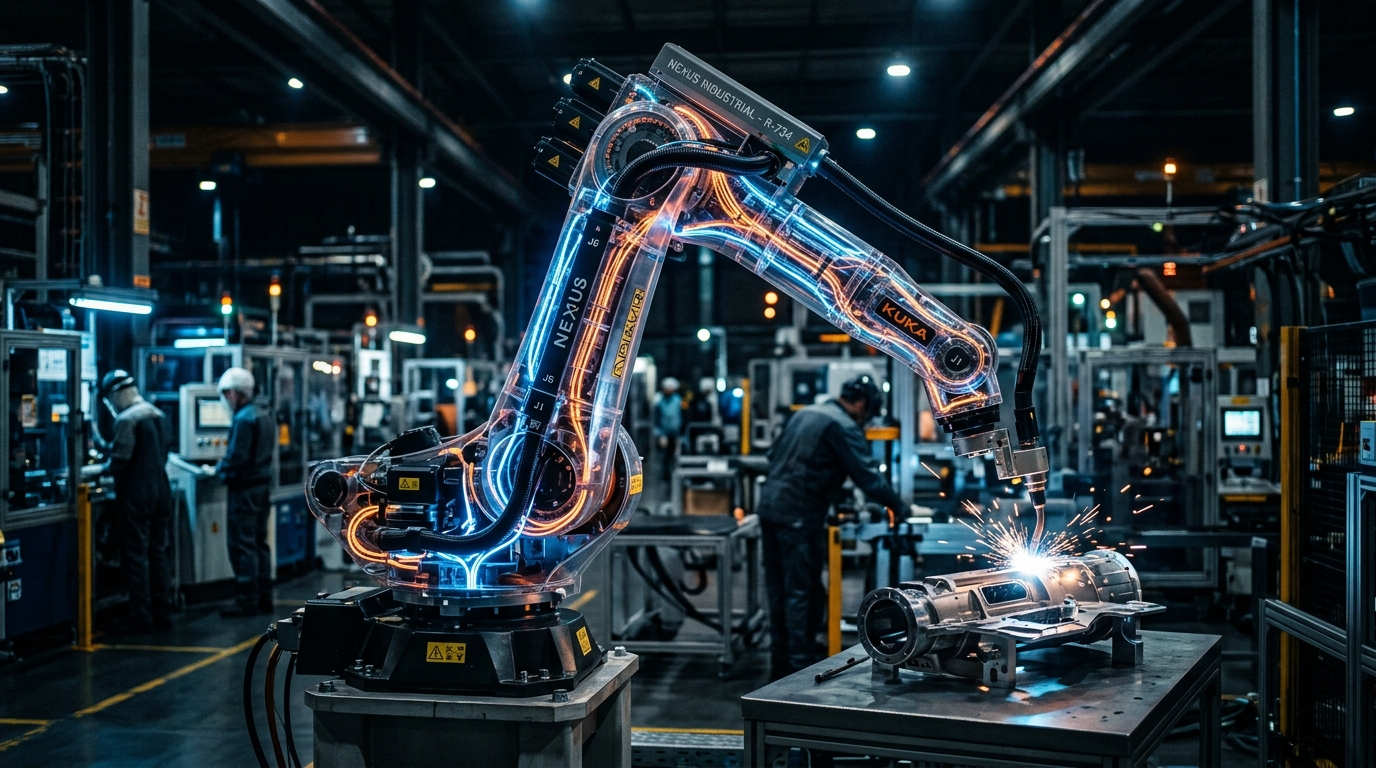
In the era of Industry 4.0 and flexible manufacturing, industrial automation is evolving at an unprecedented pace. Behind every precise movement of an automated guided vehicle (AGV), a collaborative robot (Cobot), or a heavy-duty welding arm lies an invisible yet critical lifeline: the Robot Communication Harness.
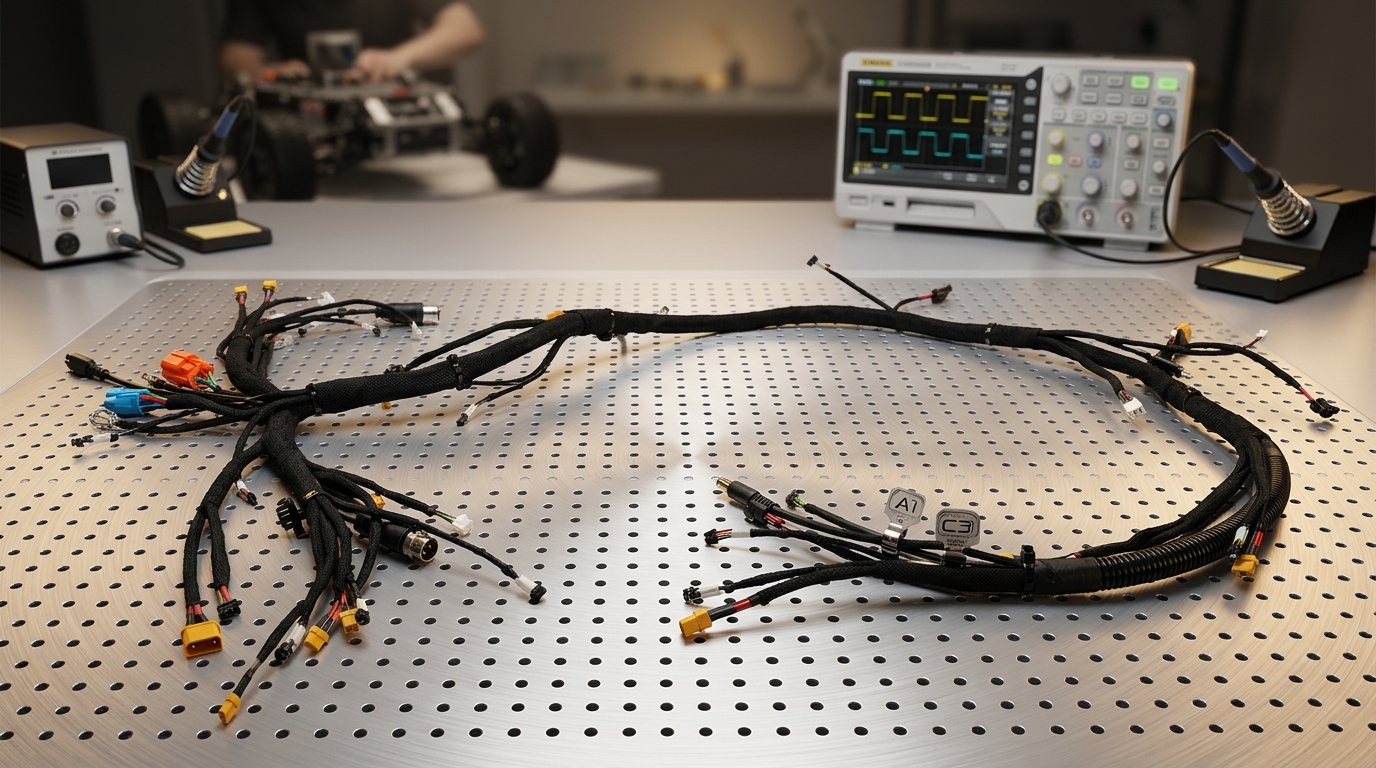
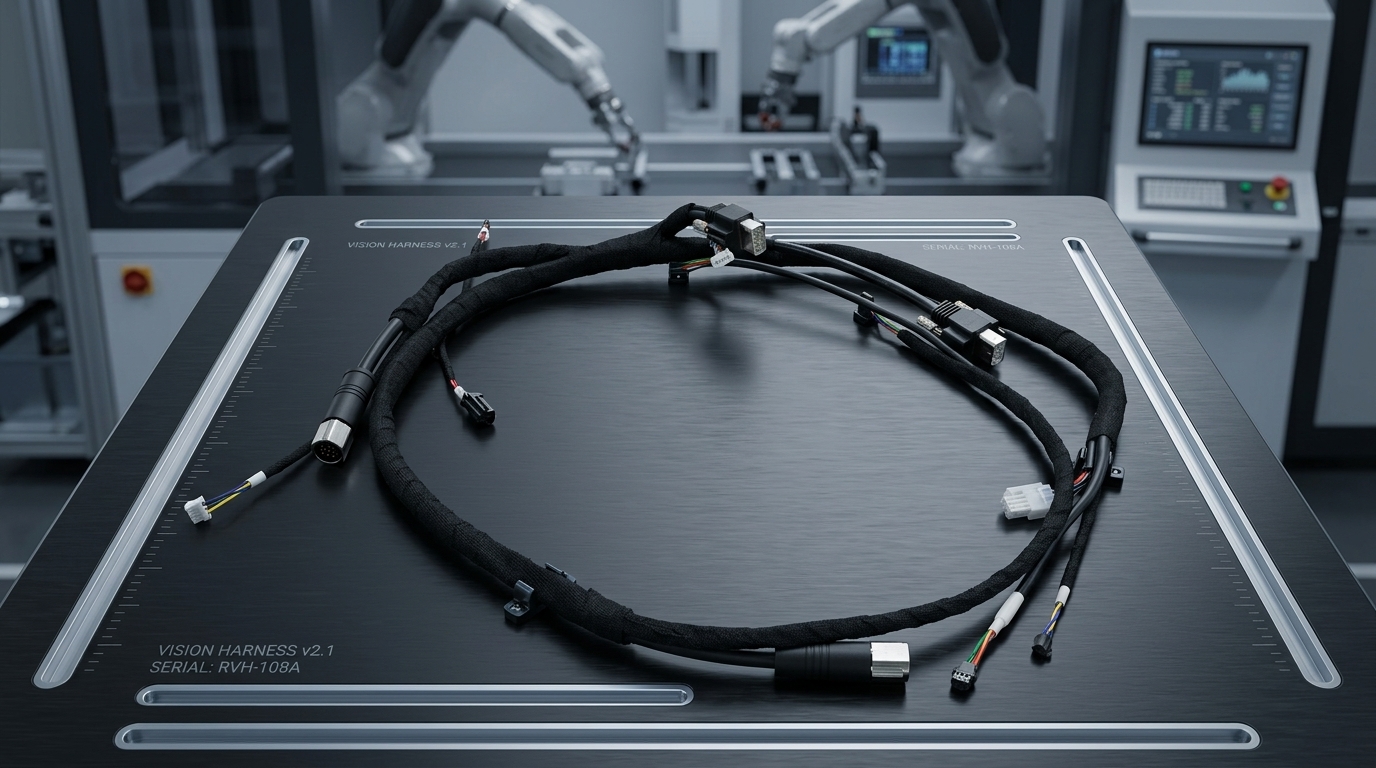
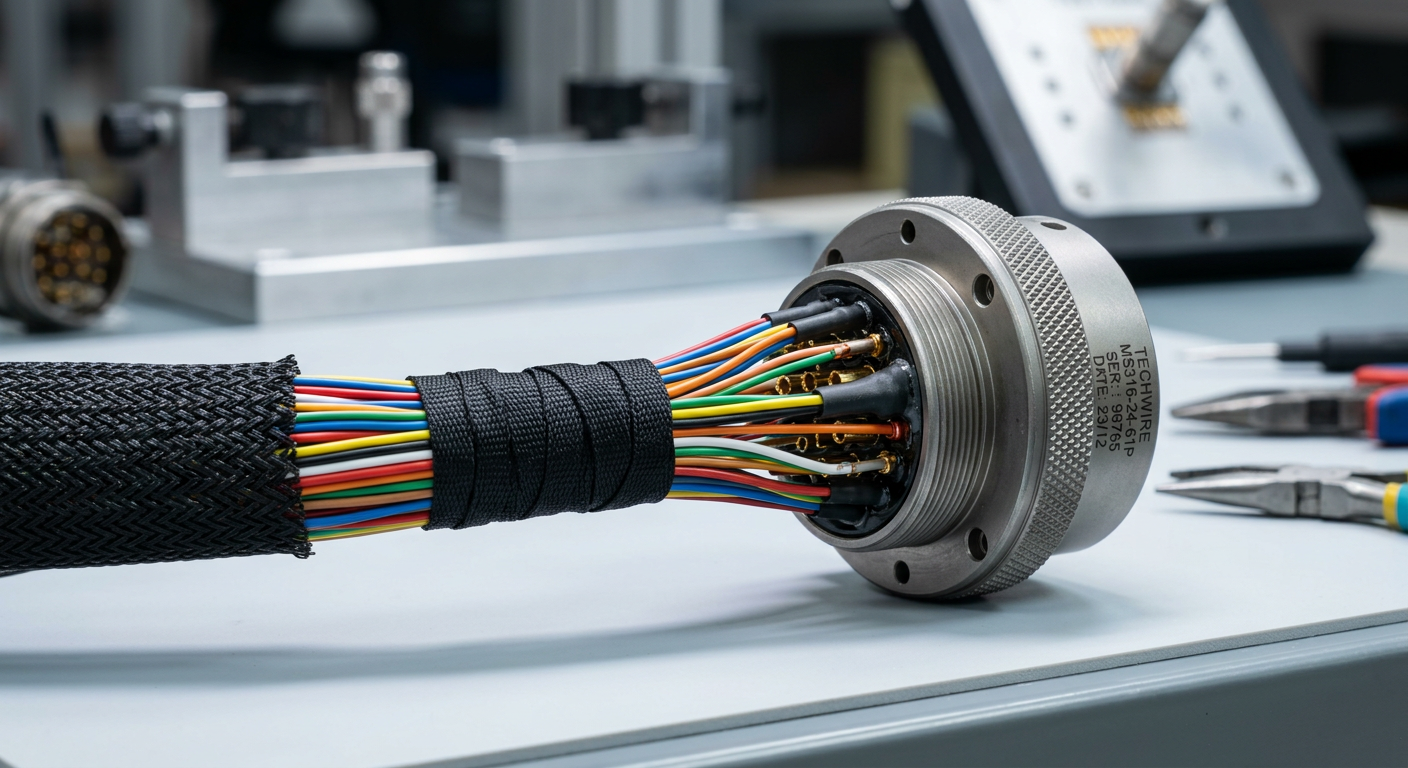
Robot communication harnesses are high-reliability signal and data transmission cable assemblies designed specifically for robotic applications. Acting as the "neural network" of a robot, they are responsible for the stable transmission of control commands, operational data, and interactive signals among controllers, robotic arms, sensors, and actuators, making them the core connective components of industrial automation equipment. Without this vital network, even the most advanced AI-driven robot is merely a collection of motionless metal.
Classifications of Robot Communication Harnesses
To meet the diverse demands of the robotics industry, communication harnesses are generally classified into several main categories based on their application location and functional requirements:
By Installation Location
- Internal Robot Cables: Embedded within the robotic arm and joints. These cables must endure extreme torsion and bending in tight spaces.
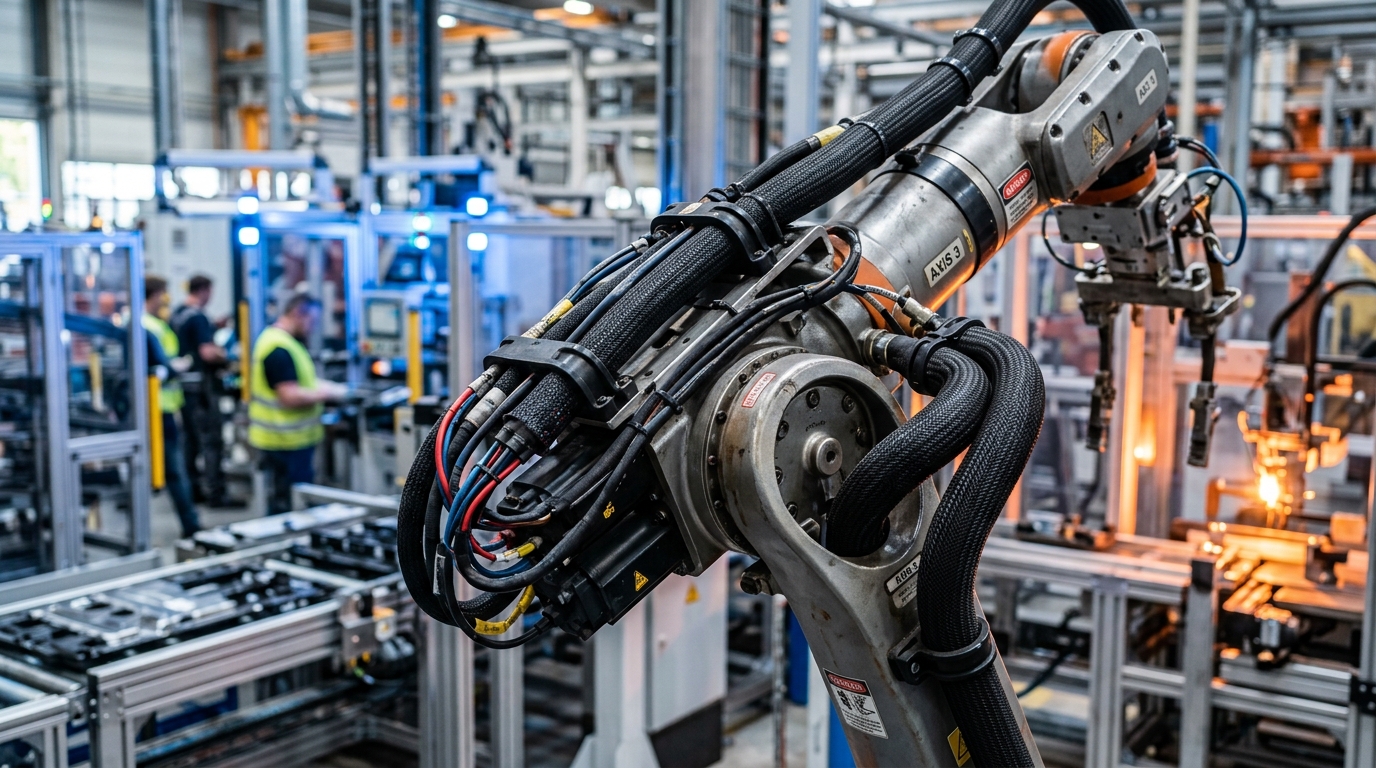
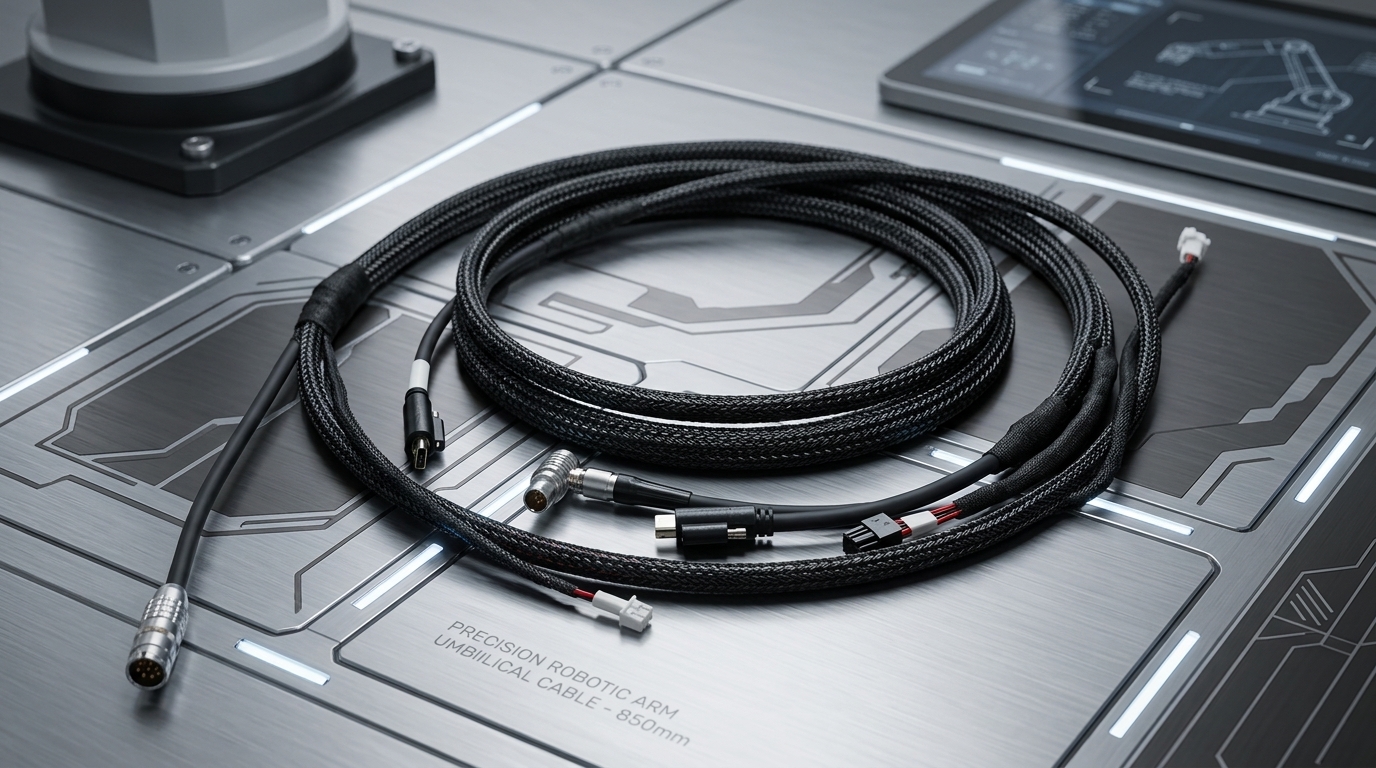
- External Dresspacks (Umbilical Cables): Connecting the main controller cabinet to the base of the robot. These require excellent resistance to environmental hazards like oil, sparks, and physical abrasion.
By Functional Axis
- Base/Main Axis Cables (Axis 1-3): Thicker harnesses that carry main power and primary data bus signals.
- Wrist/Tool Cables (Axis 4-6): Highly flexible, lightweight cables that connect to the End of Arm Tooling (EOAT), transmitting precise sensor data.
Key Features of Industrial Robot Wiring
Unlike standard commercial cables, a custom robot cable assembly must survive the harshest industrial environments. The defining features include:
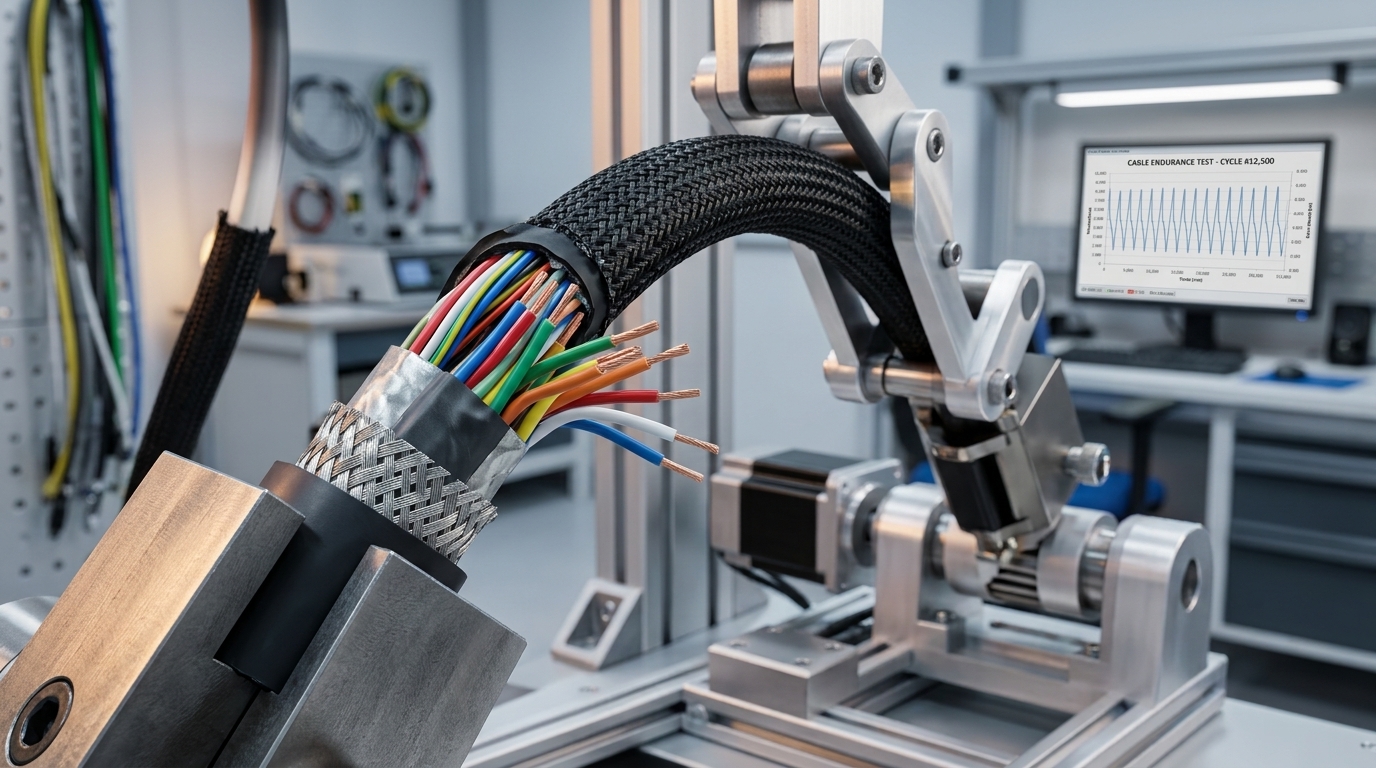
- Extreme Continuous Flexing: Capable of withstanding millions of bending and torsional cycles (often >10 million cycles) without signal degradation.
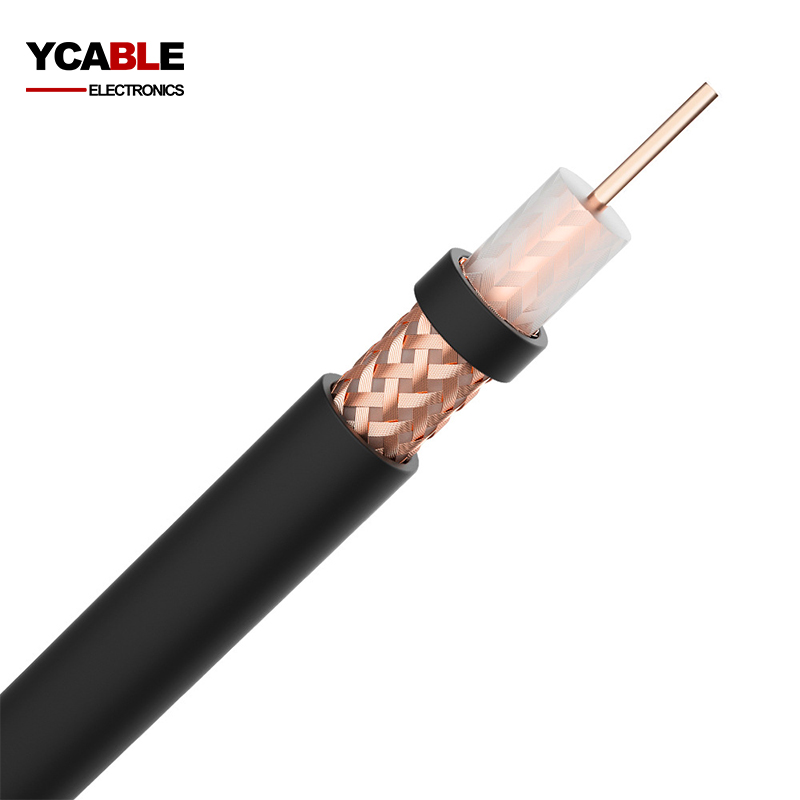
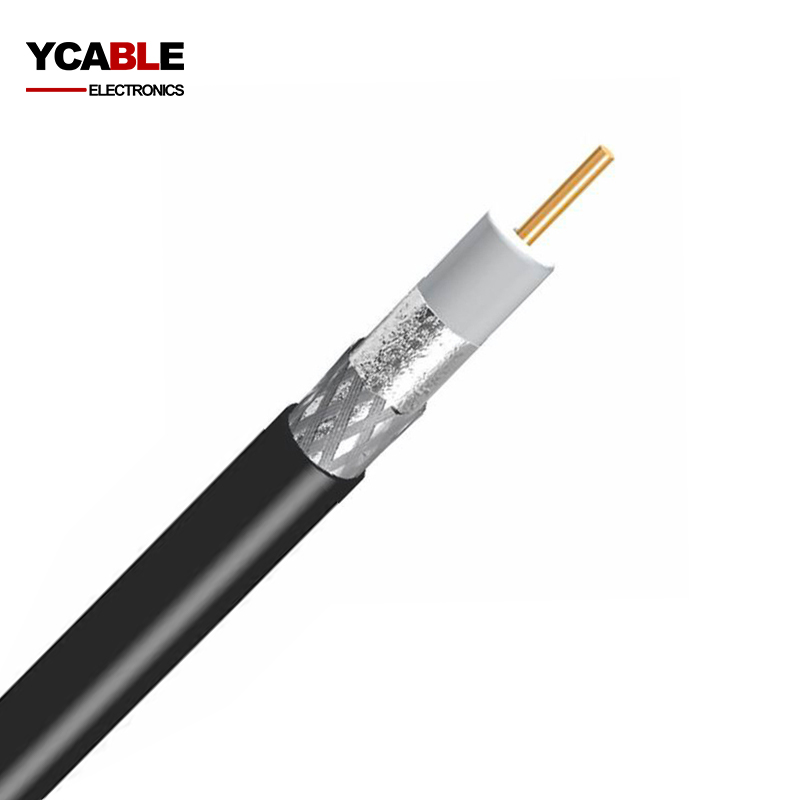
- Superior EMI/RFI Shielding: Heavily shielded with tinned copper braiding or aluminum foil to prevent electromagnetic interference from servo motors, ensuring zero data loss during high-speed transmission.
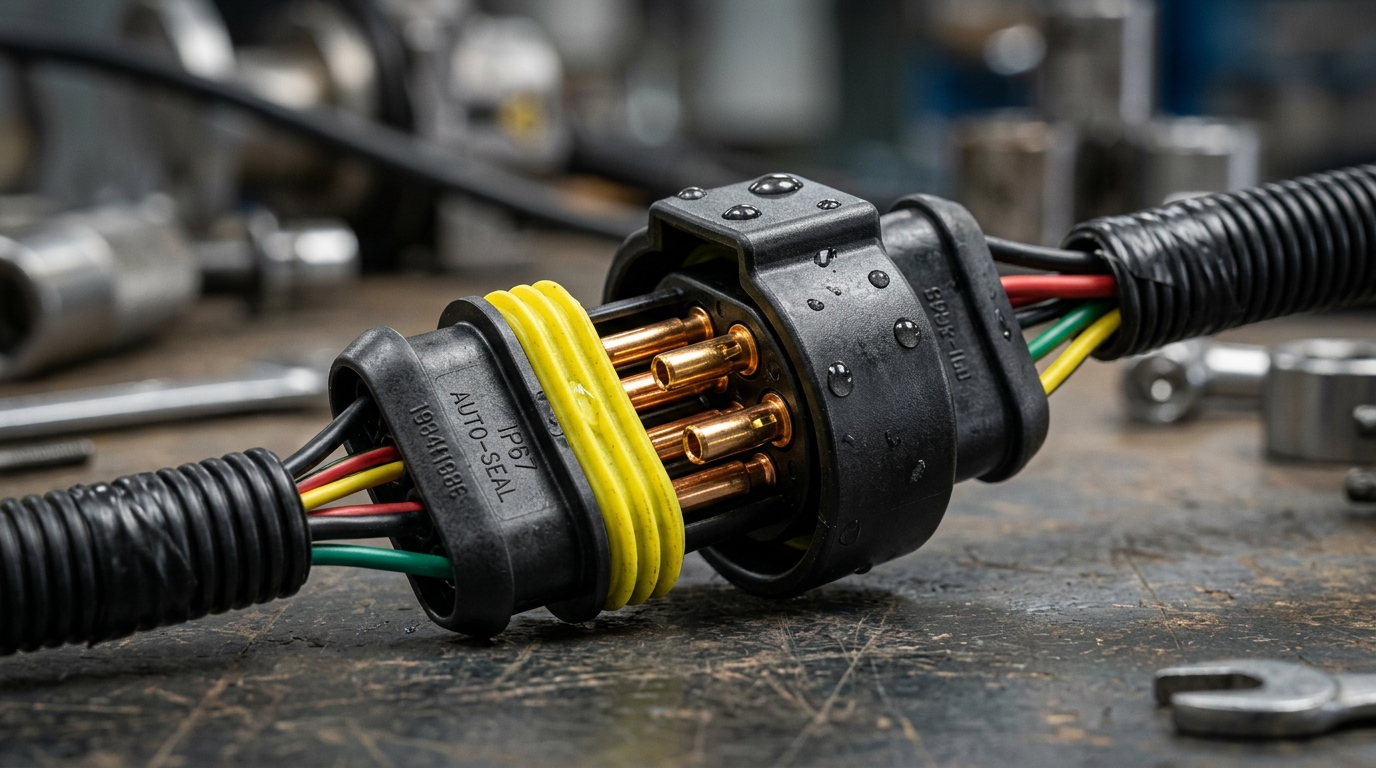
- Environmental Resistance: Utilizing advanced jacket materials (like PUR or TPE) that provide exceptional resistance to welding slag, oil, grease, UV rays, and extreme temperatures.
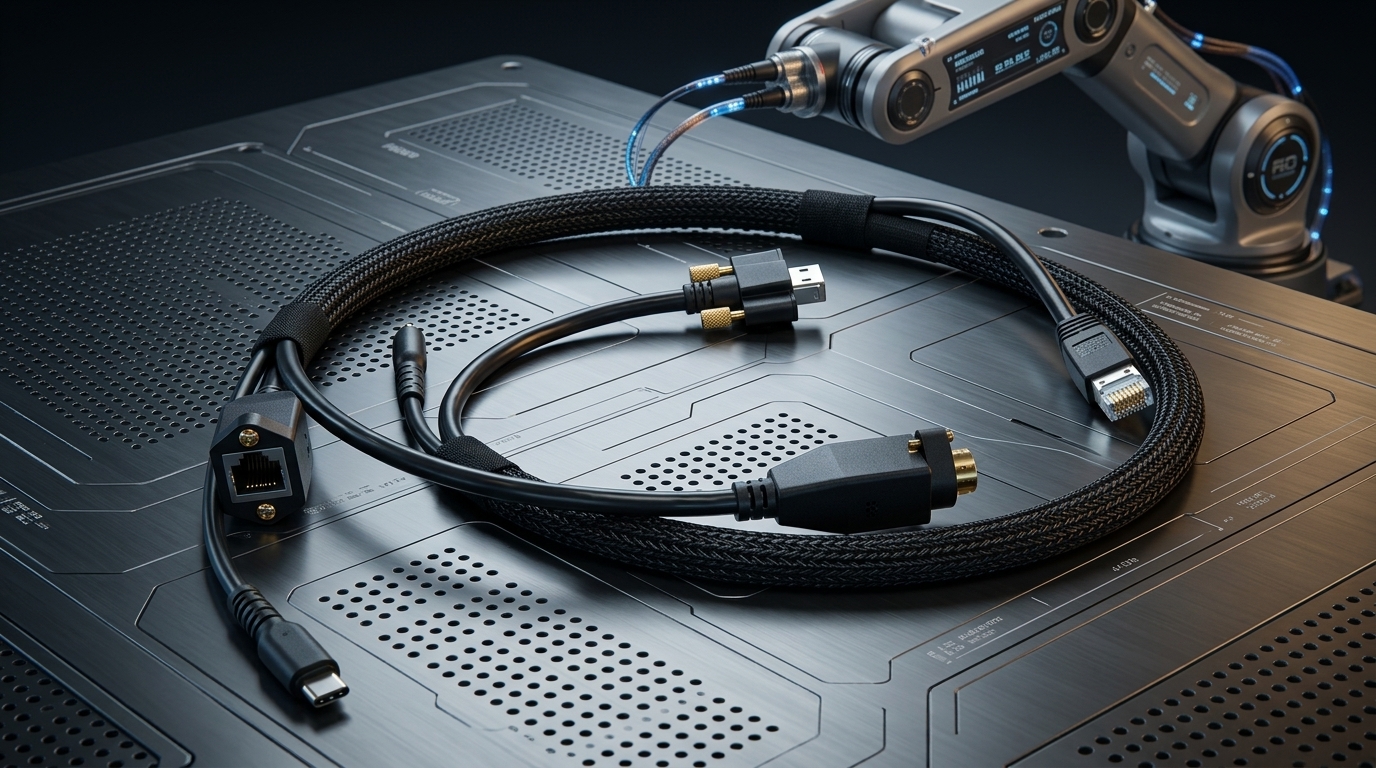
- Miniaturization and Hybridization: Combining power, signal, and data (like Industrial Ethernet, EtherCAT, or PROFINET) into a single composite cable to save space and reduce weight.
Application Scenarios
Robot communication harnesses are universally applied across various advanced manufacturing and automation sectors:
- Automotive Manufacturing: Spot welding and painting robots where cables face extreme heat, weld spatter, and continuous repetitive movement.
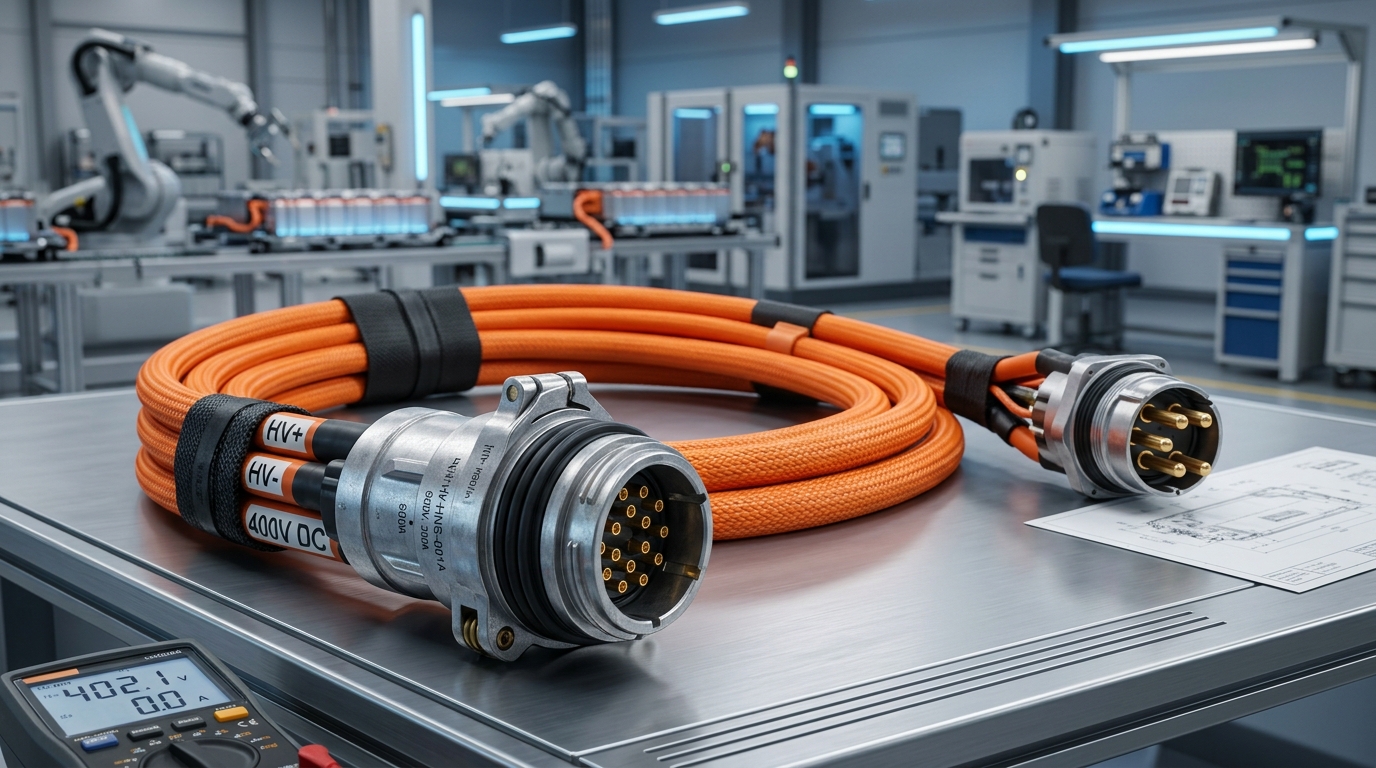
- Logistics & Warehousing: AGVs and AMRs (Autonomous Mobile Robots) requiring robust internal wiring that handles constant vibration and battery power delivery.
- Electronics Manufacturing (3C): SCARA and collaborative robots performing high-precision pick-and-place tasks, requiring zero-latency data transmission.
- Medical Robotics: Surgical robots requiring ultra-flexible, biocompatible, and completely sterile-capable cable assemblies for life-saving precision.
Core Functions and Working Principles
How exactly does this "neural network" operate?
The working principle relies on high-fidelity electrical signal conversion and transmission. When the robot's central processing unit issues a command, the signal travels through the communication harness via specific protocols (e.g., CAN bus, RS-485, EtherCAT) to the servo drives located at the robot's joints.
Simultaneously, absolute encoders and torque sensors located at the end-effectors send real-time positional and force feedback back to the controller through the same cable assembly. The shielding layer acts as a Faraday cage, blocking out the high-frequency noise generated by factory machinery, ensuring that the micro-volt level data signals arrive intact. This two-way, latency-free communication loop is what allows a robotic arm to thread a needle or precisely weld a car chassis.
Technical Specifications (Specifications Table)
As a professional B2B buyer or automation engineer, precise technical parameters are crucial. Below are the standard specifications we provide for our high-end robot communication harnesses:
| Parameter Category | Technical Details & Options |
|---|---|
| Wire Gauge Range | 32 AWG to 2 AWG (Customizable for signal & power hybrids) |
| Conductor Material | Extra-fine bare copper / Tinned stranded copper (Class 6 for high flex) |
| Insulation & Jacket | FEP, PTFE, TPE, TPU, PUR, PVC (Halogen-free options available) |
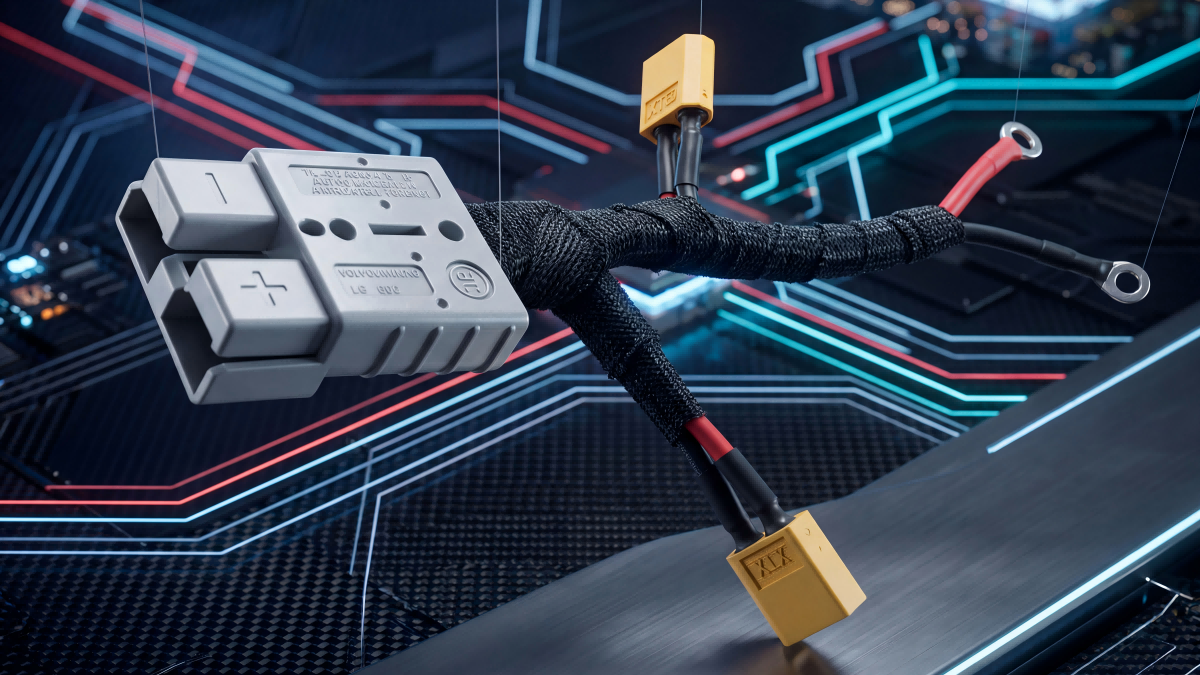
| Connector Types | M8, M12, M23, RJ45, D-Sub, USB, Push-Pull Circular, Heavy-duty Rectangular |
| Communication Protocols | EtherCAT, PROFINET, DeviceNet, CANopen, CC-Link, USB 3.0/Vision |
| Shielding Performance | >85% coverage tinned copper braid + Aluminum foil (Double shielding) |
| Flexing Endurance | Standard: 5 Million cycles / High-Flex: >10-20 Million cycles |
| Torsion Angle | Up to ±360°/meter |
| Temperature Range | -40°C to +90°C (Dynamic) / -50°C to +105°C (Static) |
| Voltage Rating | Signal: 30V / 300V ; Power: 600V / 1000V |
| Compliance Certifications | UL, CE, RoHS, REACH, ISO9001 |
Why Choose Us: Your Trusted Custom Robot Cable Assembly Partner
Navigating the complexities of robotic wiring requires more than just a supplier; it requires an engineering partner. As an industry-leading wire harness factory with over a decade of EMS (Electronic Manufacturing Services) experience, we solve the exact pain points automation engineers and procurement managers face daily.
- ISO9001 Certified Quality: Every communication harness undergoes rigorous electrical, tensile, and flex-testing before leaving our facility. We guarantee 100% continuity and zero defect rates, ensuring your robots never experience costly downtime.
- Expert Design Team: You don't just get a manufacturer; you get an engineering extension of your team. From blueprint to prototype, our in-house experts provide complete, one-stop OEM/ODM design solutions tailored to your specific axis movements and data protocols.
- Low MOQ & Agile Manufacturing: We understand that prototyping and specialized automation projects don't always require massive volumes. We proudly support Low Minimum Order Quantities (MOQ) and fast-turnaround prototyping to accelerate your time-to-market.
- Cost-Effective Customization: By optimizing the bill of materials (BOM) and utilizing our streamlined production lines, we provide world-class custom robot cable assemblies at highly competitive prices.
Ready to upgrade the "neural network" of your robotic systems? Don't let subpar wiring be the bottleneck of your automation equipment. Contact our engineering team today for a free technical consultation and a rapid quote on your custom wire harness project.