Robot Chassis Main Harness: The Ultimate Engineering Guide
Robot Chassis Main Harness: The Ultimate Engineering Guide
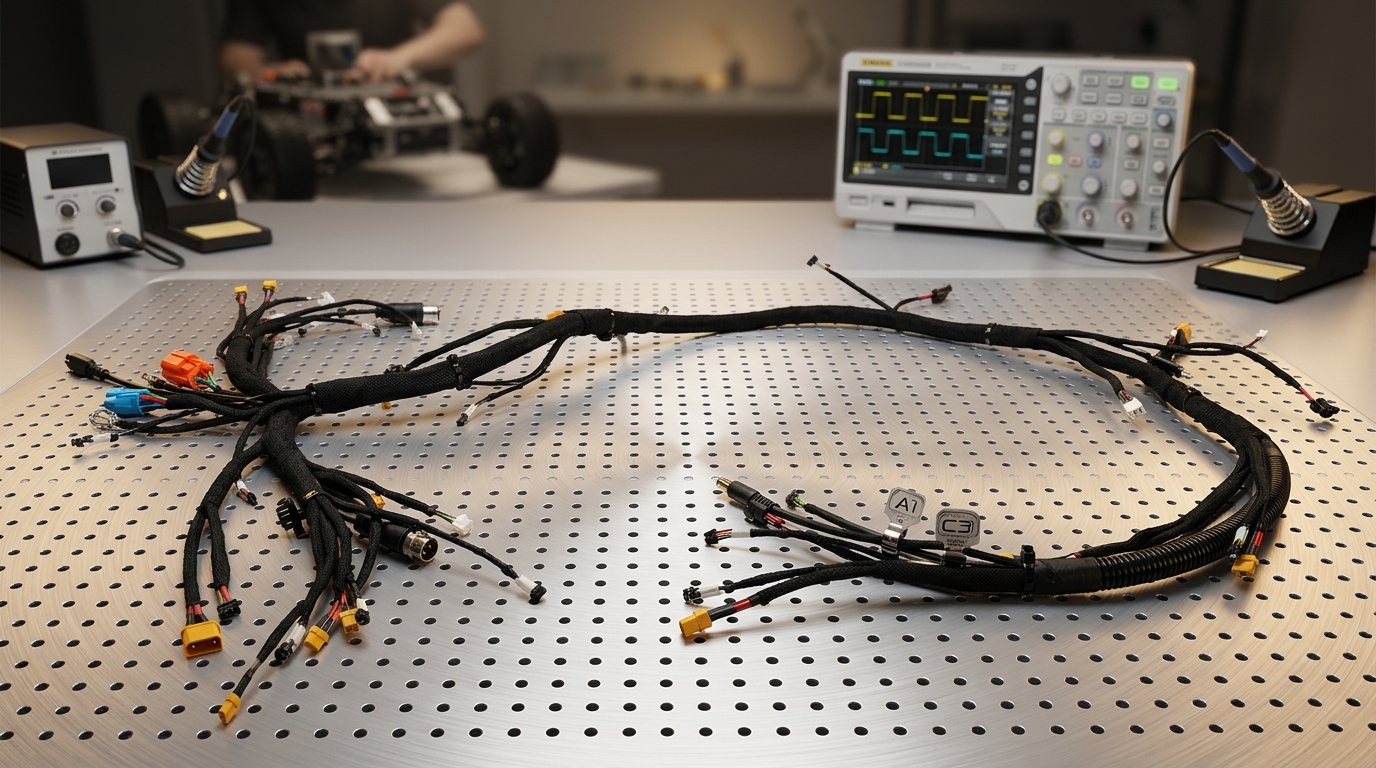
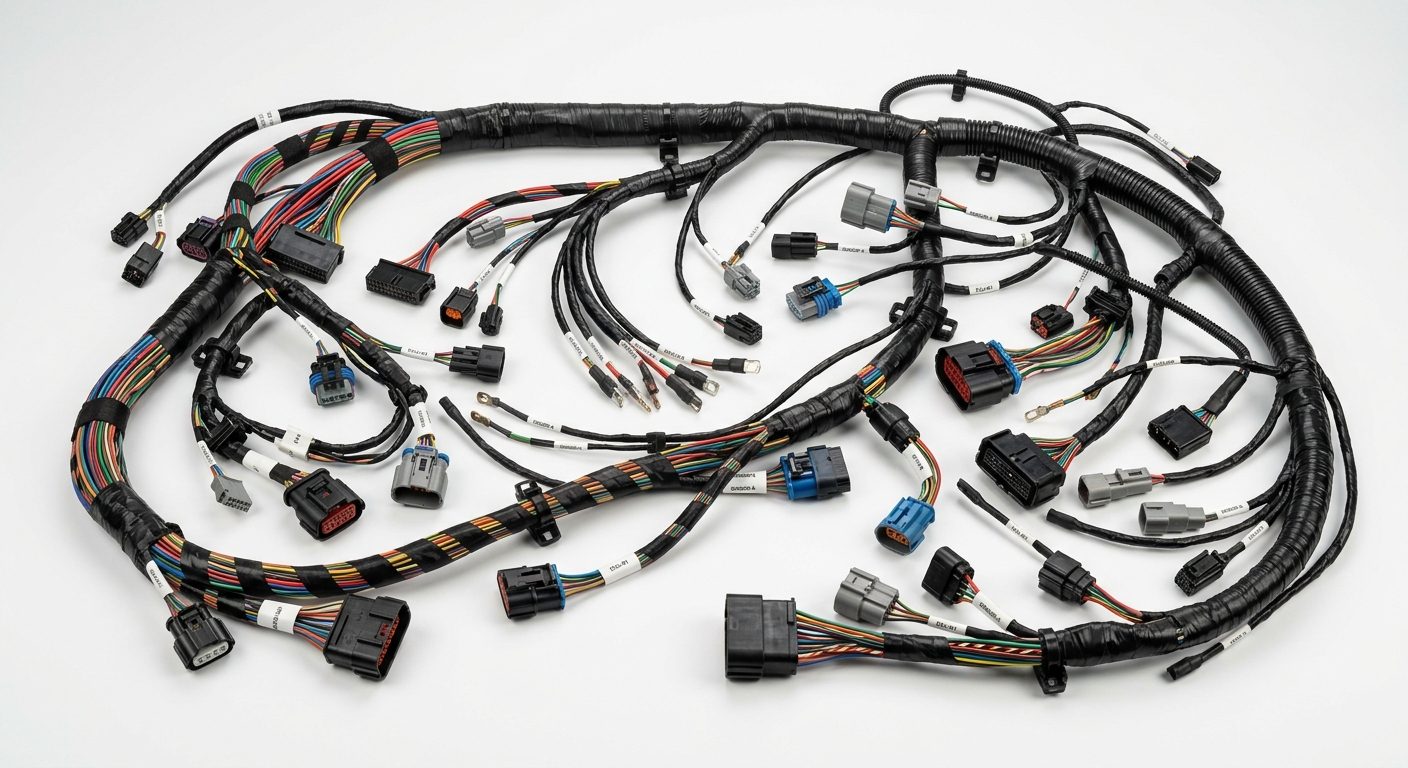
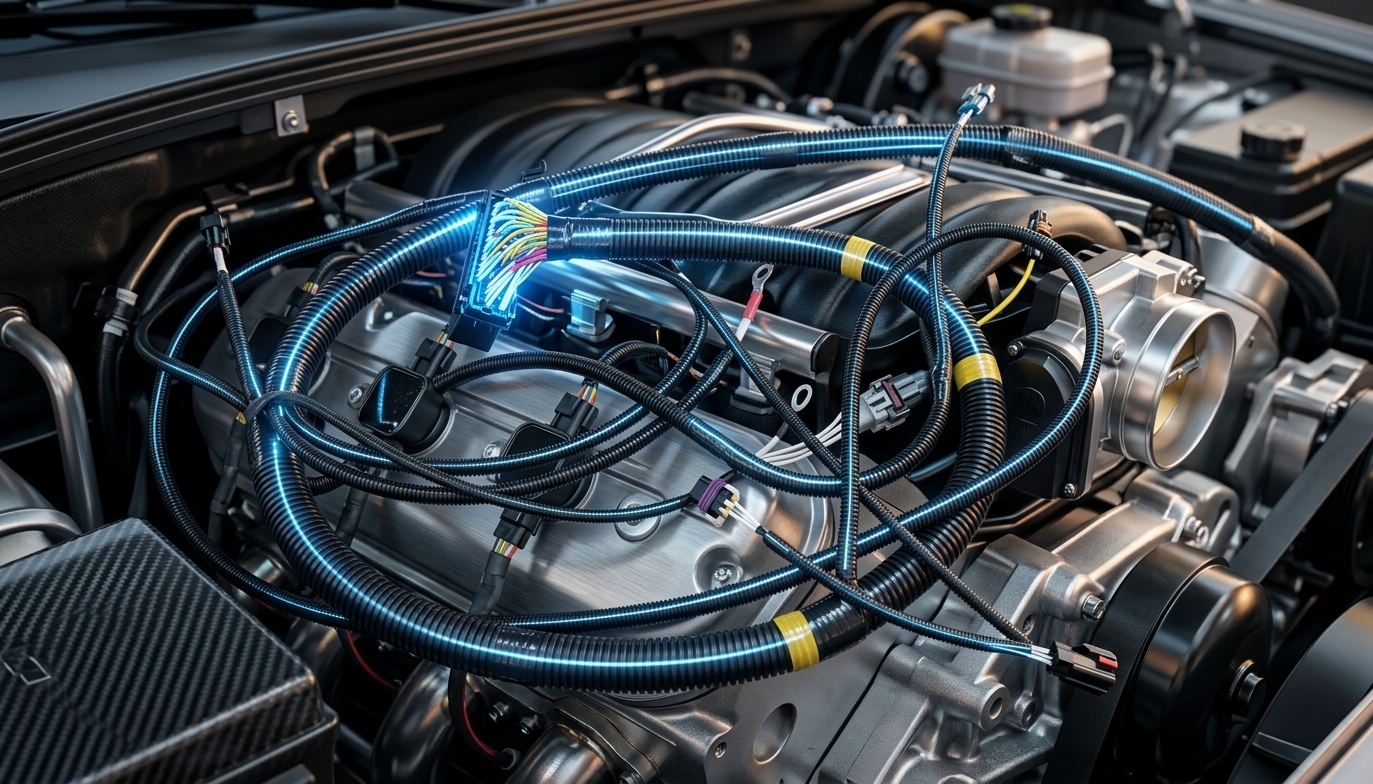
If the microprocessors and AI algorithms are the brain of an Autonomous Guided Vehicle (AGV), the robot chassis main harness acts as its vital nerves and blood vessels. In modern industrial automation, a mobile robot cannot function on isolated wires. The main harness is a highly engineered wiring assembly that integrates multiple independent cables into a unified, streamlined system. It is responsible for transmitting high-current power (the blood) and precise, real-time data signals (the nervous impulses) throughout the intricate ecosystem of the robot's base.
As intelligent warehousing and automated manufacturing surge, the demand for highly reliable, space-efficient, and durable wiring solutions has never been higher. This comprehensive guide breaks down the engineering intricacies of the chassis main harness and how to select the right connectivity solutions for your mobile robotics projects.
Classifications of Robot Chassis Main Harness
Depending on the specific architectural requirements of the AGV or Autonomous Mobile Robot (AMR), chassis harnesses are generally classified into four primary categories:
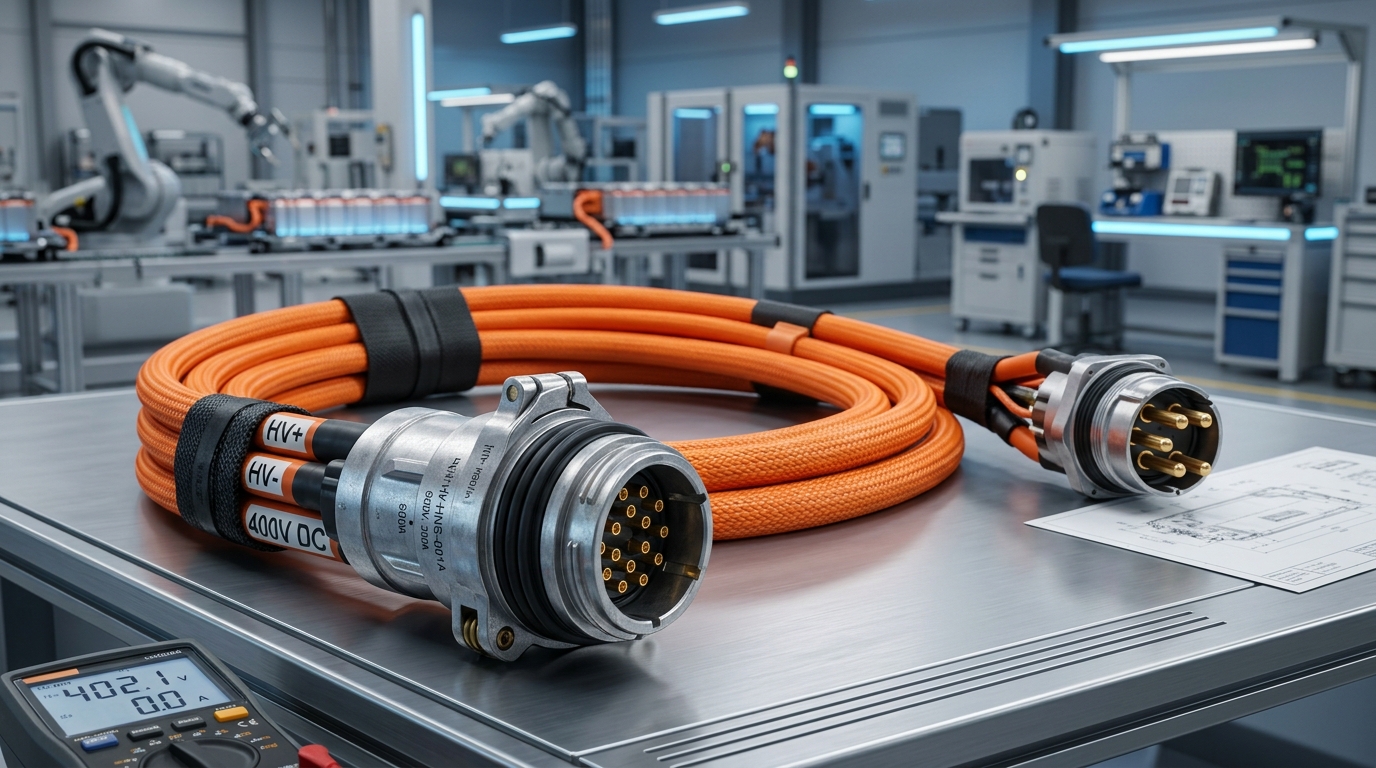
- Power Distribution Harnesses: Engineered with thick-gauge wires to handle high currents, these route electrical power from the Battery Management System (BMS) to the servo motors and drive controllers.
- Communication & Data Harnesses: Built to support high-speed protocols (Ethernet, CAN bus, RS485). These require rigorous EMI shielding to prevent signal degradation.
- Sensor & Control Harnesses: Designed to connect environmental perception modules, such as LiDAR, ultrasonic sensors, encoders, and limit switches, back to the main control unit (MCU).
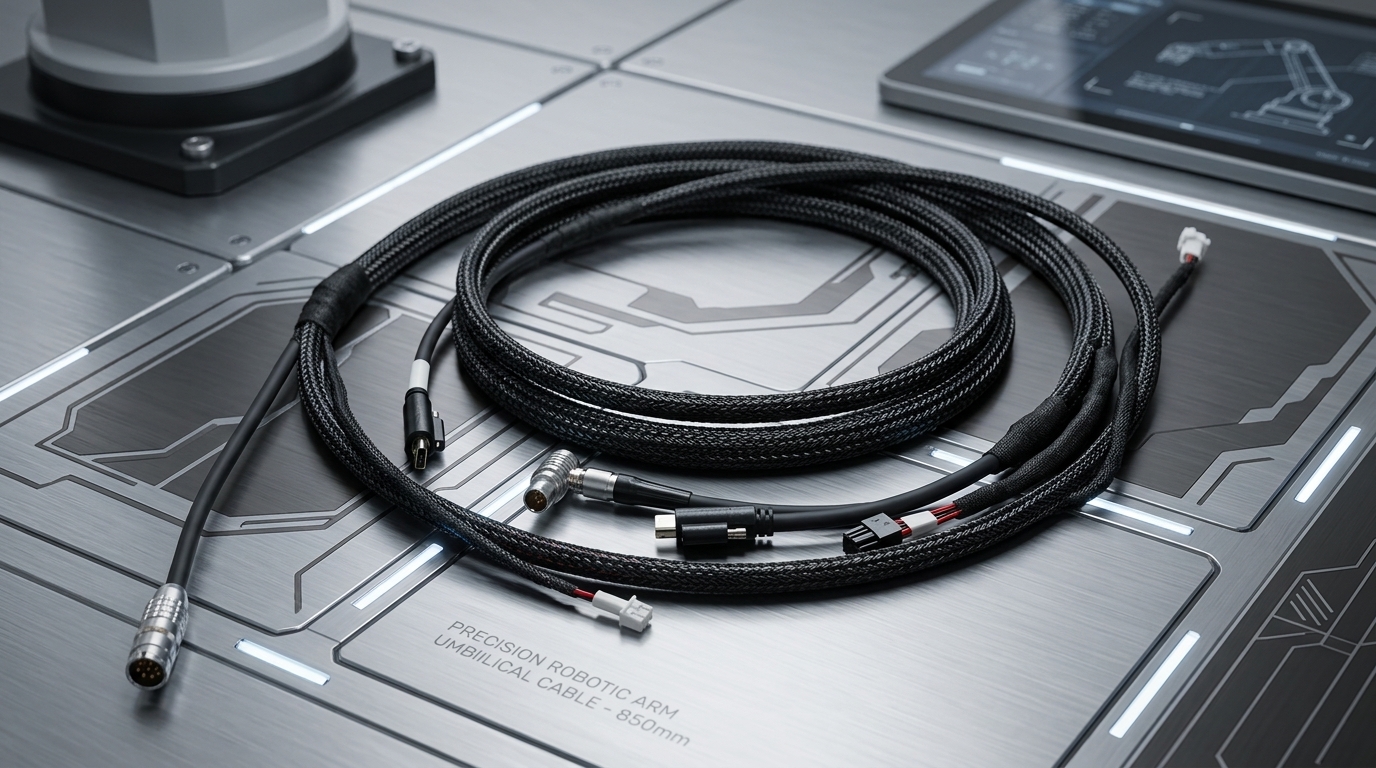
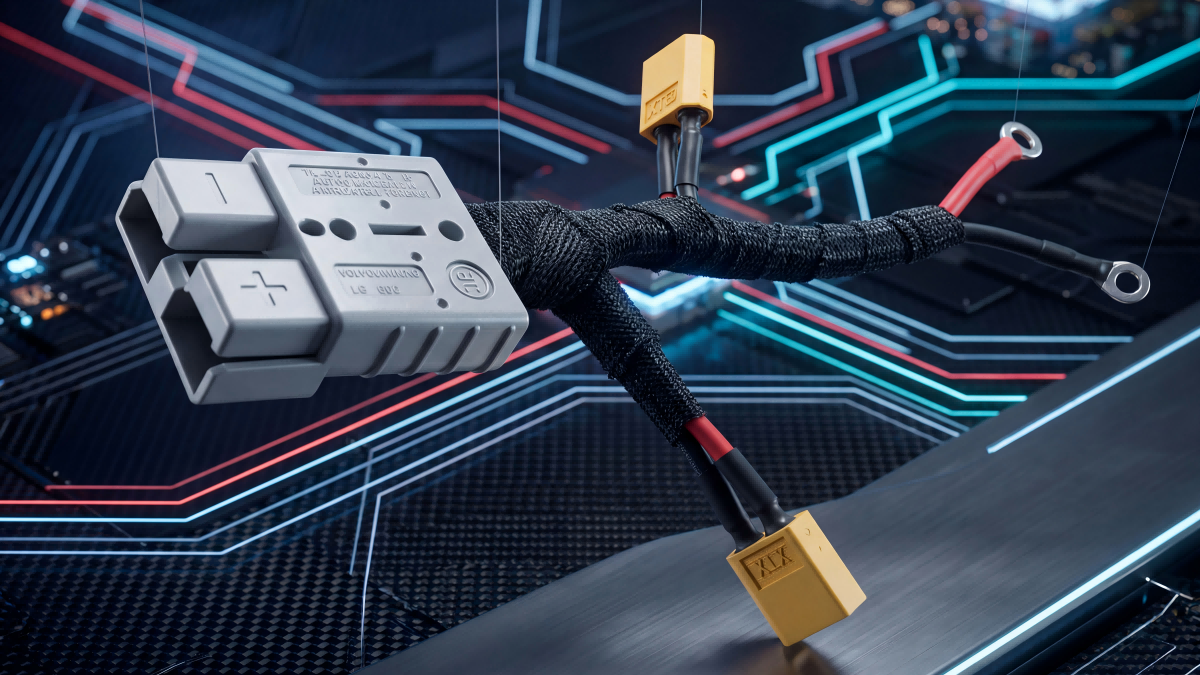
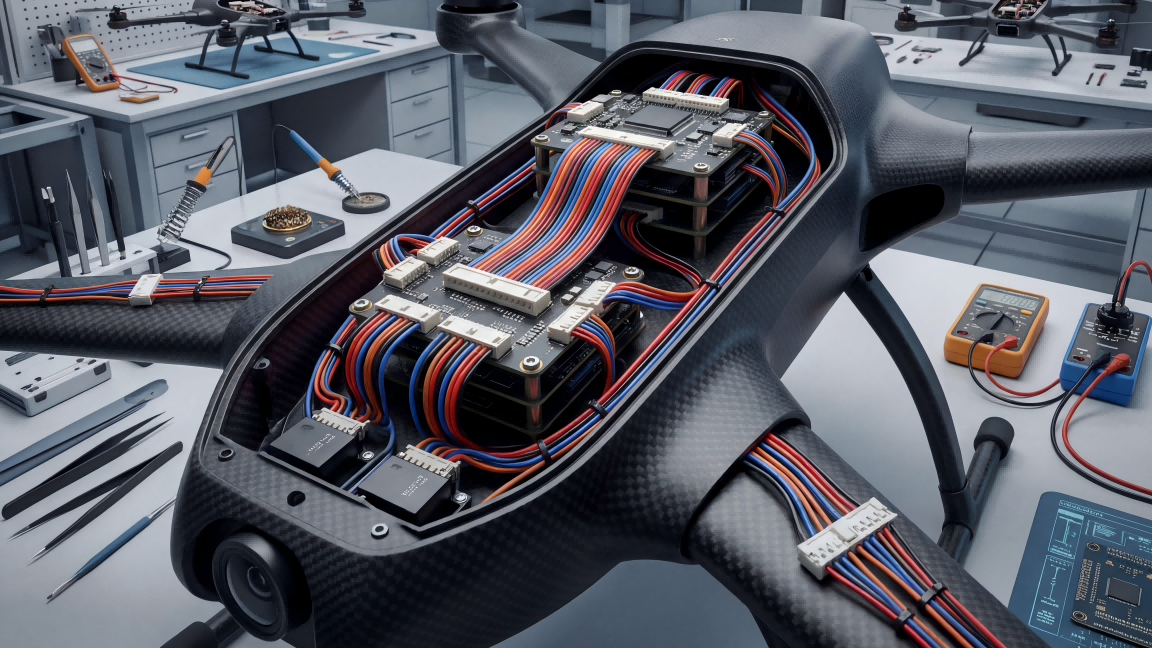
- Hybrid/Integrated Harnesses: A complex, all-in-one mobile robot chassis wiring assembly that combines power, signal, and data cables within a single heavily protected outer jacket, optimizing routing space inside compact chassis designs.
Key Features of an AGV Chassis Main Wiring Harness
To survive in harsh industrial environments, a professional-grade AGV chassis main wiring harness must possess several critical characteristics:
- Exceptional Flexibility and Flex Life: Mobile robots undergo constant dynamic movement. The harnesses are constructed using high-strand-count copper and specialized insulation to withstand millions of bending cycles without fatigue.
- Robust EMI/RFI Shielding: Factories are filled with electromagnetic interference. Advanced braided shielding and twisted-pair configurations ensure zero packet loss during critical navigation data transmission.
- Extreme Environmental Resistance: Industrial harnesses utilize heavy-duty outer sheaths (like PUR or TPE) that provide excellent resistance against abrasion, industrial oils, chemicals, and extreme temperature fluctuations.
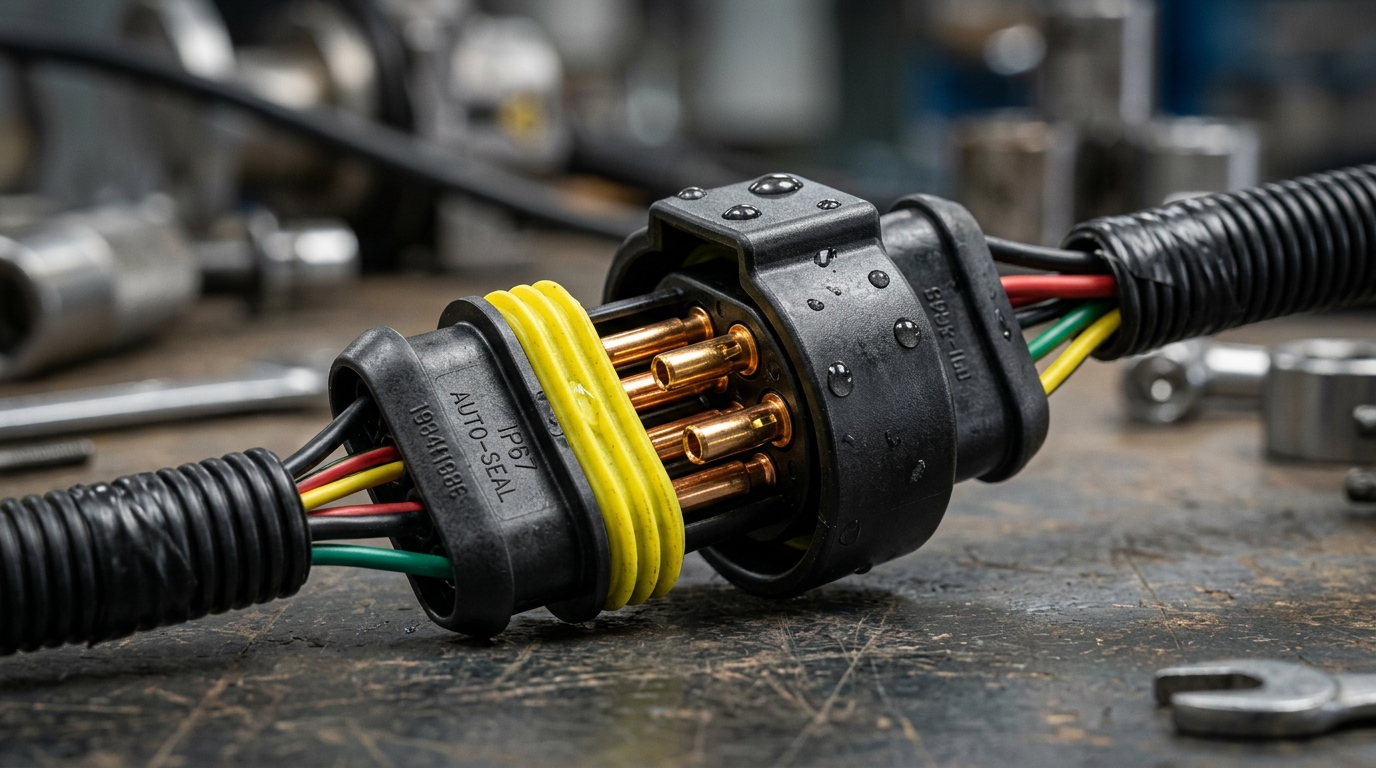
- Anti-Vibration Connectivity: To prevent accidental disconnections caused by uneven warehouse floors, these harnesses employ secure locking mechanisms, specialized terminals, and robust strain relief designs.
Working Principles in Mobile Robotics
The core principle of a robot chassis main harness lies in centralized point-to-point integration. Rather than having a chaotic web of point-to-point wires, the engineered harness provides a pre-planned, structured electrical pathway.
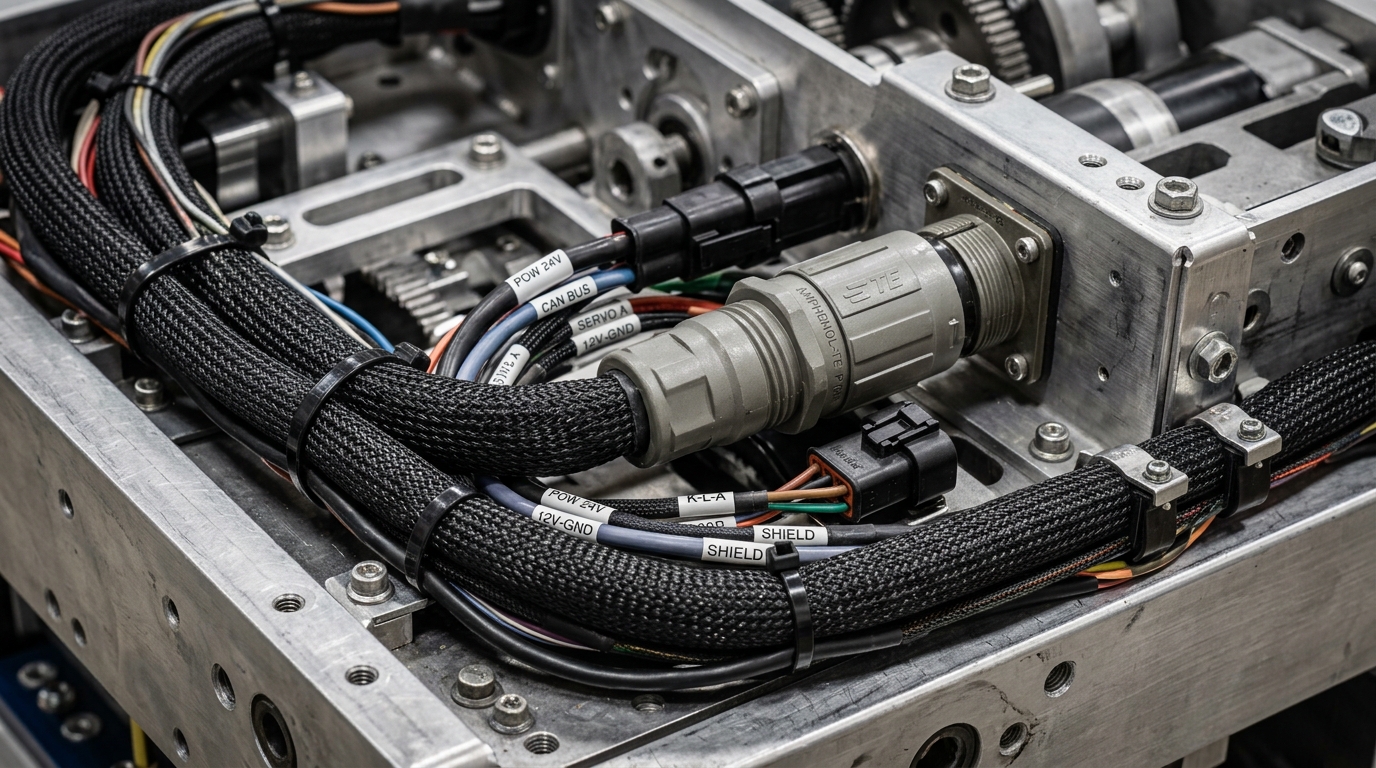
When the AGV receives a movement command, the harness instantly facilitates the power surge from the battery to the wheel actuators with minimal voltage drop. Simultaneously, it transmits continuous closed-loop feedback from the wheel encoders and safety lasers back to the processor. By physically bundling these pathways, the harness minimizes crosstalk, reduces electromagnetic interference, and ensures that both low-voltage signals and high-current power can coexist safely within the confined space of the robot's metal chassis.
Technical Specifications
The reliability of a mobile robot chassis wiring assembly is heavily dependent on its precise engineering specifications. Below is a standard specification matrix for premium AGV chassis harnesses:
| Parameter | Specification / Range | Application Notes |
|---|---|---|
| Wire Gauge (AWG) | 2 AWG - 28 AWG | 2-8 AWG for main power; 22-28 AWG for sensors and data. |
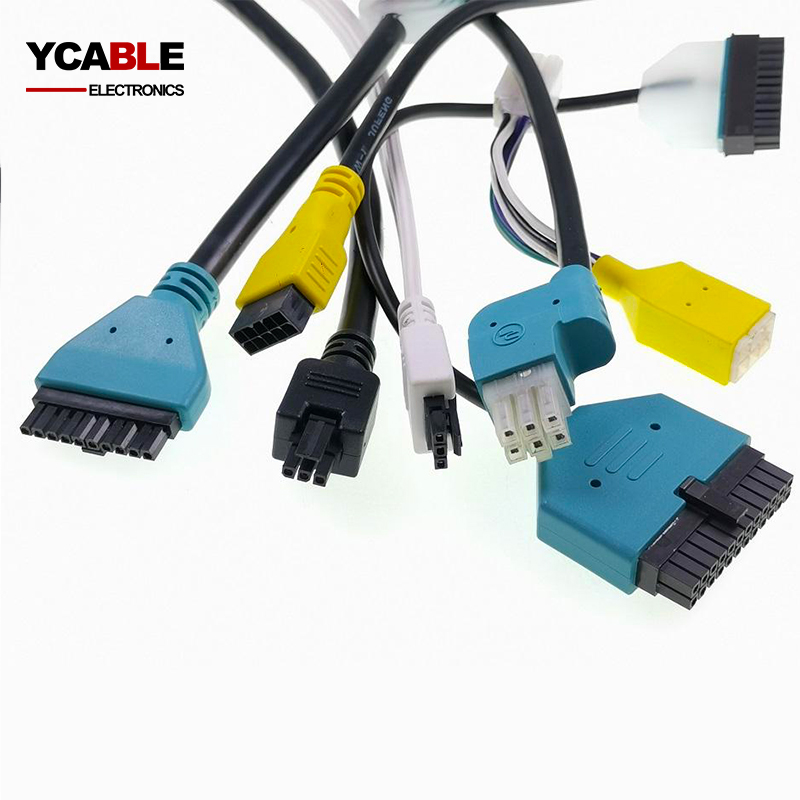
| Connector Types | TE, Molex, JST, Amphenol, Deutsch | Industrial-grade locked connectors with IP67/IP68 options. |
| Shielding Material | Tinned Copper Braid & Aluminum Foil | Dual-layer shielding providing >85% coverage for maximum EMI protection. |
| Voltage Rating | 300V / 600V / 1000V DC | Tailored to match the AGV's specific battery and motor architecture. |
| Temperature Range | -40°C to +105°C (up to +125°C) | Ensures stable operation in cold storage or high-heat manufacturing plants. |
| Insulation / Jacket | PVC, PUR, TPE, Teflon (PTFE) | PUR/TPE highly recommended for dynamic drag chain applications. |
| Minimum Bending Radius | 5x to 10x Cable Diameter | Optimized for tight routing corners inside compact mobile robot bases. |
Typical Usage Scenarios and Applications
Our engineered wire harness assemblies are the invisible driving force behind various automated systems:
- Warehouse Logistics AGVs: Supplying stable power and data to automated guided carts (AGCs) and sorting robots operating 24/7 in fulfillment centers.
- Heavy-Duty Industrial AMRs: Providing high-current power delivery for robots transporting multi-ton automotive chassis or aerospace components across factory floors.
- Outdoor Patrol & Inspection Robots: Utilizing IP68 waterproof and UV-resistant harnesses to ensure reliability in unpredictable weather conditions.
- Automated Forklifts: Connecting the complex mast-lifting hydraulic sensors with the main drive base, requiring extreme durability against continuous mechanical stress.
Partner with a Premier Wire Harness Manufacturing Expert
Developing a reliable robot chassis main harness requires more than just assembling wires; it demands deep engineering expertise and uncompromising quality control. As a leading manufacturer specializing in industrial connectivity, we provide an end-to-end, one-stop solution for your mobile robotics projects.
- Professional Design Team: Our seasoned electrical engineers work directly with your R&D department to design optimized routing layouts, select the best AWG and terminals, and solve complex EMI challenges before manufacturing begins.
- ISO9001 Certified Quality: Every mobile robot chassis wiring assembly undergoes rigorous testing, including continuity, high-voltage, and pull-force tests, ensuring 100% compliance with international quality management standards.
- Customization & Small Batch Support: We understand that robotics innovation requires agility. We proudly support custom-tailored designs and offer flexible low-volume, high-mix production (small batch manufacturing) to support your prototyping and scaling phases without massive minimum order quantities (MOQ).
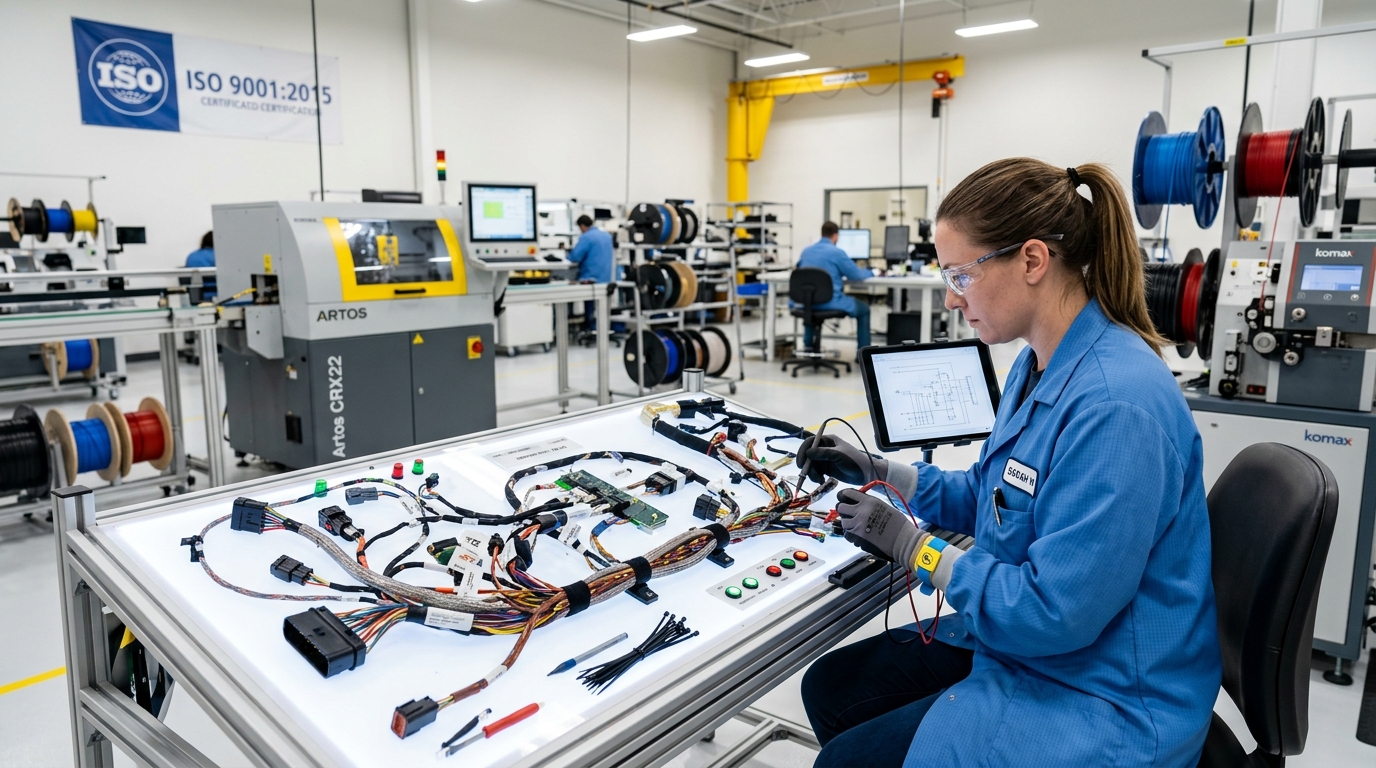
Don't let subpar wiring compromise your robot's performance. Contact our engineering team today to discuss your AGV chassis main wiring harness requirements and discover how our custom manufacturing solutions can accelerate your time to market.