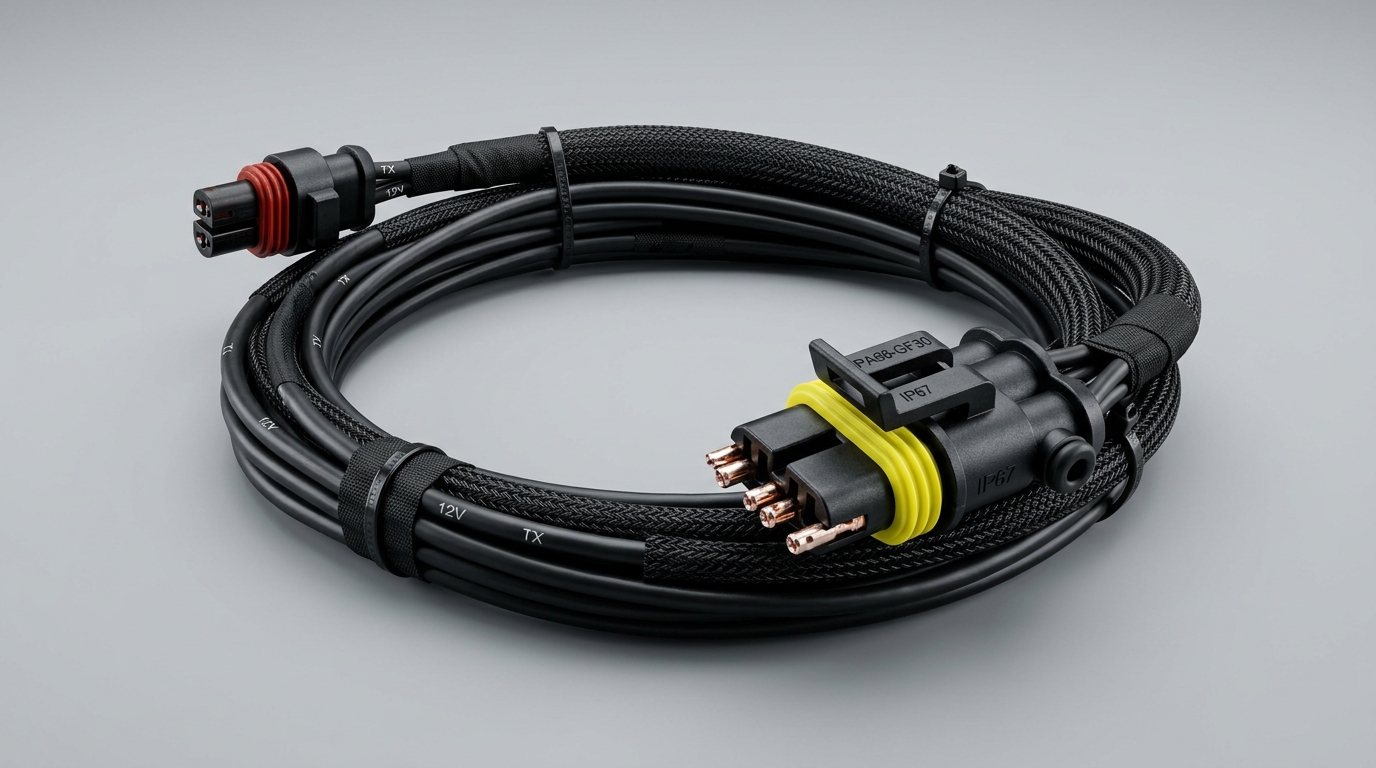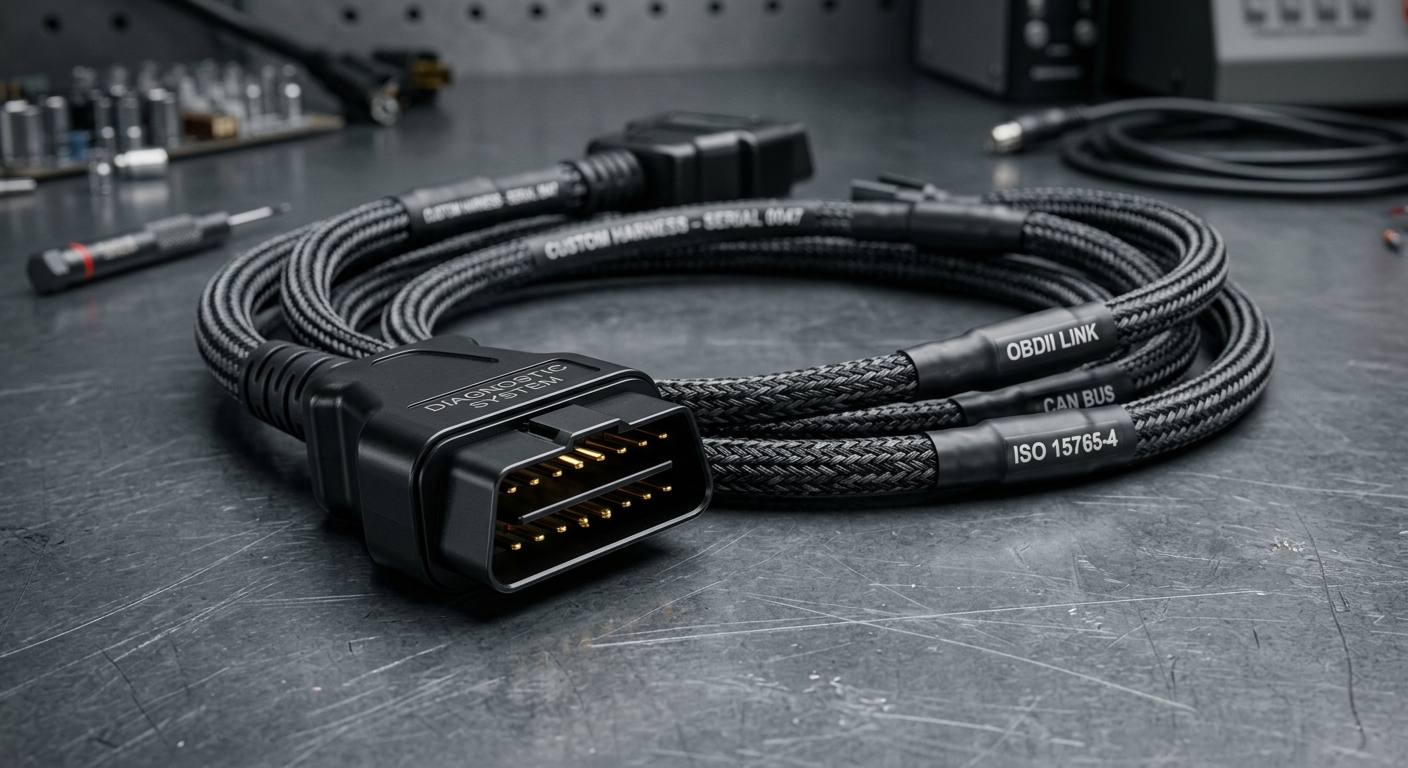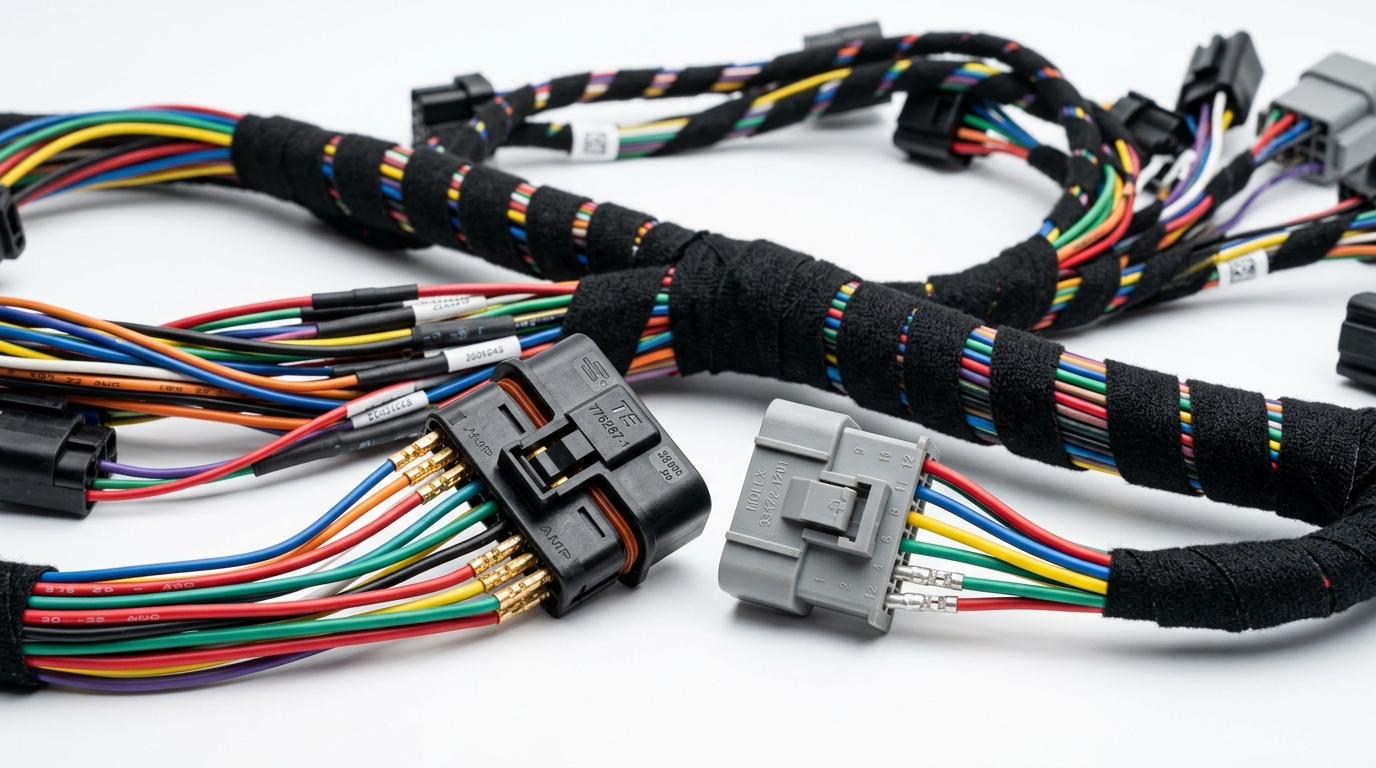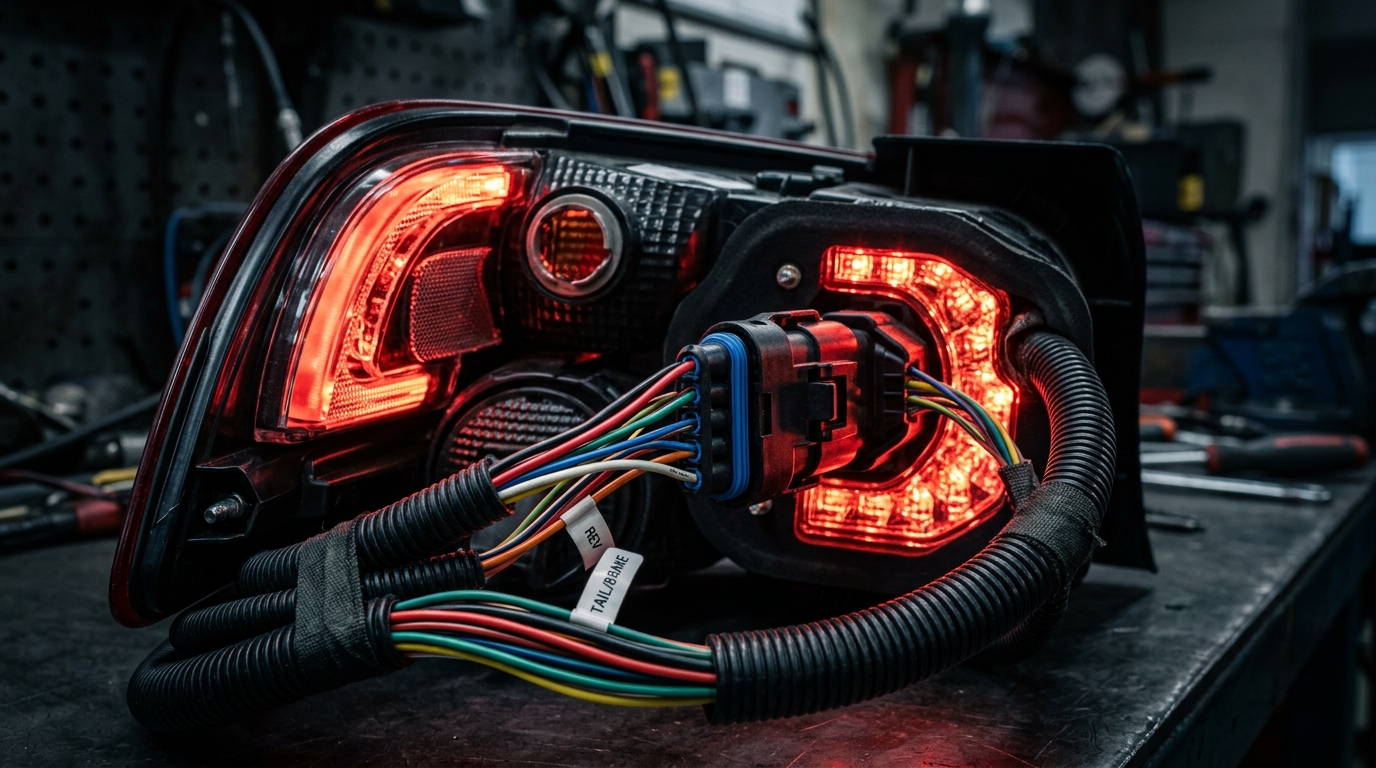
Custom Electric Vehicle Main Wiring Harness Manufacturer
Electric Vehicle Main Wiring Harness: The Ultimate Guide from a Custom Manufacturer
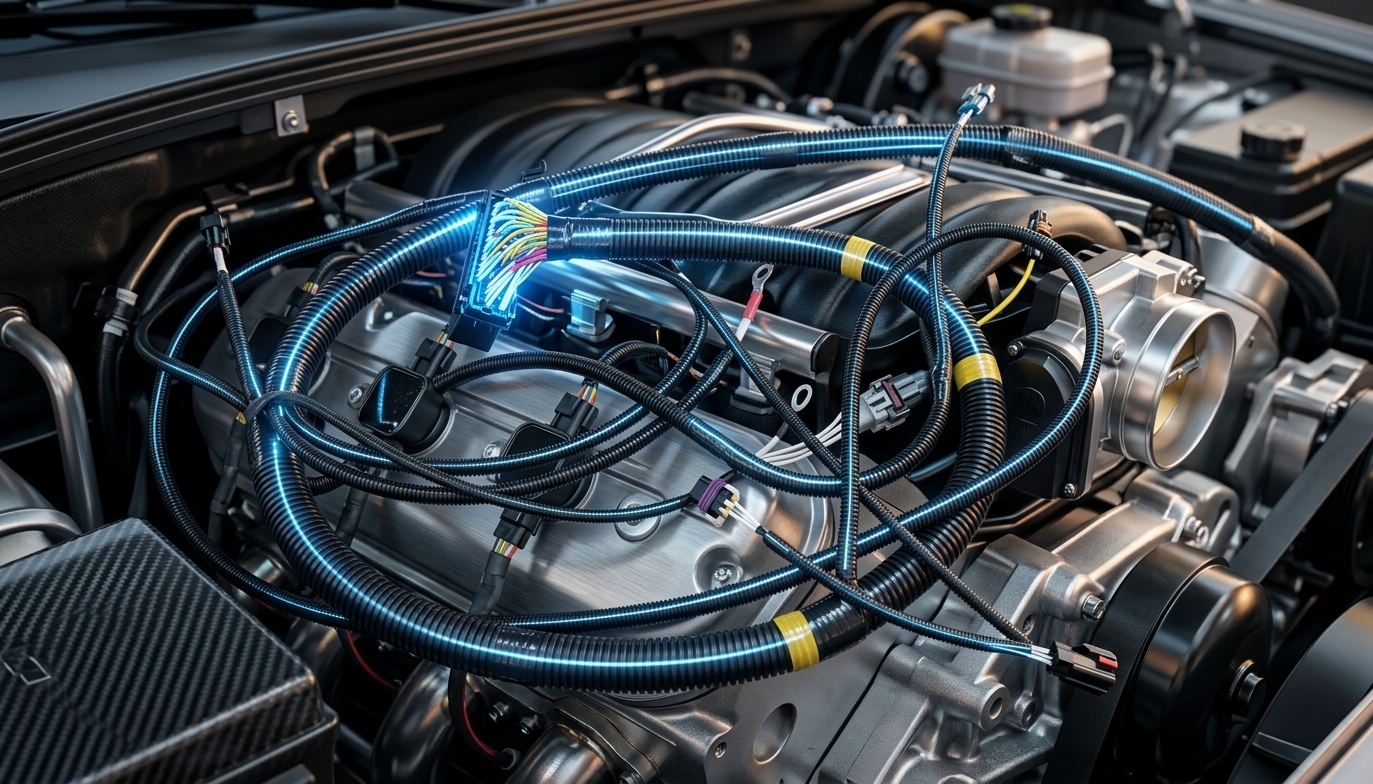
In the complex electrical and electronic architecture (EEA) of modern e-mobility, the electric vehicle main wiring harness acts as both the central nervous system and the primary blood vessels of the car. It is fundamentally responsible for safely transmitting high-voltage electrical power and critical control signals between the power battery, the motor control unit (MCU), and various high-voltage accessories.
For global Tier 1/Tier 2 suppliers and EV manufacturers, sourcing a highly reliable EV main wiring harness is the ultimate key to guaranteeing overall vehicle safety, range efficiency, and system stability. As a premier custom EV wiring harness manufacturer, we engineered this comprehensive guide to help automotive R&D engineers and purchasing managers understand the technical intricacies of the new energy vehicle main wiring assembly and how to choose the right manufacturing partner for your next project.
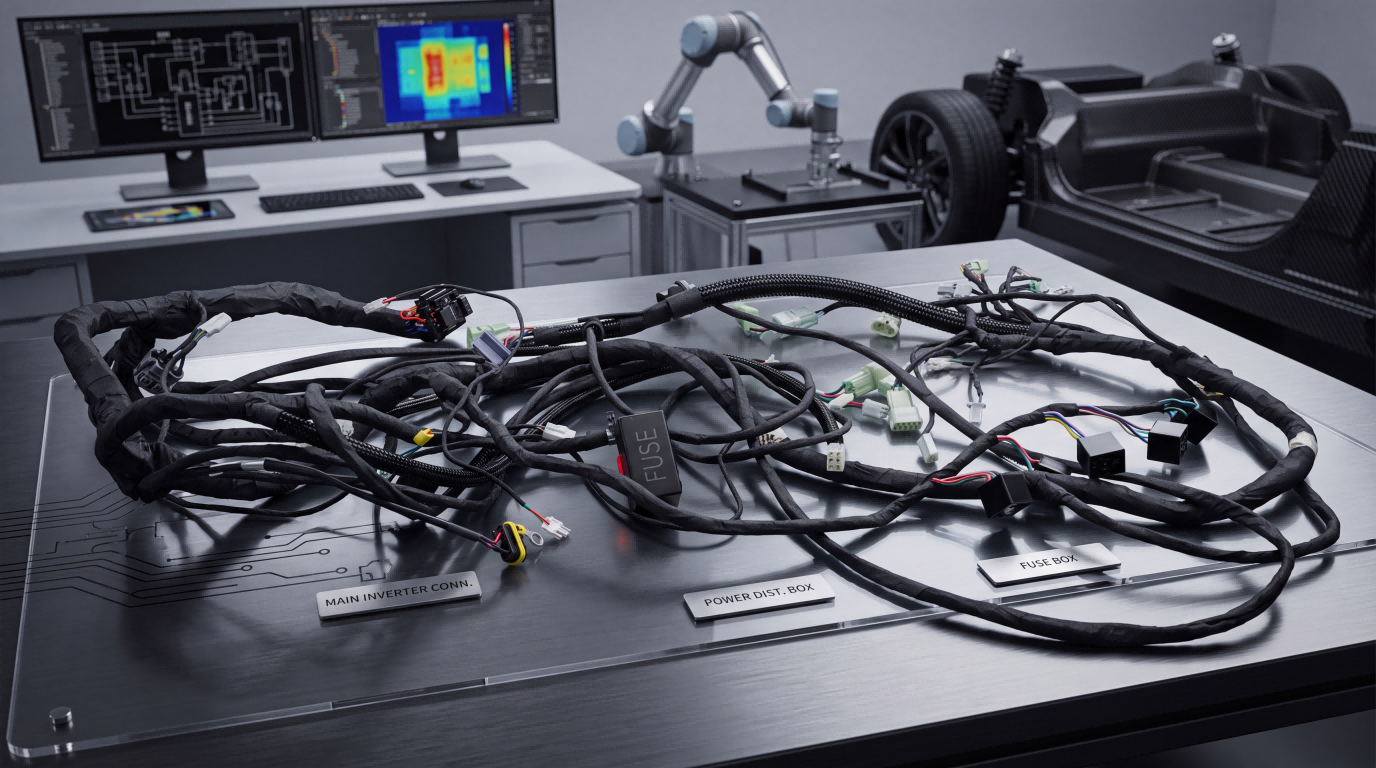
The 5 Core Components of an EV Main Wiring Assembly
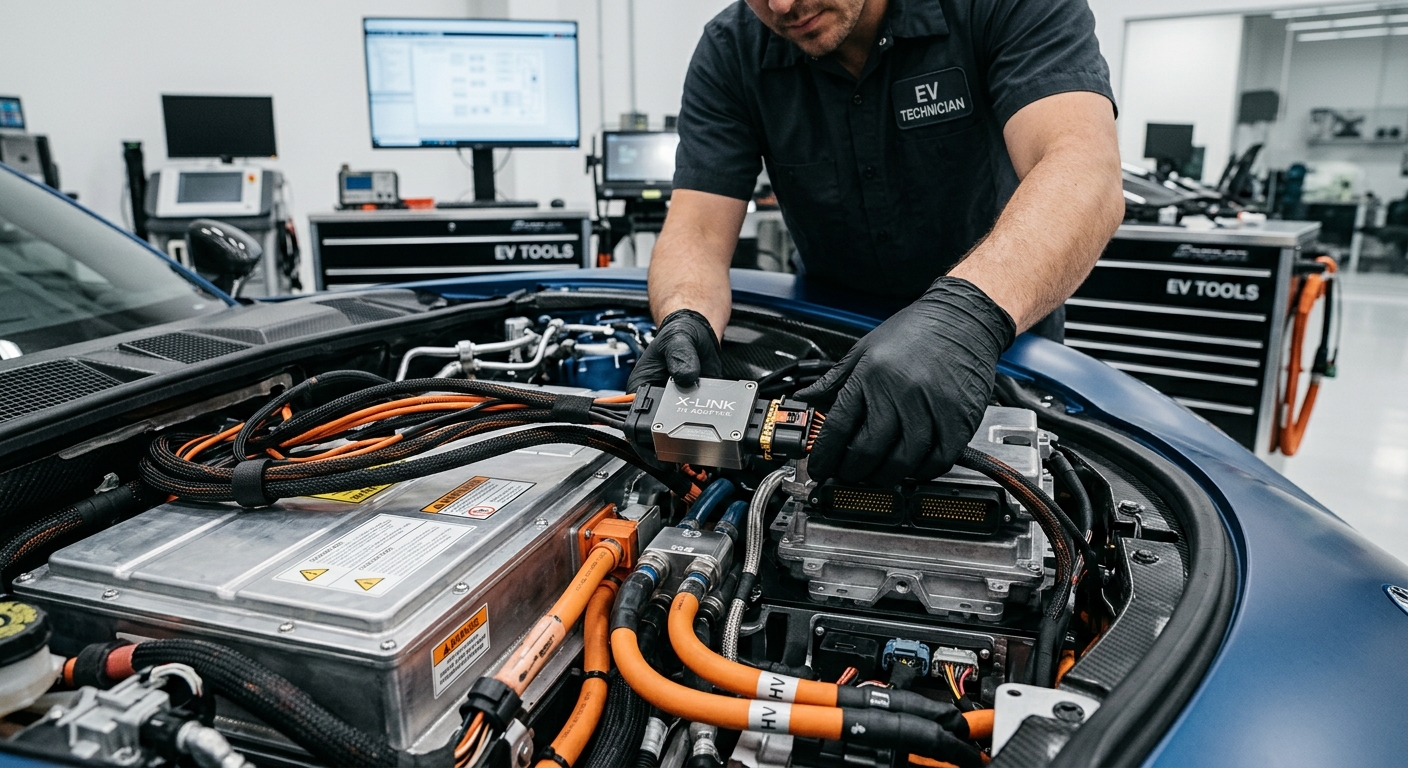
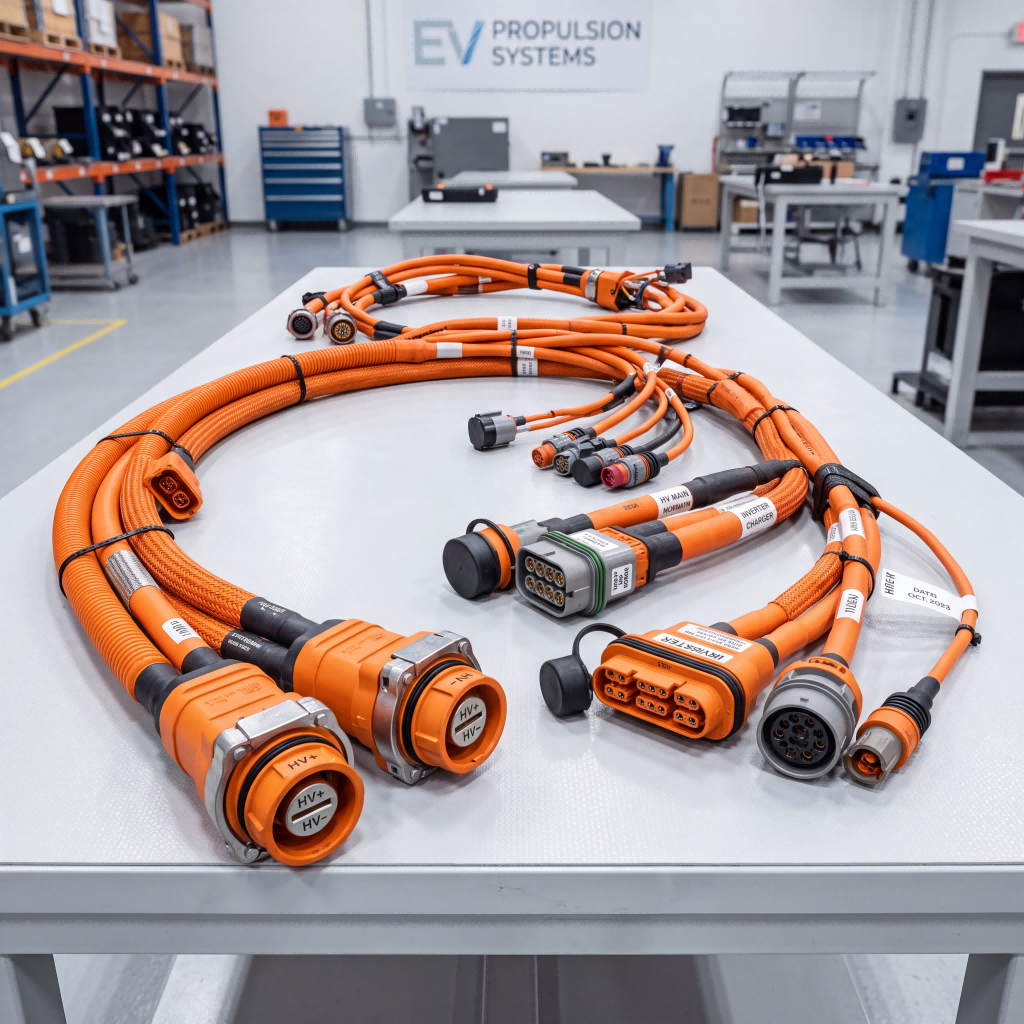
Unlike traditional internal combustion engine (ICE) vehicles, the electrical demands of an EV require an advanced EV high voltage main power harness capable of handling extreme currents and voltages. A complete system can be systematically categorized into five primary transmission links:
High-Voltage (HV) Power Battery Cables
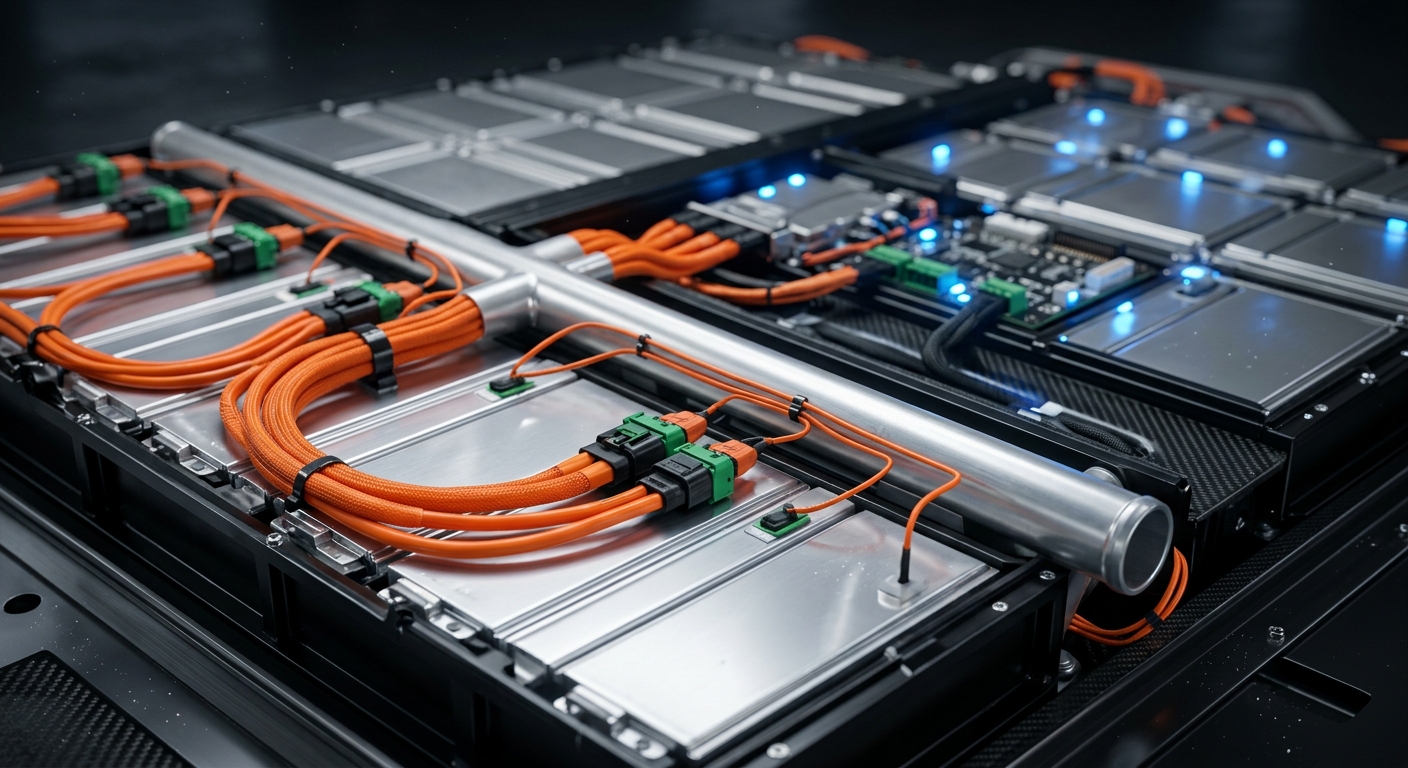
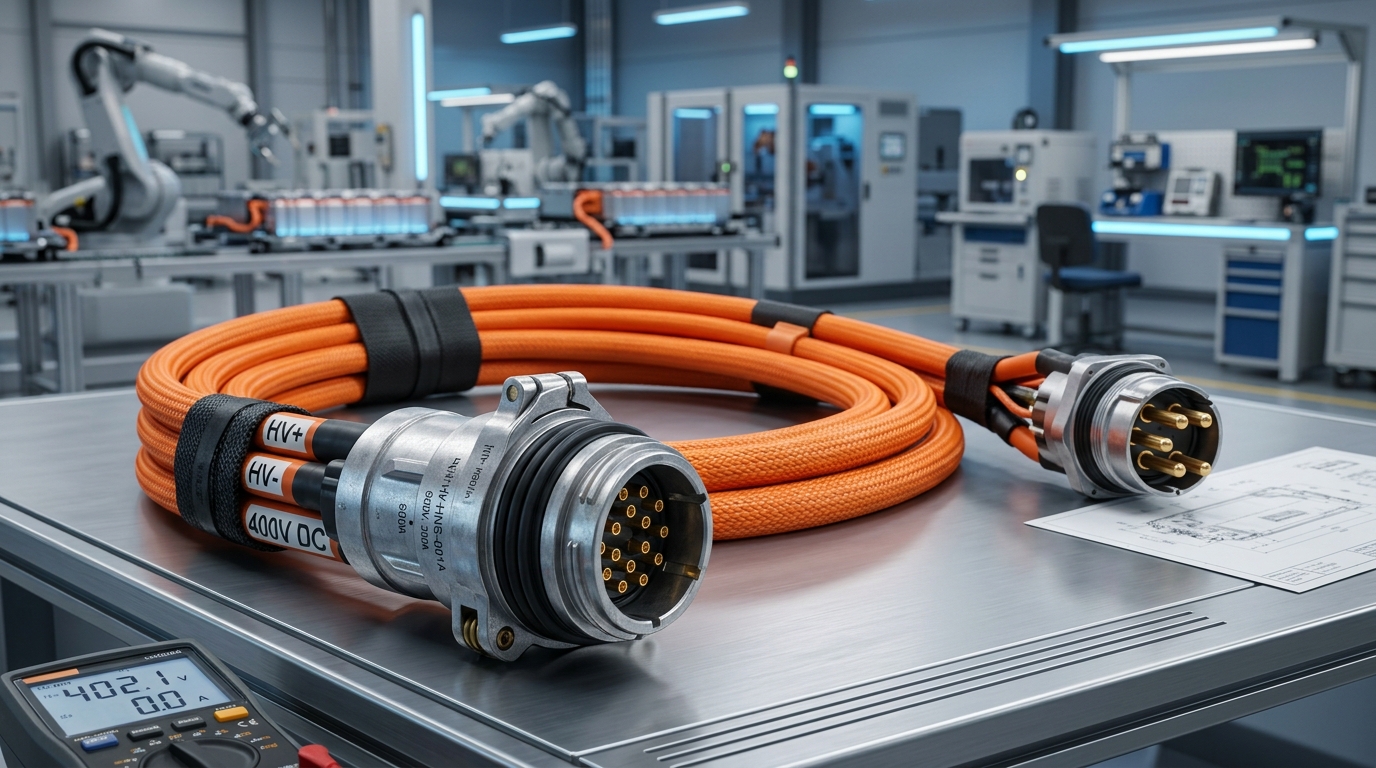
Often considered the main artery of the vehicle, these heavy-gauge cables connect the battery pack to the Power Distribution Unit (PDU). They are designed to carry massive direct current (DC) loads, requiring superior thermal management and shielding to prevent electromagnetic interference (EMI).
Motor Control Unit (MCU) Cables
These harnesses link the PDU or battery directly to the inverter and electric motor. Because the motor demands rapid fluctuations in three-phase alternating current (AC) power, this section of the EV main wiring harness must exhibit exceptional flexibility and resistance to high-frequency vibrations.
DC Fast Charging Harnesses
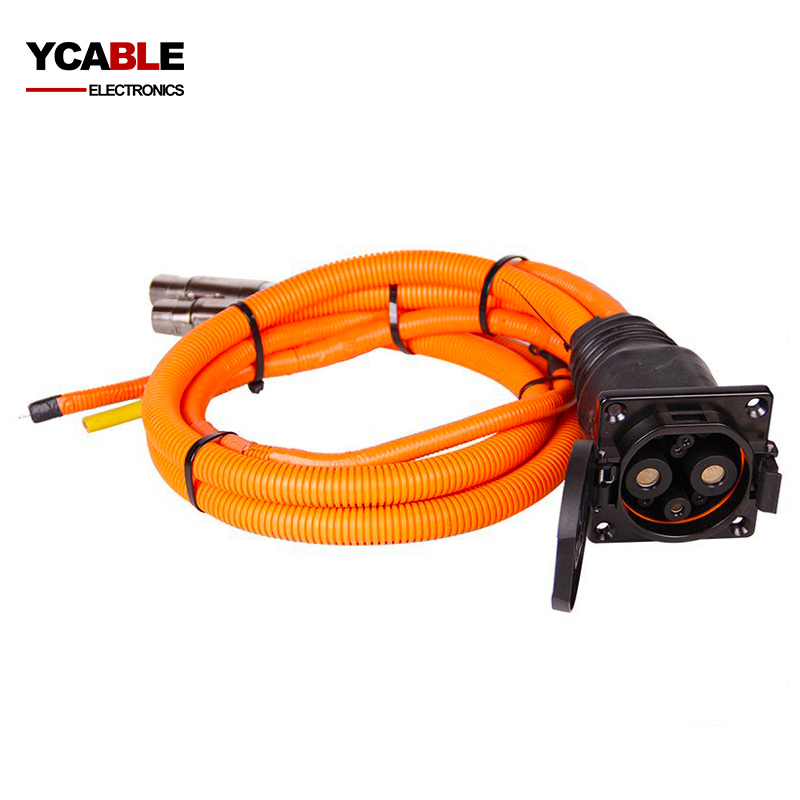
Designed to connect the external charging port to the vehicle's battery system, fast-charging cables must safely channel up to 400A or more. They are engineered with strict temperature monitoring sensors and advanced cooling structural designs to prevent overheating during rapid energy transfer.
AC Slow Charging Harnesses
Connecting the onboard charger (OBC) to the standard AC charging port, this sub-assembly handles lower power inputs (e.g., 7kW to 22kW) for overnight or residential charging, focusing heavily on long-term durability and weatherproofing.
High-Voltage Accessory Harnesses
This intricate network routes power from the PDU to auxiliary systems, including the positive temperature coefficient (PTC) heater, electric air conditioning (A/C) compressor, and the DC/DC converter. It ensures that comfort and utility systems operate efficiently without draining excessive power.
Working Principles and Engineered Features
From an engineering perspective, the new energy vehicle main wiring assembly operates on a principle of highly secure, interference-free power distribution. When the driver accelerates, signals are sent to the MCU, which dynamically pulls high-voltage DC from the battery via the EV high voltage main power harness, converts it to AC, and drives the motor.
To survive in this harsh automotive environment, a reliable harness must feature:
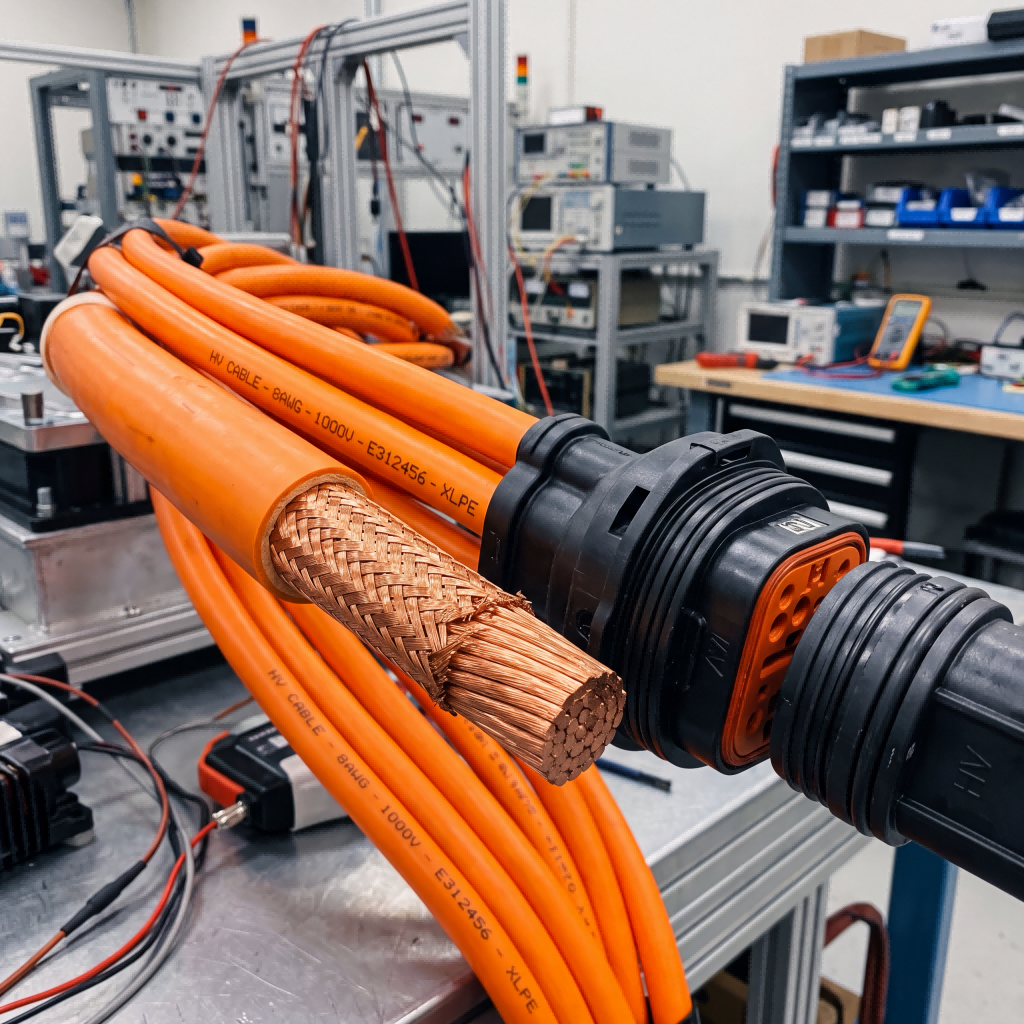
- Extreme Voltage and Temperature Resistance: Standard operating voltages range from 600V to 1000V DC. The cables utilize cross-linked polyethylene (XLPE) or silicone insulation to withstand temperatures from -40°C to +125°C (or up to 150°C for peak loads).
- Advanced EMI/RFI Shielding: Braided tinned copper shielding and aluminum foil wrap are heavily utilized to prevent the high-voltage system from interfering with low-voltage infotainment and autonomous driving sensors.
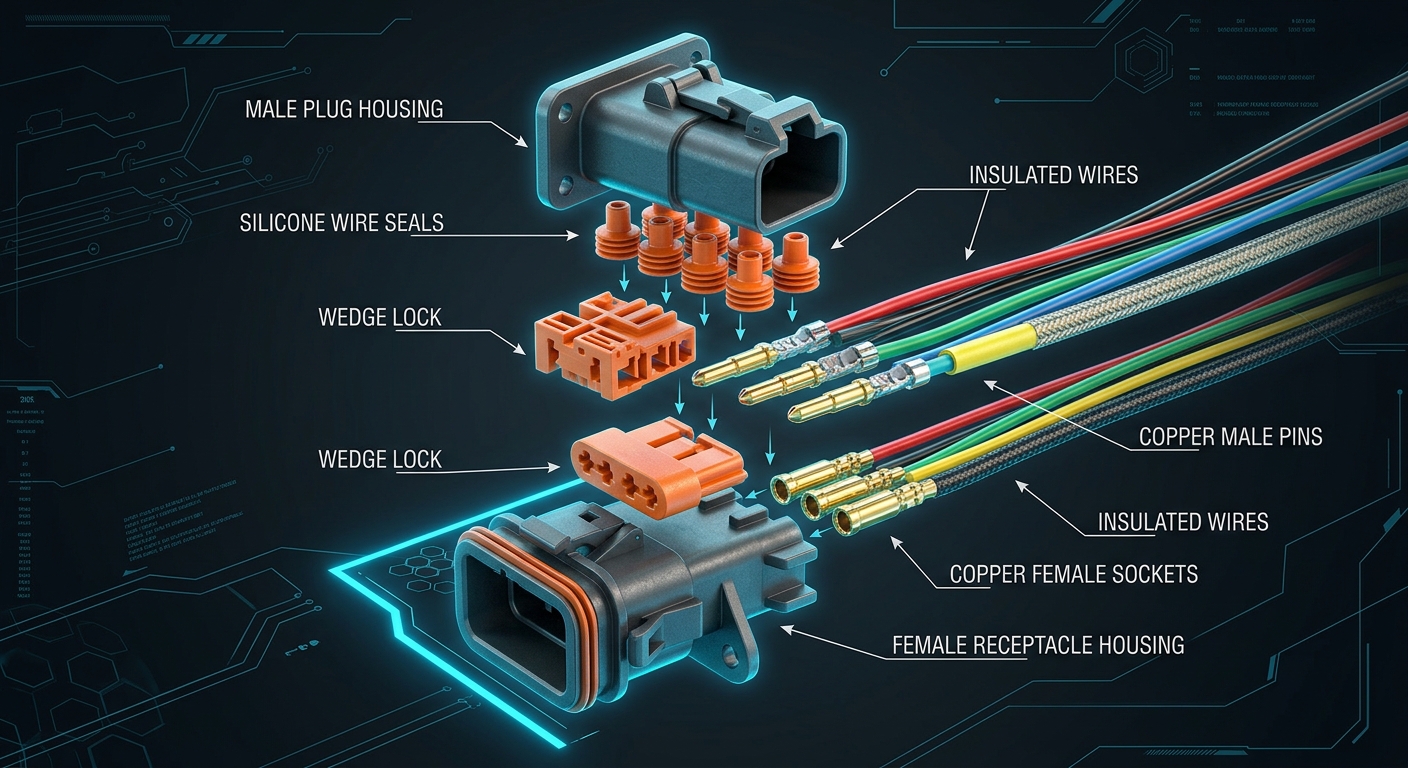
- Uncompromising Safety Standards: Equipped with High Voltage Interlock Loop (HVIL) technology. If a connector is disconnected while live, the system instantly cuts power to prevent fatal electric shocks.
Technical Specifications: New Energy Vehicle Main Wiring Assembly
As a leading automotive high voltage cable assembly supplier, we ensure every product strictly adheres to international automotive standards (such as ISO-19642, LV216, and USCAR-2). Below are the standard technical specifications we provide for our OEM/ODM clients:
Table 1: High-Voltage Cable Specifications
| Specification Item | Parameter Range / Description |
|---|---|
| Conductor Material | High-purity Oxygen-free Bare Copper / Tinned Copper |
| Cross-Sectional Area | 2.5 mm² to 120 mm² (AWG 14 to AWG 4/0) |
| Rated Voltage | 600V AC / 1000V DC (Up to 1500V DC custom available) |
| Operating Temperature | -40°C to +125°C / +150°C (depending on insulation) |
| Insulation Material | XLPE (Cross-linked Polyethylene) or Silicone Rubber |
| Shielding Performance | Braided Shielding Coverage > 85%, Attenuation > 70dB |
Table 2: Automotive-Grade Connector Specifications
| Specification Item | Parameter Range / Description |
|---|---|
| Connector Type | HVIL (High Voltage Interlock Loop) Integrated |
| Waterproof & Dustproof | IP67 / IP69K (High-pressure wash resistant) |
| Mating Cycles | > 100 - 500 cycles (Depending on series) |
| Flame Retardant Grade | UL94 V-0 |
| Vibration Resistance | Meets USCAR-2 Class 3 / Class 4 standards |
Your Trusted Custom EV Wiring Harness Manufacturer
Finding a reliable supply chain partner is critical in the fast-paced electric vehicle industry. As a veteran custom EV wiring harness manufacturer based in China, we are dedicated to solving the pain points of global B2B procurement—ranging from exorbitant prototyping costs to inconsistent mass-production quality.
Why Choose Us as Your OEM/ODM Partner?
- ISO9001 & IATF16949 Certified: Our manufacturing facilities operate under strict international automotive quality management systems, ensuring zero-defect delivery.
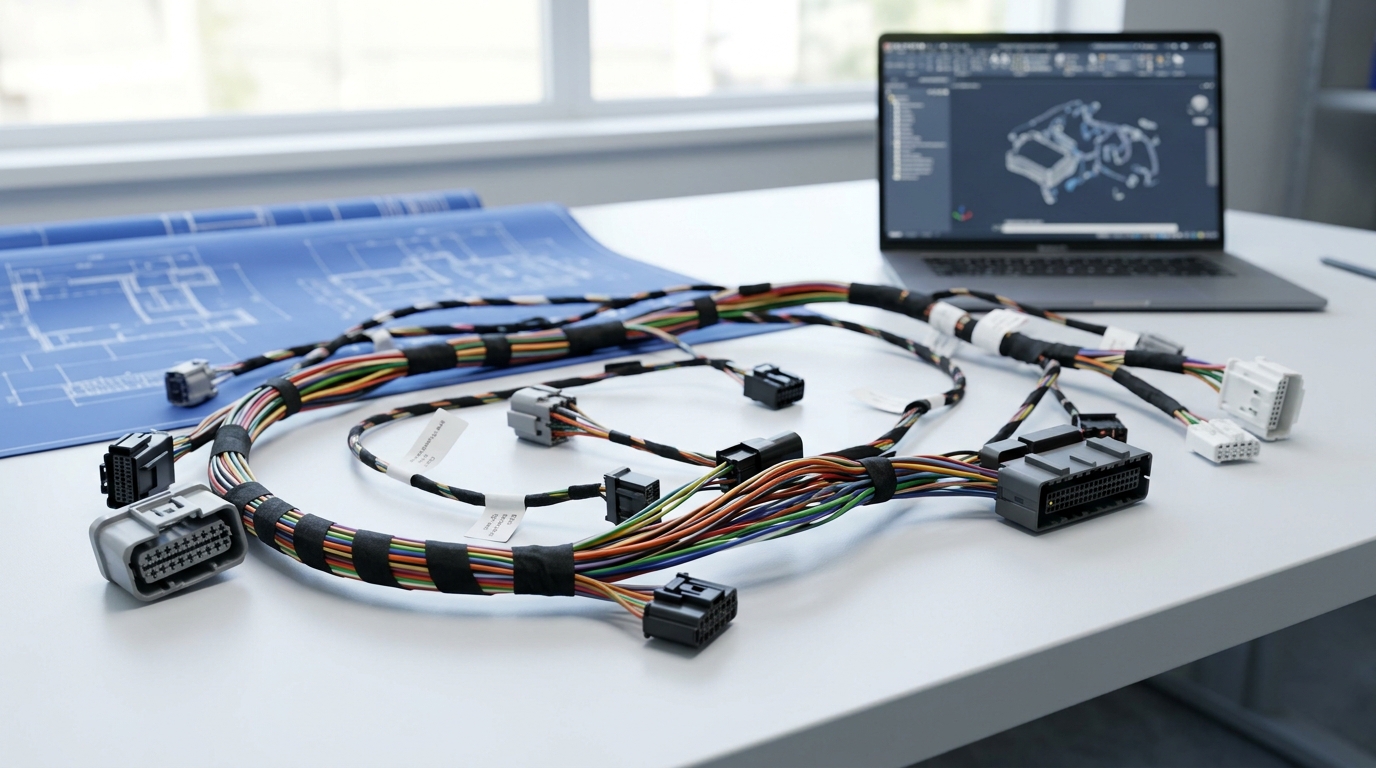
- Professional R&D Design Team: Bring us your electrical schematics or functional requirements. Our in-house engineering team provides end-to-end solutions, from 3D routing design (using CATIA/UG) to final prototype validation.
- Low MOQ & Agile Manufacturing: We understand that R&D phases and niche EV markets require flexibility. We proudly support Low Minimum Order Quantities (MOQ) for small-batch trial production without compromising on pricing.
- 100% Comprehensive Testing: Every single electric vehicle main wiring harness undergoes rigorous testing, including continuity testing, high-voltage withstand (Hi-Pot) testing, and HVIL functionality verification before shipping.
Ready to Power Your Next EV Project?
Whether you are developing electric passenger cars, commercial electric buses, or advanced energy storage systems, securing a high-quality EV main wiring harness is your first step to success. Stop struggling with unreliable suppliers and high defect rates.
Partner with a world-class automotive high voltage cable assembly supplier today.
[Contact Us Now] to get a free consultation and request a customized quote for your new energy vehicle main wiring assembly project. Let our engineering team turn your blueprint into a highly optimized, road-ready reality!