Custom BMS Wiring Harness Manufacturer | EV & Energy Storage
The Ultimate Guide to Custom BMS Wiring Harnesses: The Neural Network of Battery Systems
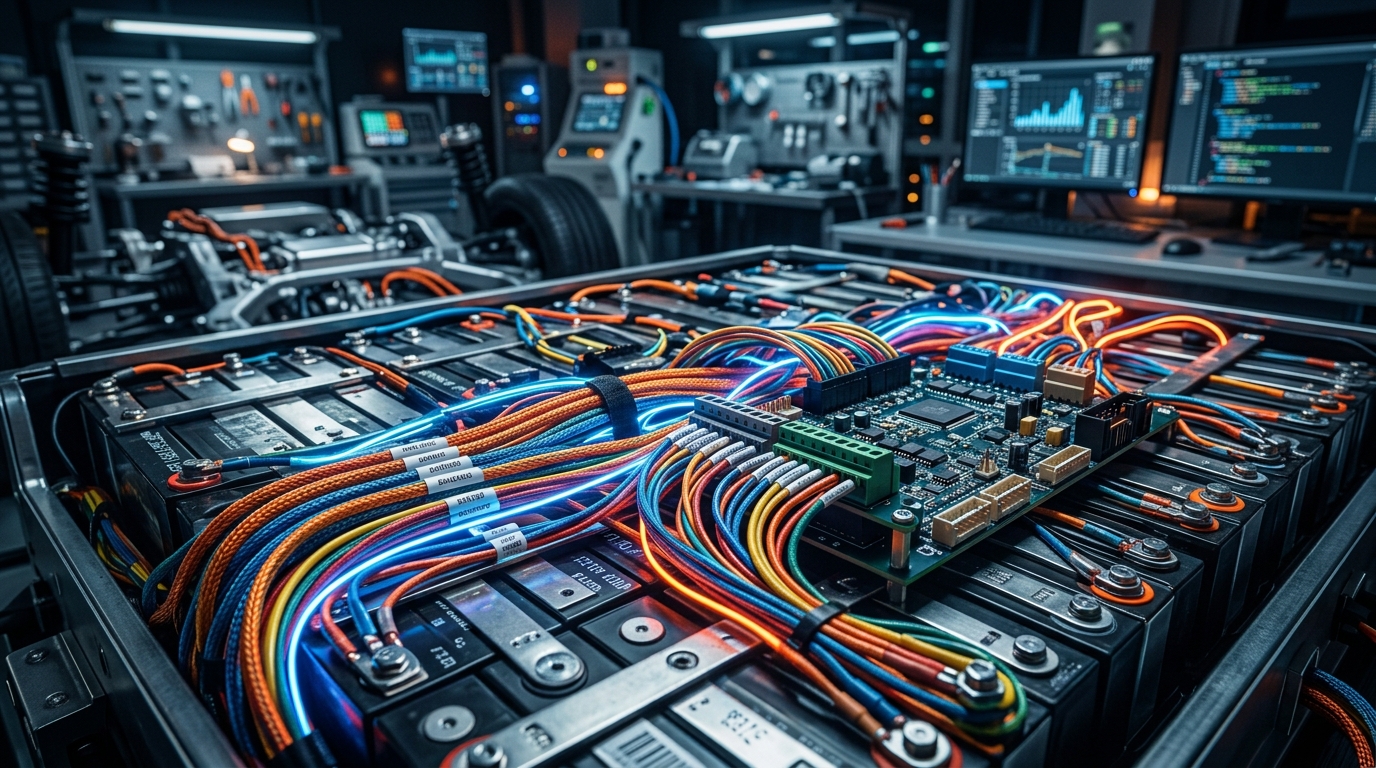
As the global transition toward sustainable energy accelerates, the demand for New Energy Vehicles (NEVs) and advanced Energy Storage Systems (ESS) is skyrocketing. At the heart of these technologies lies the Battery Management System (BMS). But how does the BMS communicate with the battery pack? The answer is the BMS wiring harness, often referred to as the BMS sampling wire harness.
Serving as the core data transmission carrier, the custom BMS wiring harness acts as the "neural network" of the battery system. It directly determines the accuracy of battery state monitoring and the overall electrical safety of the vehicle or storage unit.
In this comprehensive guide, we will explore the working principles, types, and specifications of BMS wiring harnesses, and why partnering with a certified manufacturer is crucial for your project.
How Does a BMS Wiring Harness Work? (Working Principle)
The working principle of a BMS wiring harness is similar to the human nervous system. It connects the individual battery cells to the main BMS control board. By attaching highly sensitive terminals and sensors to the battery modules, the harness continuously collects critical analog data—such as voltage, temperature, and current—from each cell in real-time.
This data is securely transmitted to the BMS unit, which calculates the State of Charge (SOC) and State of Health (SOH), ensuring the battery operates within safe parameters and preventing catastrophic failures like thermal runaway.
The Crucial Role of the BMS Sampling Wire Harness
Why is a high-quality custom BMS cable so important? Its primary functions include:
- Accurate Data Collection: Pinpoint accuracy in voltage and temperature sampling.
- Signal Transmission: Ensures zero-latency and interference-free data flow to the master control board.
- Active/Passive Balancing: Assists the BMS in balancing the charge across all cells, extending battery life.
- Safety Protection: Triggers early warnings for overcharging, over-discharging, or overheating.
Classifications of BMS Wiring Harnesses
Depending on the application and battery pack design, BMS harnesses are customized into several types:
- By Application:
- EV BMS Harnesses: Designed for high vibration and extreme automotive environments.
- ESS BMS Harnesses: Used in solar energy storage, focusing on longevity and high voltage resistance.
- By Structure:
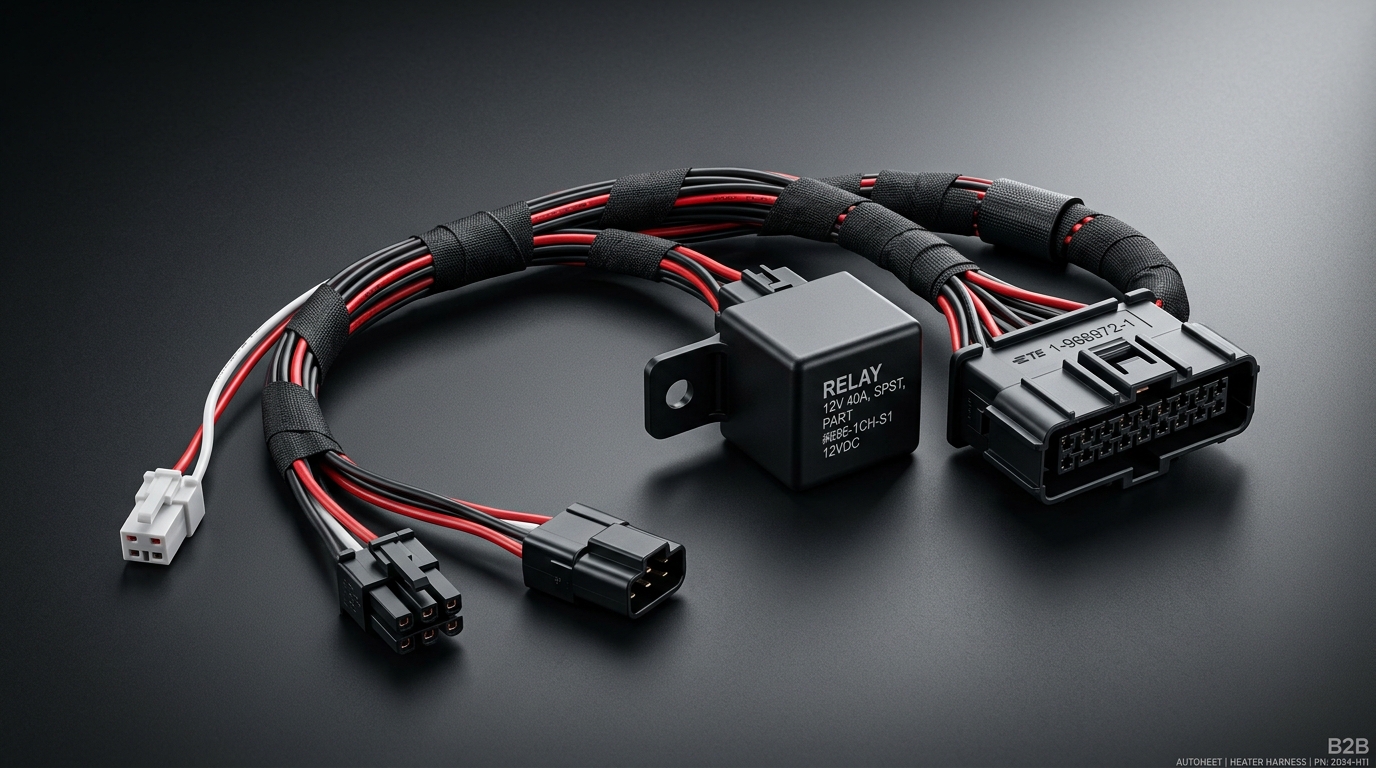
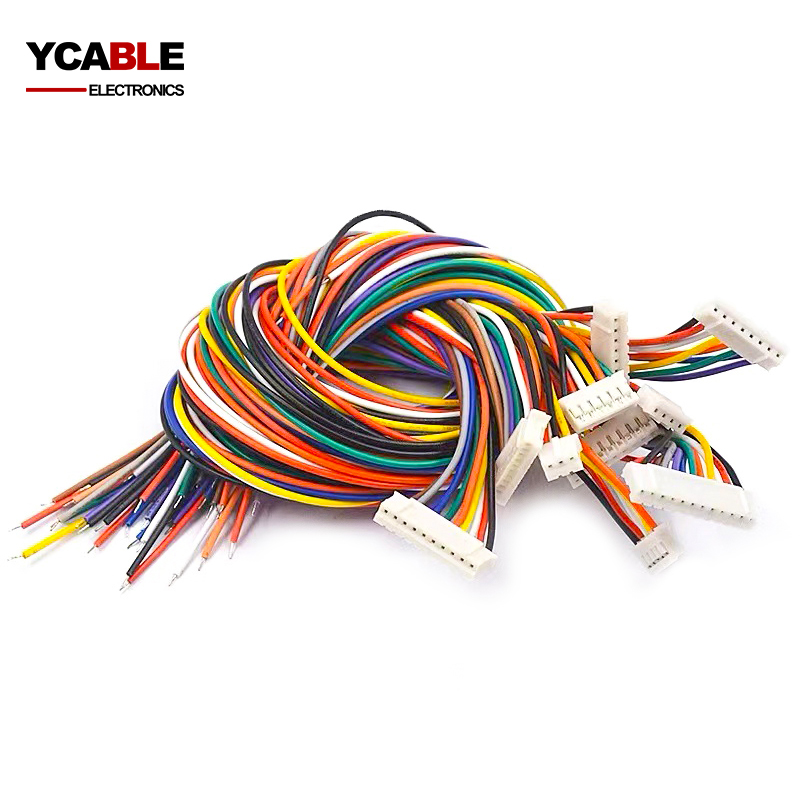
- Traditional Wire-to-Board Harnesses: Flexible, easy to route, and highly customizable.
- FPC (Flexible Printed Circuit) BMS Cables: Lightweight and space-saving, popular in modern EV battery packs.
- CCS (Cell Contact System) Assemblies: Integrated solutions combining busbars, FPCs, or wiring harnesses.
Key Features of High-Quality BMS Cables
To survive in demanding environments, our custom BMS wiring harnesses possess the following characteristics:
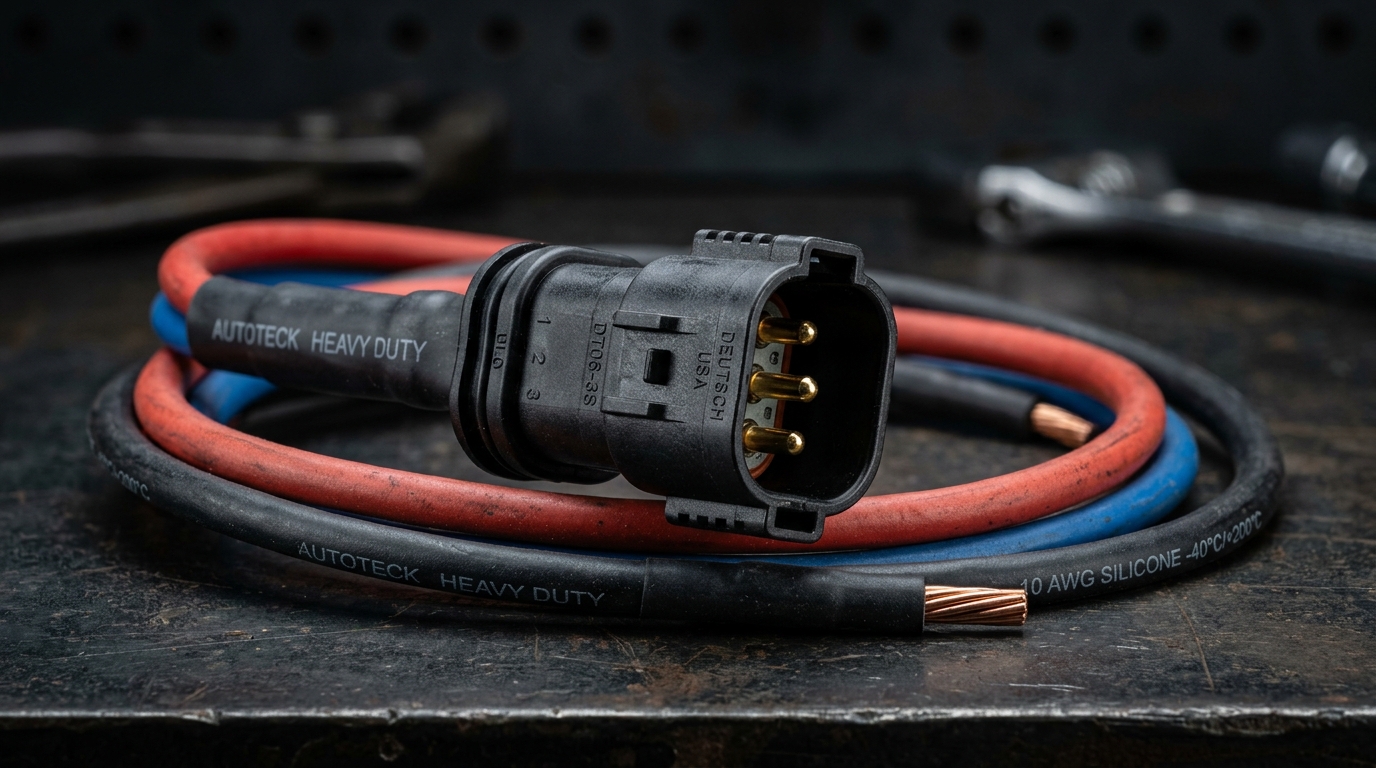
- High-Temperature Resistance: Capable of withstanding extreme heat (up to 200°C with silicone/Teflon).
- Flame Retardant: Meets UL94 V-0 standards to prevent fire hazards.
- Excellent EMI/EMC Performance: Shielded designs to prevent electromagnetic interference.
- High Flexibility & Durability: Engineered to withstand automotive vibrations and bending tests.
Common Application Scenarios
Our custom BMS wiring solutions are widely used across various industries:
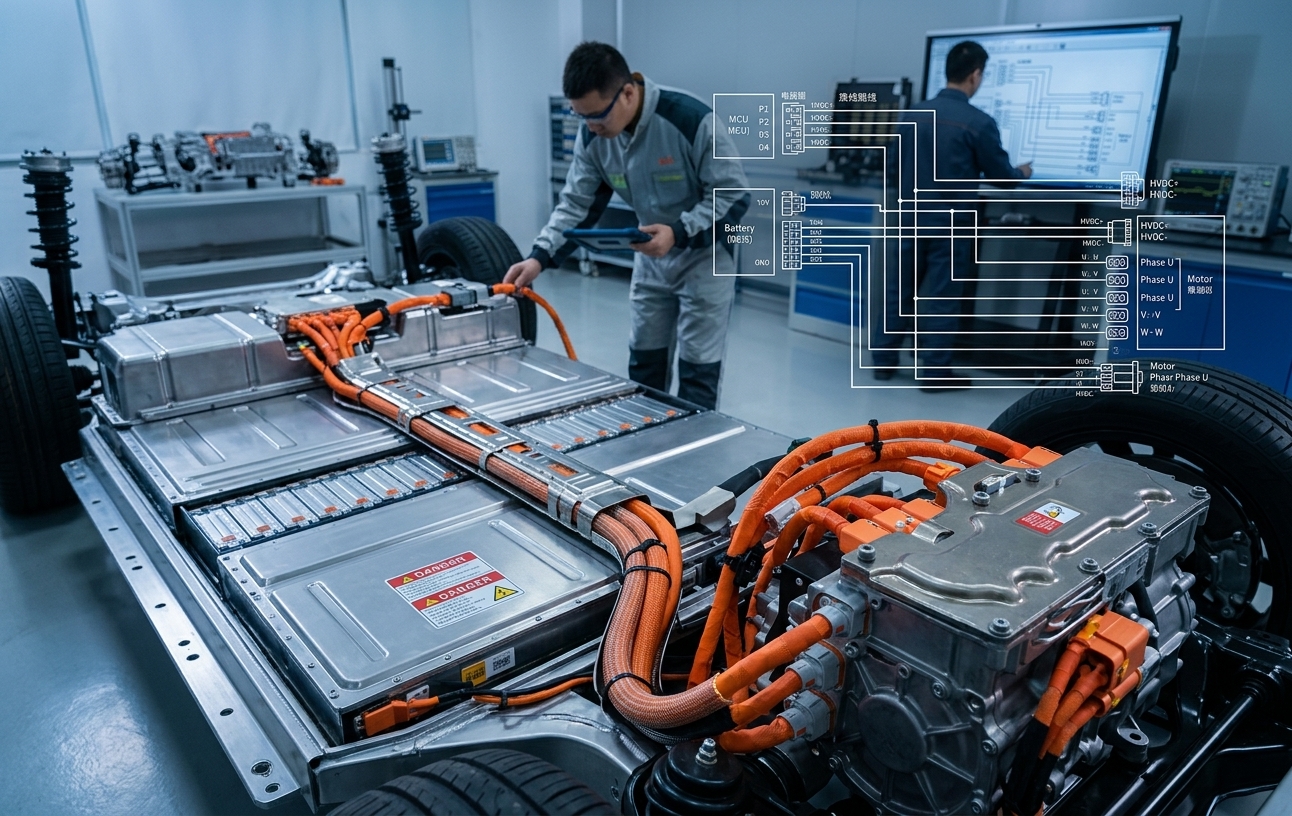
- New Energy Vehicles (NEVs): Electric Cars (BEV), Plug-in Hybrids (PHEV), and Electric Buses.
- Light Electric Vehicles (LEVs): E-bikes, E-scooters, and electric motorcycles.
- Energy Storage Systems (ESS): Commercial solar storage, home battery walls, and portable power stations.
- Industrial Equipment: AGVs (Automated Guided Vehicles), electric forklifts, and robotics.
BMS Wiring Harness Specifications
When designing a custom BMS sampling wire, specific technical parameters must be met. Below is a general specification table of what we can customize for you:
| Specification Parameter | Details & Options Available for Customization |
|---|---|
| Wire Gauge (AWG) | 18 AWG, 20 AWG, 22 AWG, 24 AWG, 26 AWG (Customizable based on current) |
| Conductor Material | Tinned Copper, Bare Copper, Silver-Plated Copper |
| Insulation Material | XLPE (Automotive grade), Silicone, Teflon (PTFE), PVC, TPE |
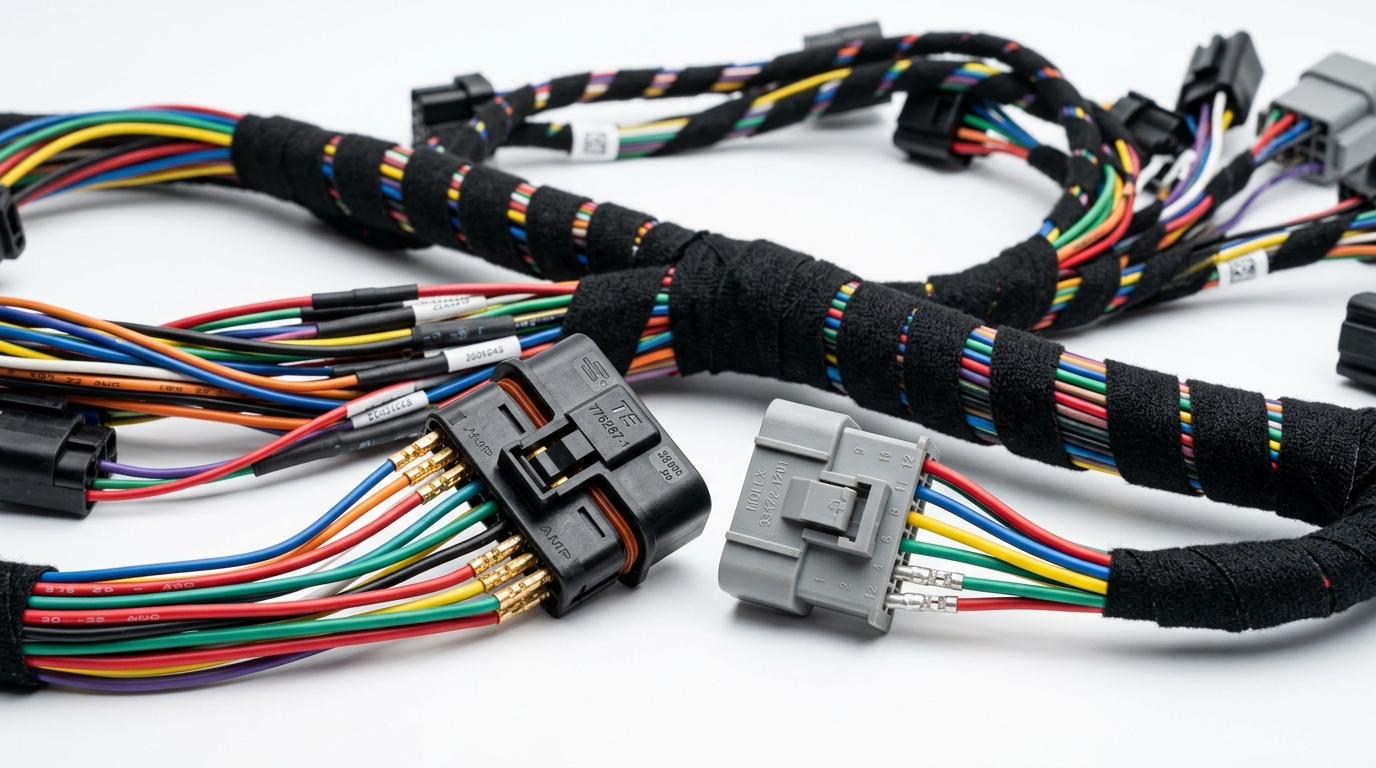
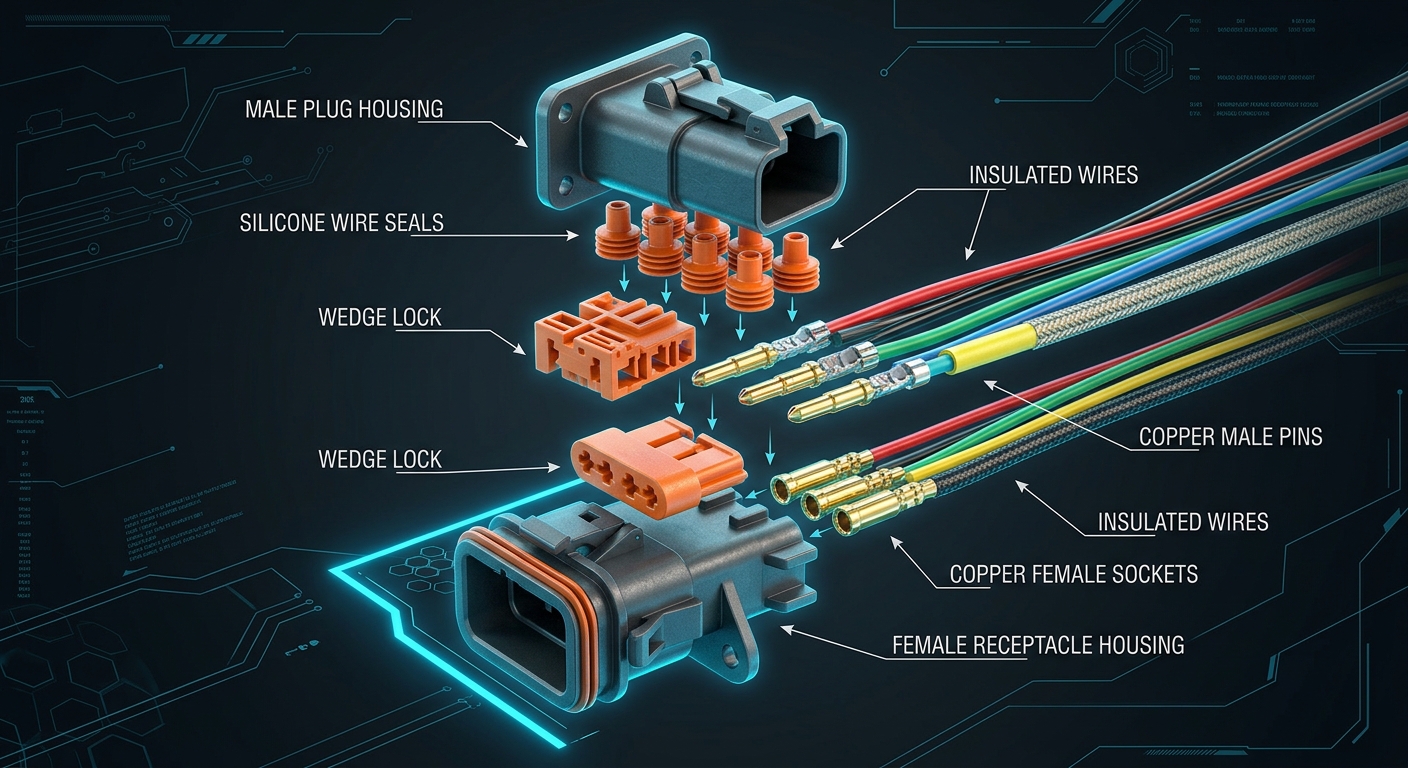
| Connector Brands/Types | Molex, JST, TE Connectivity (Tyco), Amphenol, Delphi, or Equivalents |
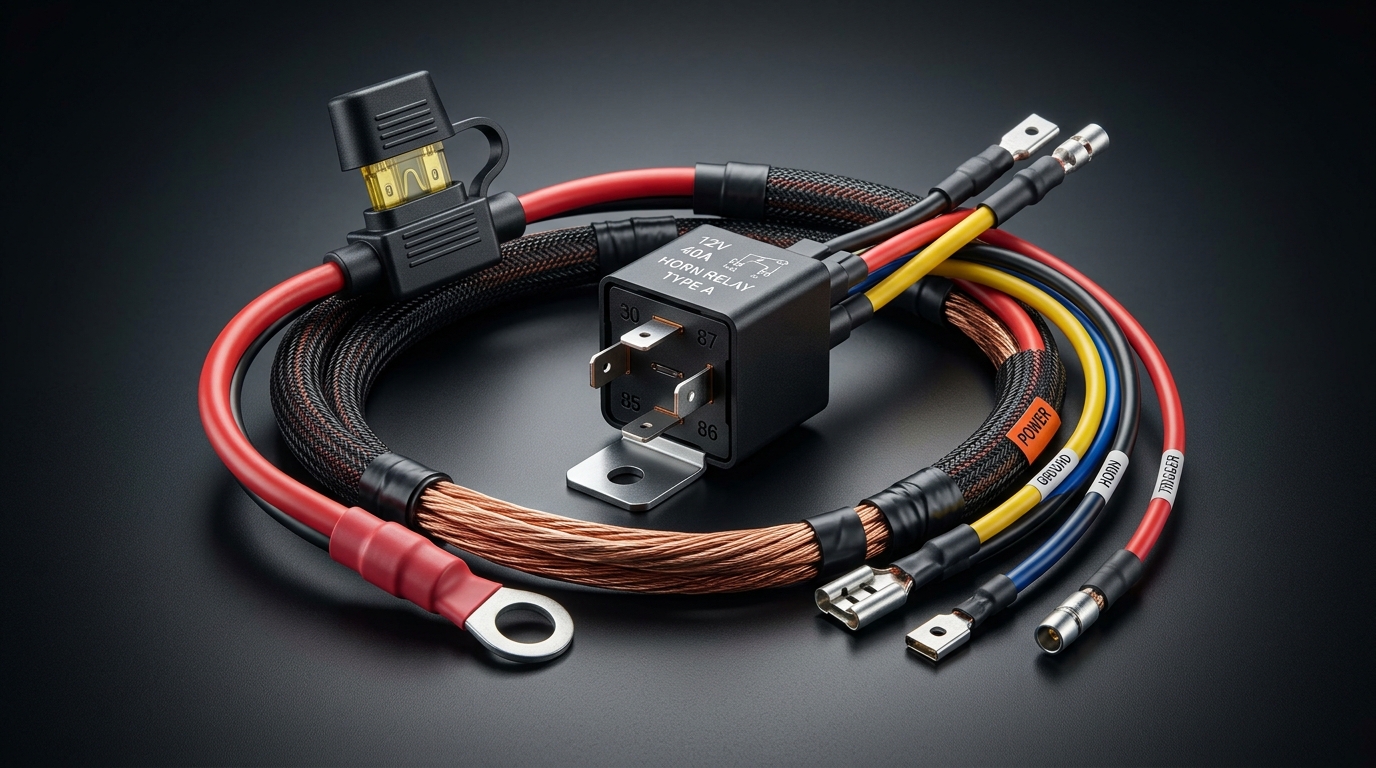
| Terminal Types | Ring Terminals, Spade Terminals, Custom PCB Connectors |
| Temperature Rating | -40°C to +125°C (Standard EV) / Up to +200°C (Silicone/Teflon) |
| Voltage Rating | 300V / 600V / 1000V (High Voltage options available) |
| Certifications/Standards | UL, RoHS, REACH, USCAR-2 |
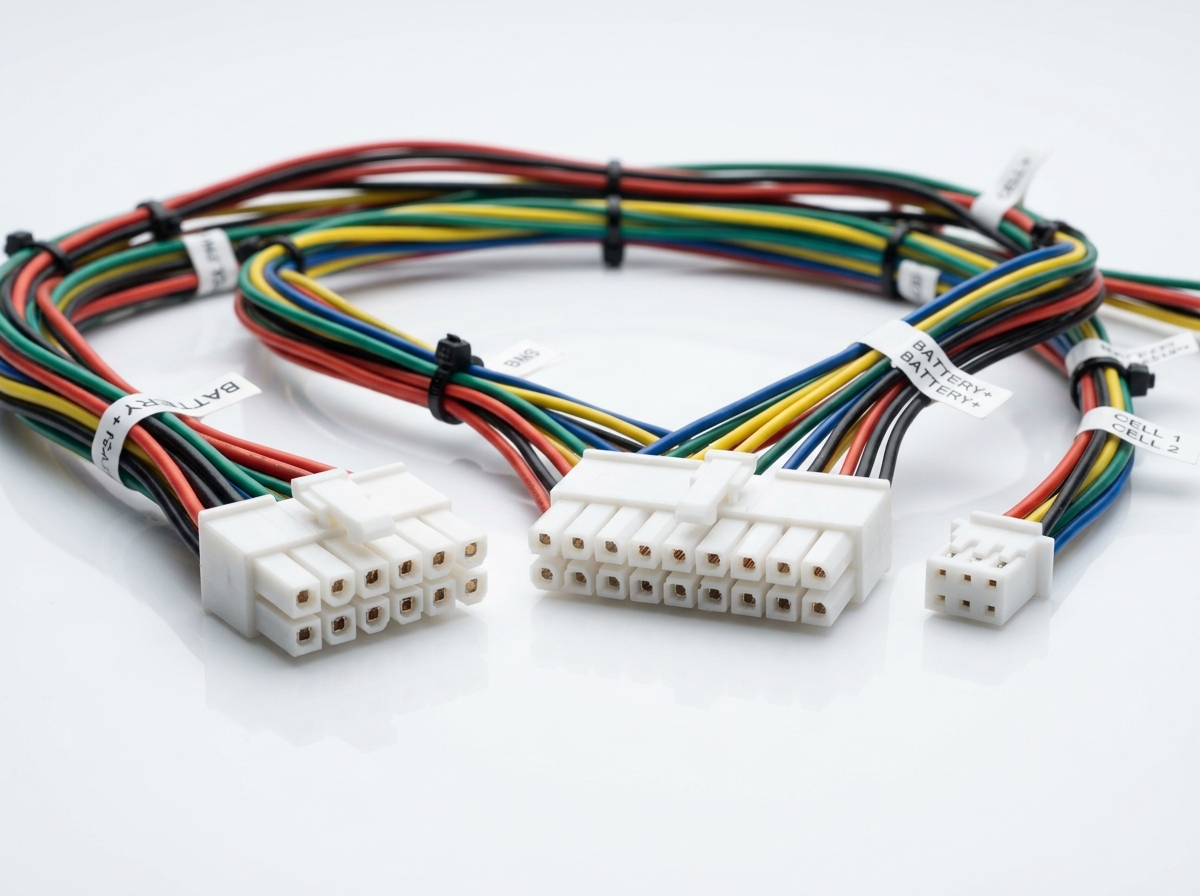
Your Trusted Custom BMS Wiring Harness Manufacturer
As a professional wire harness factory, we understand that there is no "one-size-fits-all" when it comes to battery management systems. We are fully ISO9001 and IATF16949 certified, ensuring that every harness meets strict automotive-grade quality standards.
Why Choose Us?
- Professional Design Team: We provide end-to-end solutions from conceptual design to mass production.
- Small Batch Support: We welcome low Volume/High Mix orders and support small batch production to help you test the market.
- Fully Customizable: Whether you need specific connectors, unique wire lengths, or specialized shielding, we can build it.
Don't let a faulty "neural network" compromise your battery system. [Contact us today] to discuss your custom BMS wiring harness project and get a free quote!