PTFE Wire Harnesses for UAVs & Micro-Satellites: A Complete Guide
Why PTFE Wire Harnesses Are Critical for UAVs and Micro-Satellites in Extreme Environments
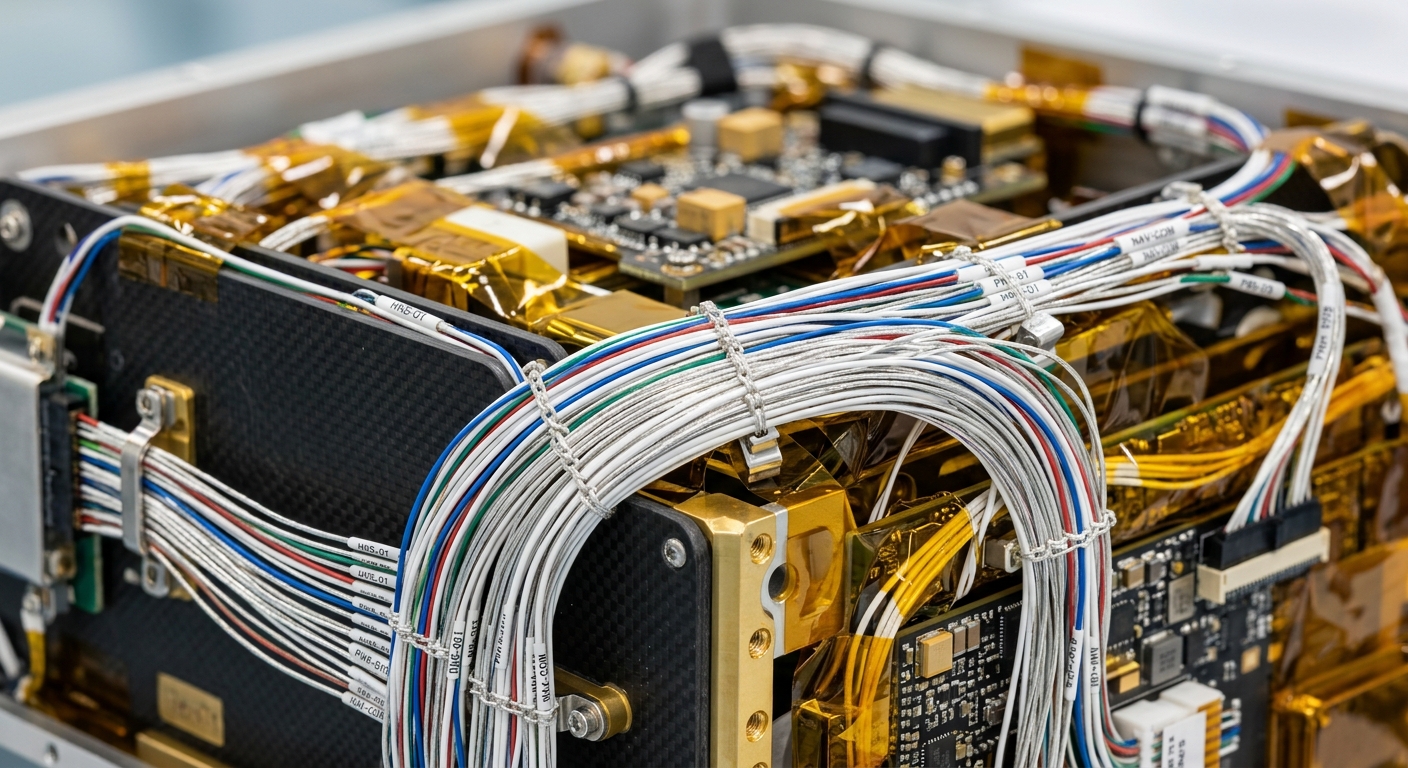
The rapid evolution of high-altitude Unmanned Aerial Vehicles (UAVs) and Low Earth Orbit (LEO) micro-satellites has pushed aerospace engineering to its limits. In these applications, the margin for error is zero. While engineers obsess over propulsion systems and sensor payloads, the underlying nervous system of these crafts—the electrical wire harness—often determines the success or catastrophic failure of a mission.
For operations strictly bound by SWaP (Size, Weight, and Power) constraints and exposed to severe atmospheric conditions, standard wiring solutions are fundamentally inadequate. This article explores the engineering necessity of using PTFE (Polytetrafluoroethylene) wire harnesses for modern UAV and micro-satellite cabling, comparing its material science advantages against conventional alternatives.
The Hidden Threat in the Stratosphere: Temperature and Weight
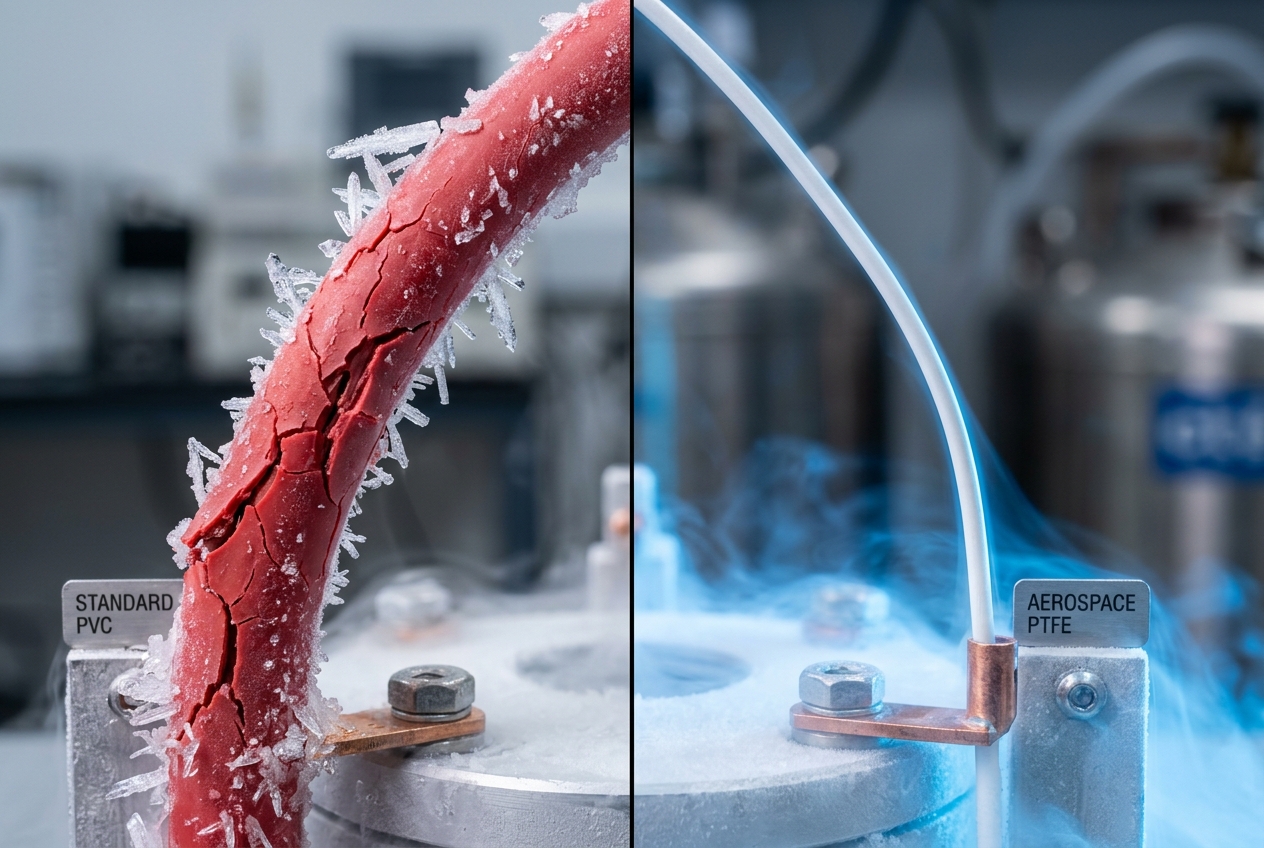
The Catastrophic Failure of Standard Insulation at -50°C
As UAVs ascend to high altitudes and micro-satellites enter the vacuum of space, temperatures plummet drastically. Standard insulation materials, such as standard Polyvinyl Chloride (PVC) or silicone, are structurally unequipped for these environments.
When exposed to temperatures around -50°C, PVC and standard commercial silicone undergo a glass transition. The polymers lose their elasticity, becoming highly brittle. Under the continuous mechanical vibration of a UAV engine or the deployment shock of a satellite, this brittle insulation cracks and flakes off. The result is inevitable: exposed conductive copper, electrical short circuits, total system failure, and the loss of multimillion-dollar equipment.
The Weight Penalty
Every extra gram on a drone reduces its battery life and flight duration. For micro-satellites, launch costs are calculated by the gram; excessive wiring weight directly steals capacity from valuable scientific or communication payloads. Standard cables require thick insulation walls to prevent electrical arcing, adding parasitic weight to the aerospace vehicle.
The Solution: The Superior Physics of PTFE Wire Harnesses
To overcome the dual challenges of extreme cold and strict weight limits, aerospace engineers specify PTFE wire harnesses.
1. Unyielding Flexibility at -200°C
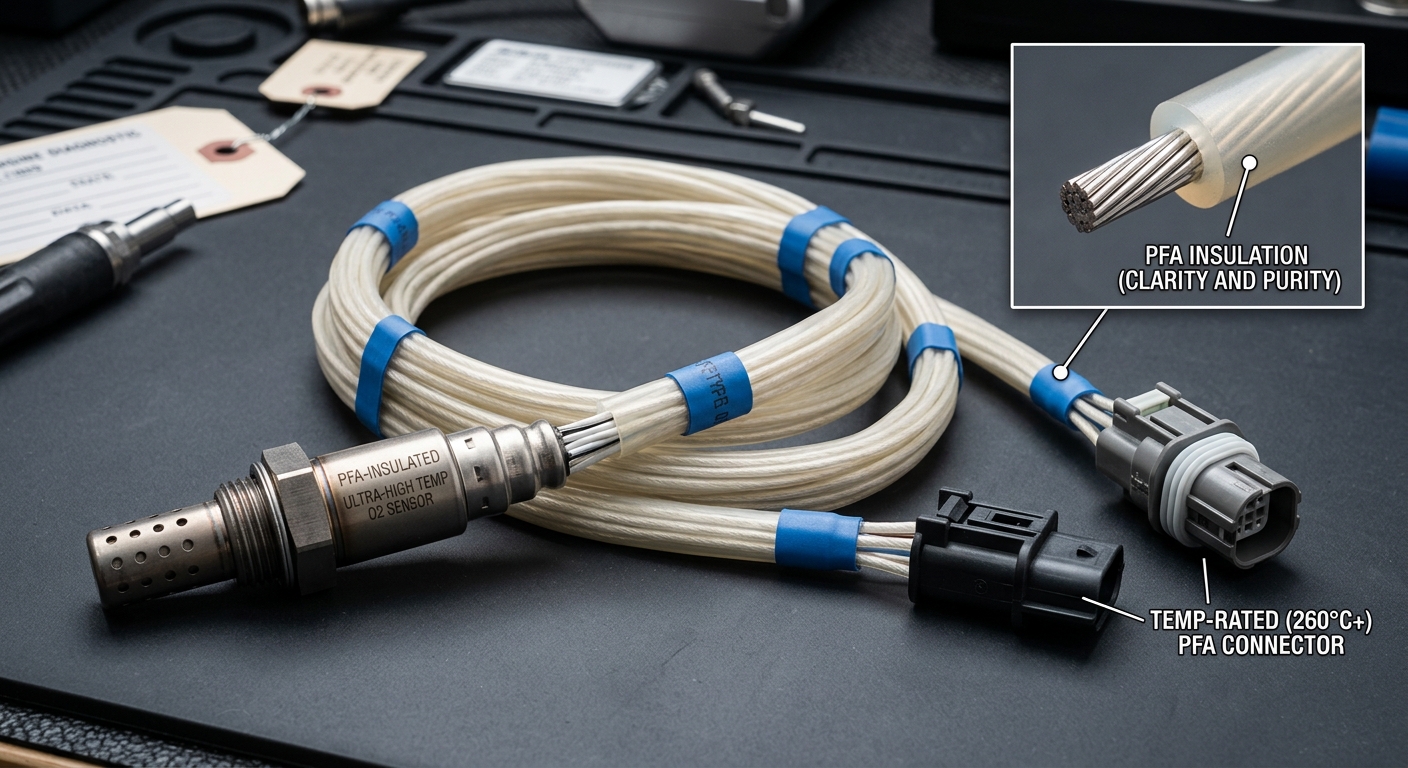
PTFE is a highly stable fluoropolymer characterized by its strong carbon-fluorine bonds. Unlike PVC, PTFE maintains its mechanical integrity and flexibility in ultra-cryogenic conditions, operating flawlessly at temperatures as low as -200°C. Whether navigating the polar stratosphere or facing the shadowed side of the Earth in orbit, PTFE insulation will not embrittle, crack, or compromise the electrical circuit.
2. Maximum Payload via Ultra-Thin Insulation
One of the most profound benefits of PTFE is its exceptionally low dielectric constant and high dielectric strength. Because it acts as an incredibly efficient insulator, the wall thickness of a PTFE cable can be manufactured to a fraction of the thickness of PVC or silicone wires while safely handling the same or higher voltages.
Feature to Benefit Translation:
- Feature: Ultra-thin insulation and smaller overall cable diameter.
- Benefit: Up to 30-50% reduction in wiring harness weight and volume. This translates directly to extended UAV flight time, enhanced maneuverability, and the ability to integrate heavier, high-resolution cameras or advanced sensor payloads on micro-satellites.
Deep Dive: Specifications and Operating Principles
UAV Wire Harness Requirements
High-altitude drones require more than just cold resistance; they need dynamic durability.
- Abrasion Resistance: The tight routing spaces inside a UAV fuselage subject wires to constant friction. PTFE's naturally low coefficient of friction (similar to wet ice) prevents mechanical wear during prolonged flight vibrations.
- Chemical Immunity: UAV cabling is frequently exposed to aviation fuels, hydraulic fluids, and atmospheric ozone. PTFE is chemically inert, ensuring the harness does not degrade when exposed to harsh solvents.
Micro-Satellite Cabling Specifications
In the thermal vacuum environment of space, wire harnesses face unique physics challenges.
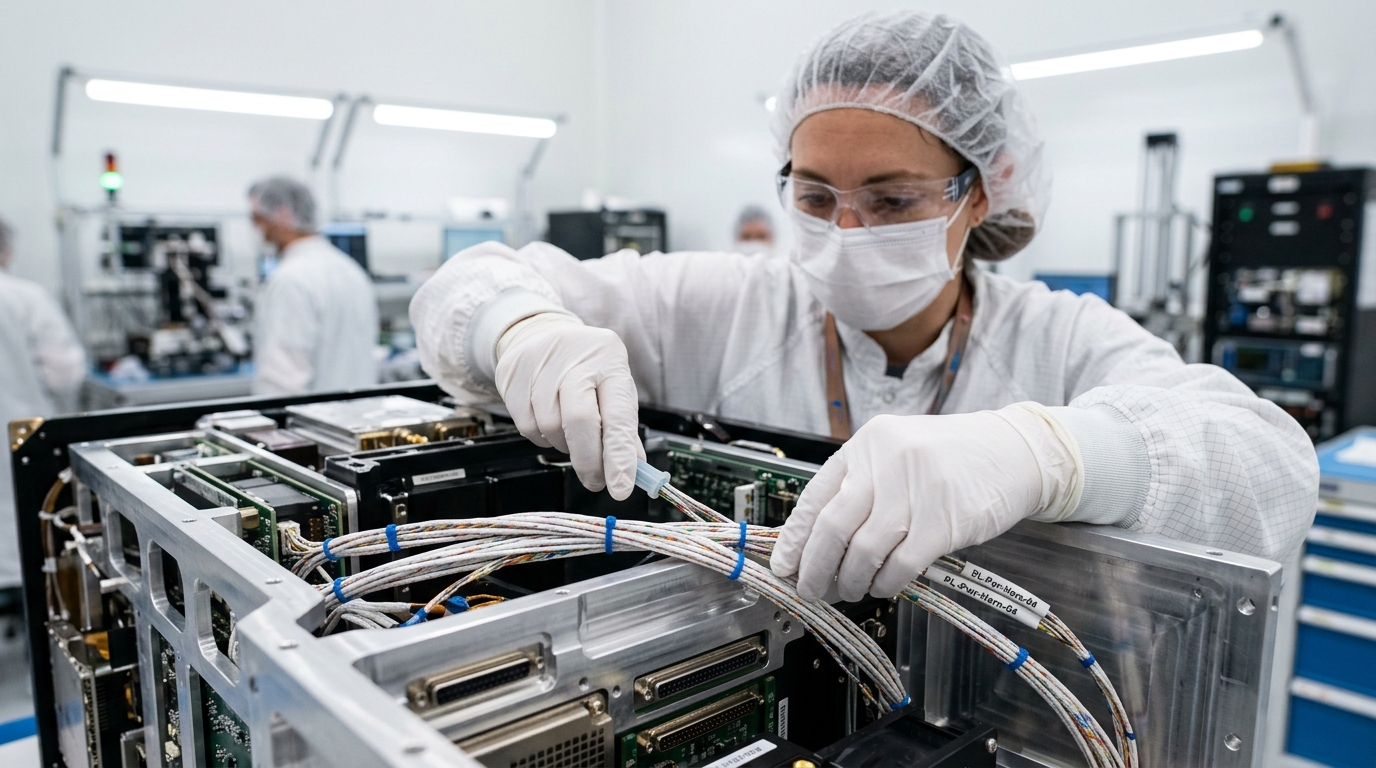
- Low Outgassing: Standard plastics release volatile organic compounds (VOCs) when exposed to a vacuum—a process called outgassing. These gasses condense on sensitive optical lenses and solar panels, blinding the satellite. PTFE is inherently stable and meets strict aerospace low outgassing standards (such as NASA/ESA requirements).
- Thermal Cycling: Micro-satellites orbit from direct, intense solar radiation to the freezing darkness of Earth's shadow within minutes. PTFE’s broad thermal operating range (-200°C to +260°C) prevents the expansion and contraction failures typical of lesser materials.
Conclusion
In the relentless pursuit of aerospace optimization, the choice of wiring material is not a secondary consideration—it is a primary mission-critical decision. Relying on standard PVC or silicone in environments that drop to -50°C is an engineering gamble that inevitably leads to cracked insulation and aborted missions.
By integrating PTFE wire harnesses, aerospace manufacturers ensure operational reliability down to -200°C, while aggressively minimizing system weight to maximize UAV flight ranges and satellite payloads.
Are you engineering the next generation of high-altitude UAVs or orbital systems? Contact our technical team today to discuss custom, MIL-SPEC compliant lightweight aerospace wire harnesses designed for extreme environments.