Teflon Transmission Wire Harness: The Ultimate B2B Guide
Why Teflon (PTFE) Wire Harnesses are Critical for Auto Transmissions
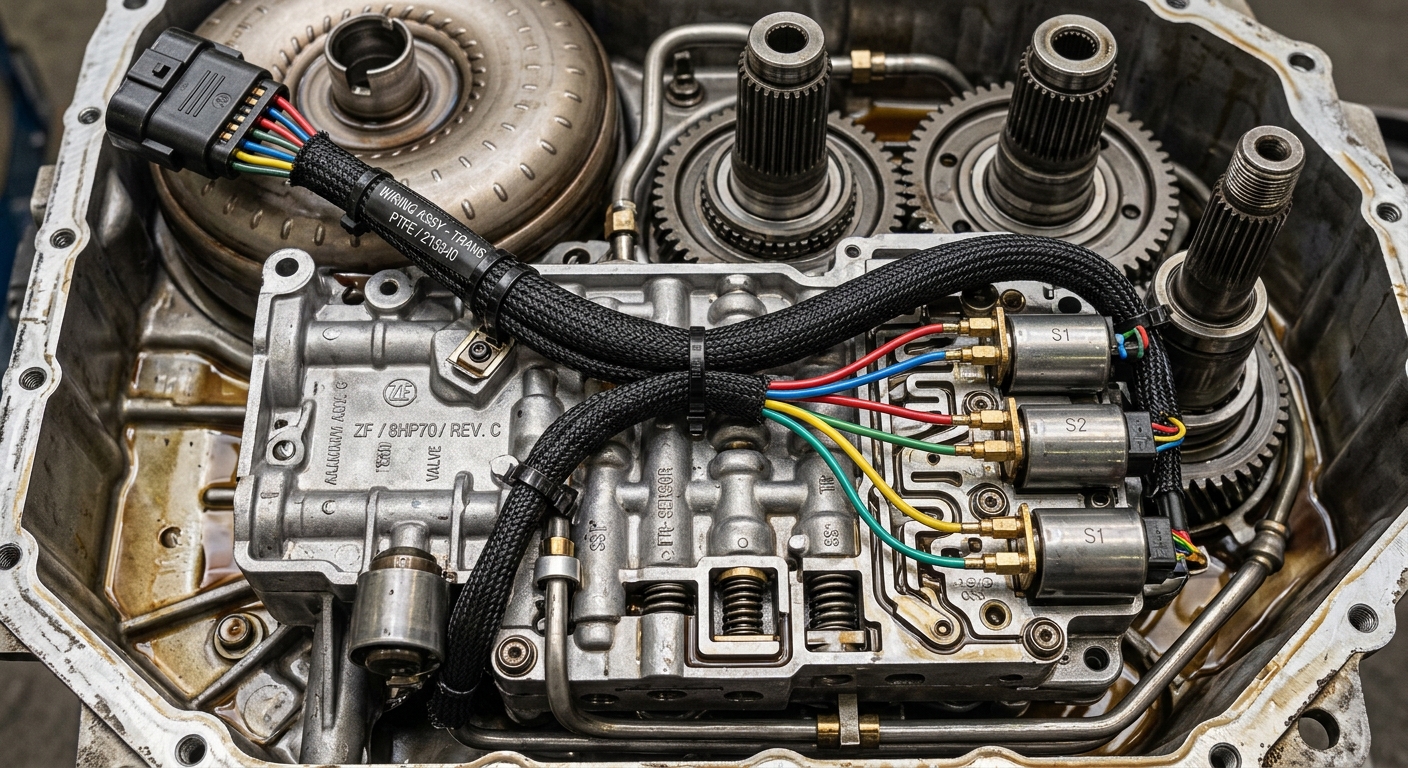
In the automotive engineering sector, automatic transmission failures are rarely caused by massive mechanical breakdowns. More often, they are the result of electrical communication failures. The internal transmission wire harness acts as the nervous system of the gearbox, responsible for millisecond-precise communication. However, when submerged in hot, chemically aggressive Automatic Transmission Fluid (ATF), standard wiring quickly degrades.
To guarantee long-term reliability and eliminate the risk of short circuits, automotive OEMs and Tier-1 suppliers rely on a highly specialized material: the Teflon wire harness. In this technical guide, we will explore the working principles of transmission wiring, the extreme pain points of the internal gearbox environment, and the material science that makes PTFE (Polytetrafluoroethylene) and PFA the only viable solutions.
The Extreme Environment: Internal Transmission Wiring Pain Points
The inside of an automatic transmission is one of the most hostile environments within a vehicle. A standard wire harness placed in this environment faces two fatal challenges:
- Extreme Thermal Stress: Transmissions operate continuously at temperatures ranging from 90°C to 120°C. Under heavy loads, towing, or high-speed driving, localized temperatures can easily spike to 150°C or higher.
- Aggressive Chemical Exposure: Internal wiring is constantly submerged in or splashed by ATF. Transmission fluid is highly penetrative and contains friction modifiers, anti-wear additives, and detergents. Over time, these chemicals cause standard polymer insulation to swell, harden, crack, or completely dissolve.
When insulation fails, the exposed copper conductors short-circuit. This leads to harsh shifting, the vehicle entering "limp mode," or total transmission failure—resulting in massive warranty claims and brand damage for automotive manufacturers.
How Internal Transmission Wire Harnesses Work
To understand why material selection is critical, we must look at the function of the harness. The internal transmission wiring connects the Transmission Control Unit (TCU) to various electro-mechanical components:
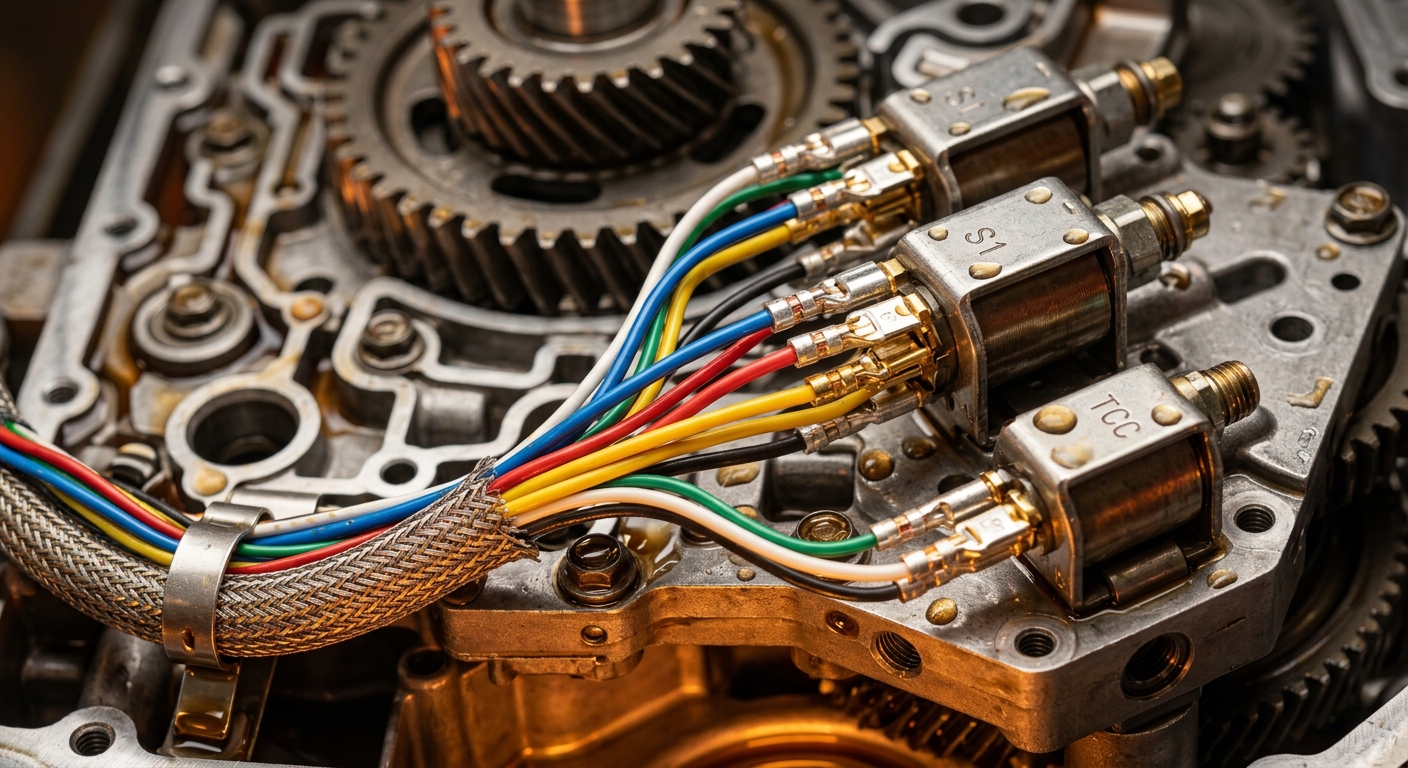
- Solenoid Valves: Actuators that direct hydraulic fluid to shift gears.
- Speed Sensors (Input/Output): Monitor shaft speeds to determine optimal shift timing.
- Temperature Sensors: Monitor the ATF temperature to adjust fluid pressure.
These components operate on low-voltage, high-frequency electrical signals. Even a minor fluctuation in resistance caused by degraded wire insulation can disrupt the electromagnetic fields of the solenoid valves, resulting in delayed gear engagement or slipping. Therefore, the dielectric integrity of the PTFE automotive wire is non-negotiable.
The Material Science: Why PTFE/PFA (Teflon) is Mandatory
Teflon, specifically fluoropolymers like PTFE and PFA, provides an impenetrable barrier against the harsh realities of the transmission housing. Here is the technical breakdown of why PTFE is the industry standard for ATF resistant wire harnesses.
1. Unmatched Chemical Resistance (ATF Inertness)
PTFE has one of the strongest molecular bonds in chemistry (the Carbon-Fluorine bond). It is virtually inert to all automotive chemicals. Even after a decade of continuous immersion in synthetic transmission fluids, a Teflon wire harness will experience zero swelling, zero degradation, and zero loss of flexibility.
2. Extreme Temperature Tolerance
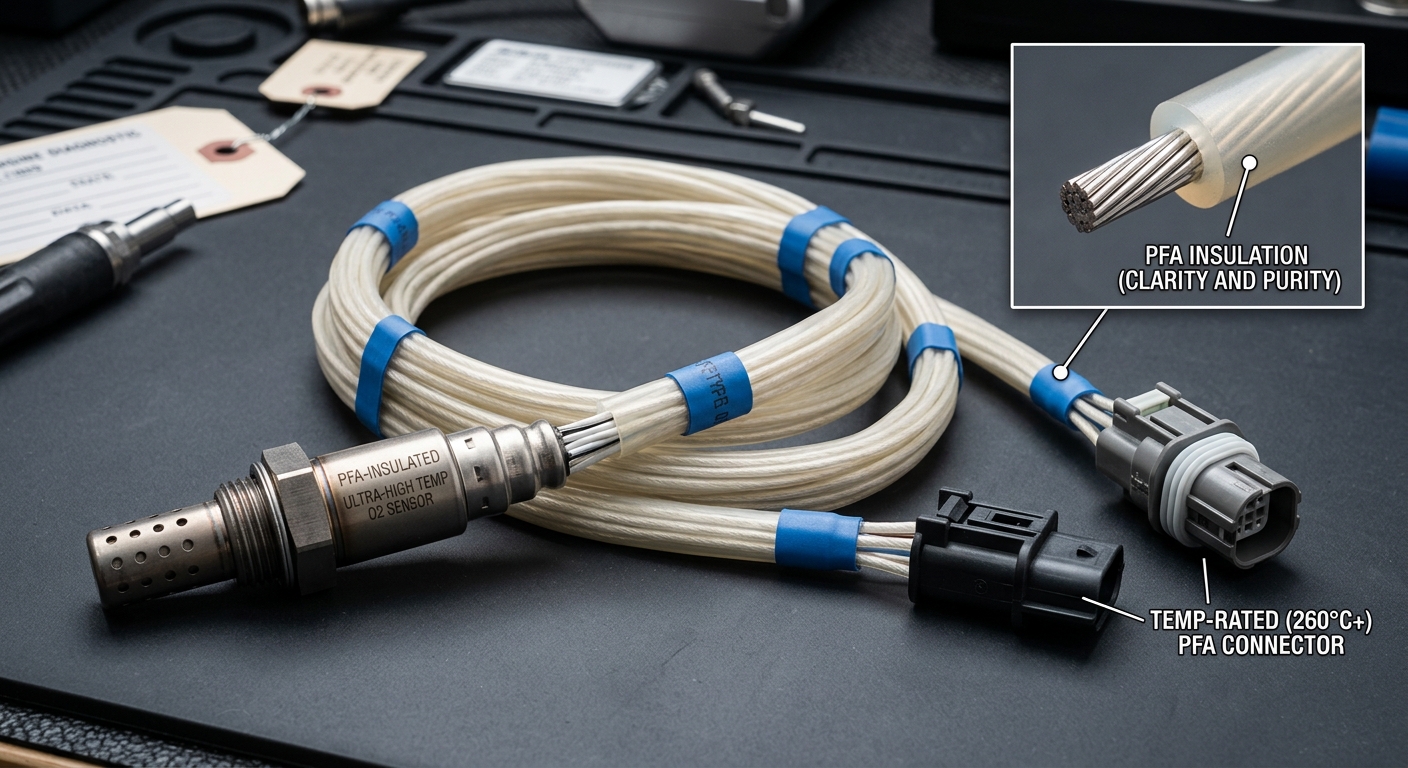
While conventional automotive wires melt or become brittle, PTFE maintains its structural and electrical integrity across a massive temperature spectrum. It offers continuous operating temperatures from -90°C up to 260°C, far exceeding the maximum thermal thresholds of any automotive transmission.
3. Superior Dielectric Strength and Thin-Wall Design
Because PTFE possesses exceptionally high dielectric strength, engineers can design wire harnesses with much thinner insulation walls. This "thin-wall" design significantly reduces the overall weight and diameter of the harness, allowing it to be routed easily through the highly confined, complex mechatronic valve bodies of modern 8-speed and 10-speed transmissions.
Material Comparison: PTFE vs. Standard Insulation in Oil Baths
To highlight the superiority of Teflon in an oil-immersed environment, let's compare it against traditional wire insulation materials:
| Material Property | Standard PVC | Silicone Rubber | PTFE / PFA (Teflon) |
|---|---|---|---|
| Max Operating Temp | 85°C - 105°C | Up to 200°C | Up to 260°C |
| ATF Resistance | Poor (Hardens/Cracks) | Poor (Swells in Oil) | Excellent (Inert) |
| Dielectric Strength | Moderate | Good | Outstanding |
| Abrasion Resistance | Good | Low (Tears easily) | Excellent |
| Suitability for Transmissions | Highly Unsafe | Not Recommended | Industry Standard |
As demonstrated, while Silicone offers good heat resistance, it acts like a sponge in oil, absorbing ATF and expanding. PVC simply melts or becomes brittle. PTFE is the only material that masters both high heat and chemical immersion.
Automotive Industry Standards and Specifications
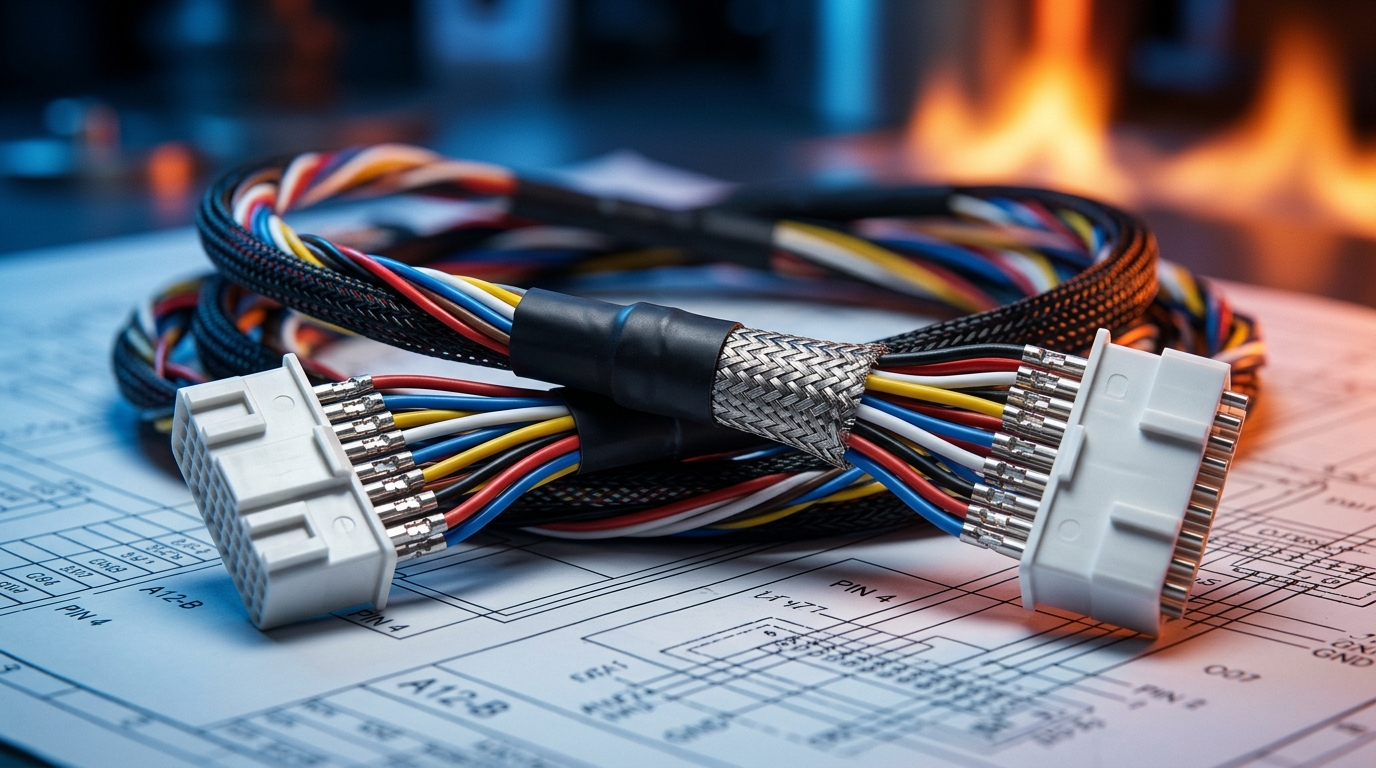
Professional B2B buyers require strict adherence to global engineering standards. Our high-temperature transmission wires are manufactured to comply with stringent automotive protocols, including:
- ISO 6722 / ISO 19642: Standards for automotive cables, ensuring ultra-thin wall, high-temperature performance.
- Standard AWG Sizes: Custom configurations available from 18 AWG to 26 AWG, designed specifically for intricate sensor and solenoid wiring.
- RoHS & REACH Compliant: Ensuring environmental safety alongside industrial performance.
Partner with Us for Custom Teflon Wire Harness Solutions
The reliability of your transmission systems depends entirely on the quality of your internal electrical connections. Don't let substandard wiring compromise your engineering excellence.
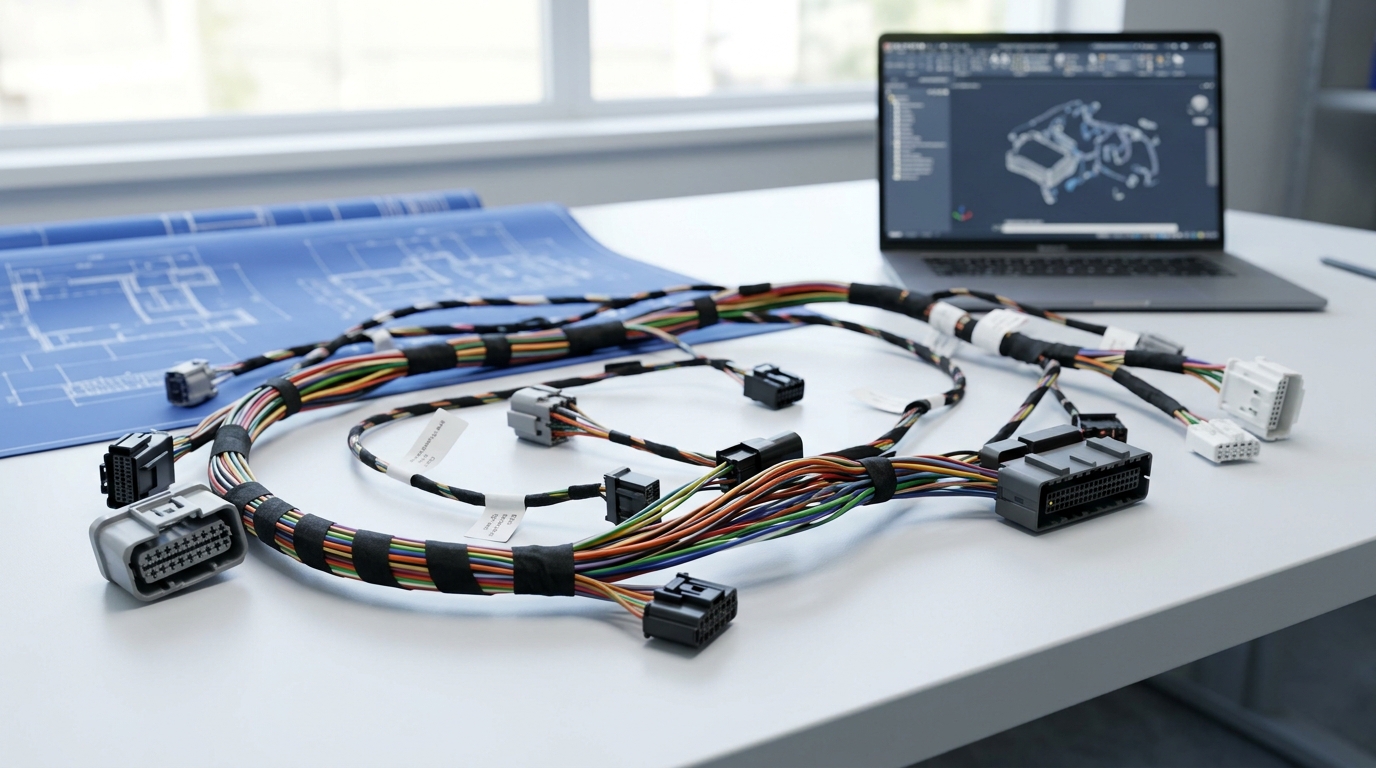
As a leading manufacturer of specialized automotive wire harnesses, we provide custom Teflon (PTFE) transmission wire harnesses engineered to your exact blueprints. Whether you need specialized connectors, specific AWG sizing, or ultra-durable fluoropolymer coatings, our solutions guarantee zero electrical failures in deep-oil, high-heat applications.
Ready to upgrade your mechatronic systems? Contact our engineering team today for a technical consultation, material samples, or a competitive RFQ. Let us help you build transmissions that last a lifetime.