Ultimate Guide: Why Exhaust Pipe Oxygen Sensors Require PTFE/PFA Wire Harnesses
Ultimate Guide: Why Exhaust Pipe Oxygen Sensors Demand Teflon (PTFE/PFA) Wire Harnesses
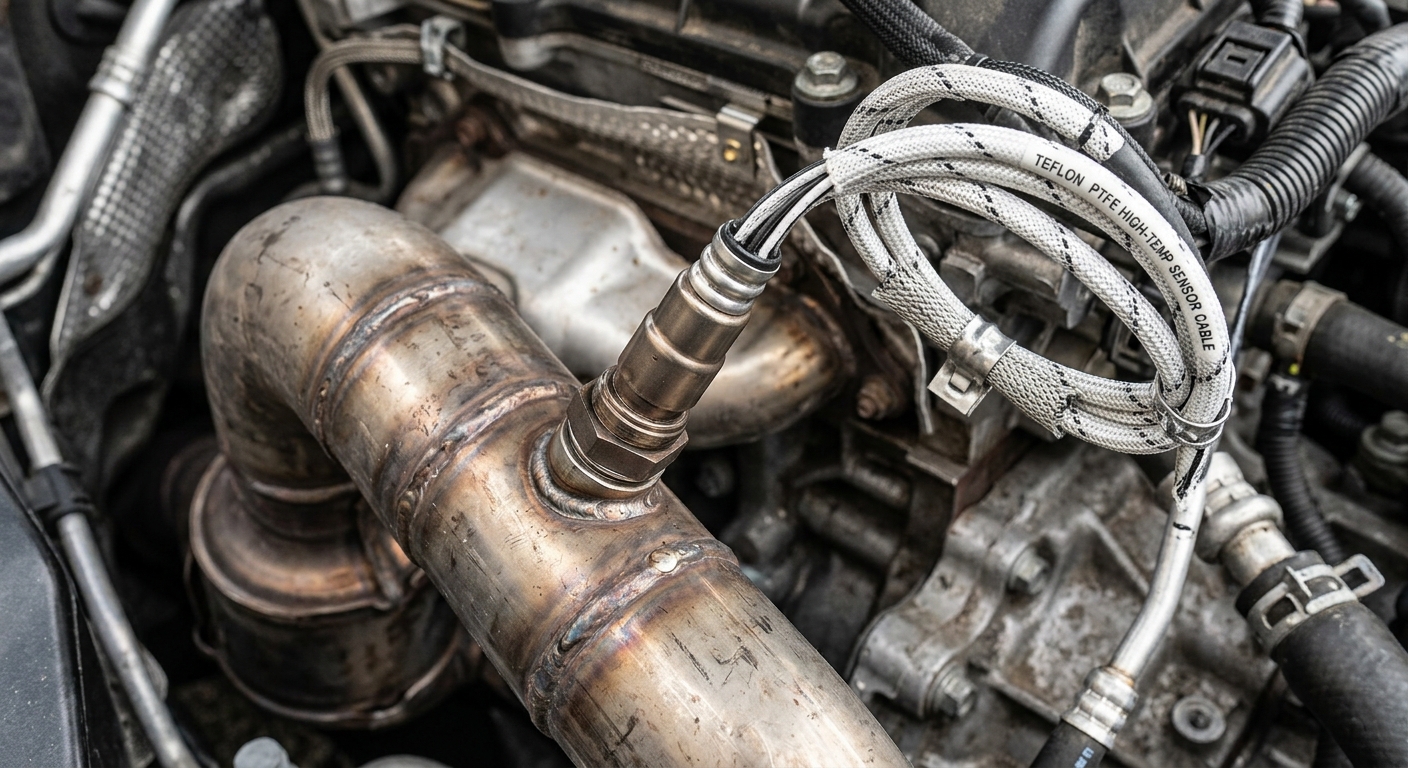
In the highly competitive automotive parts industry, reliability is not just a preference—it is a strict requirement. At the heart of modern vehicle emission control and fuel efficiency systems lies the exhaust pipe oxygen sensor (often called the O2 sensor or Lambda sensor). However, even the most advanced sensor chip is useless if its connection to the vehicle fails.
This is exactly why top-tier OEM manufacturers and professional aftermarket buyers insist on using Teflon (PTFE/PFA) wire harnesses for oxygen sensors. In this comprehensive guide, we will dive deep into the working principle of the O2 sensor, explore the extreme environment of the exhaust system, and analyze why PTFE/PFA wiring is the ultimate engineering solution for long-term stability.
What is an Exhaust Pipe Oxygen Sensor and How Does it Work?
Before understanding the critical importance of the wiring material, we must understand the core function of the component itself.
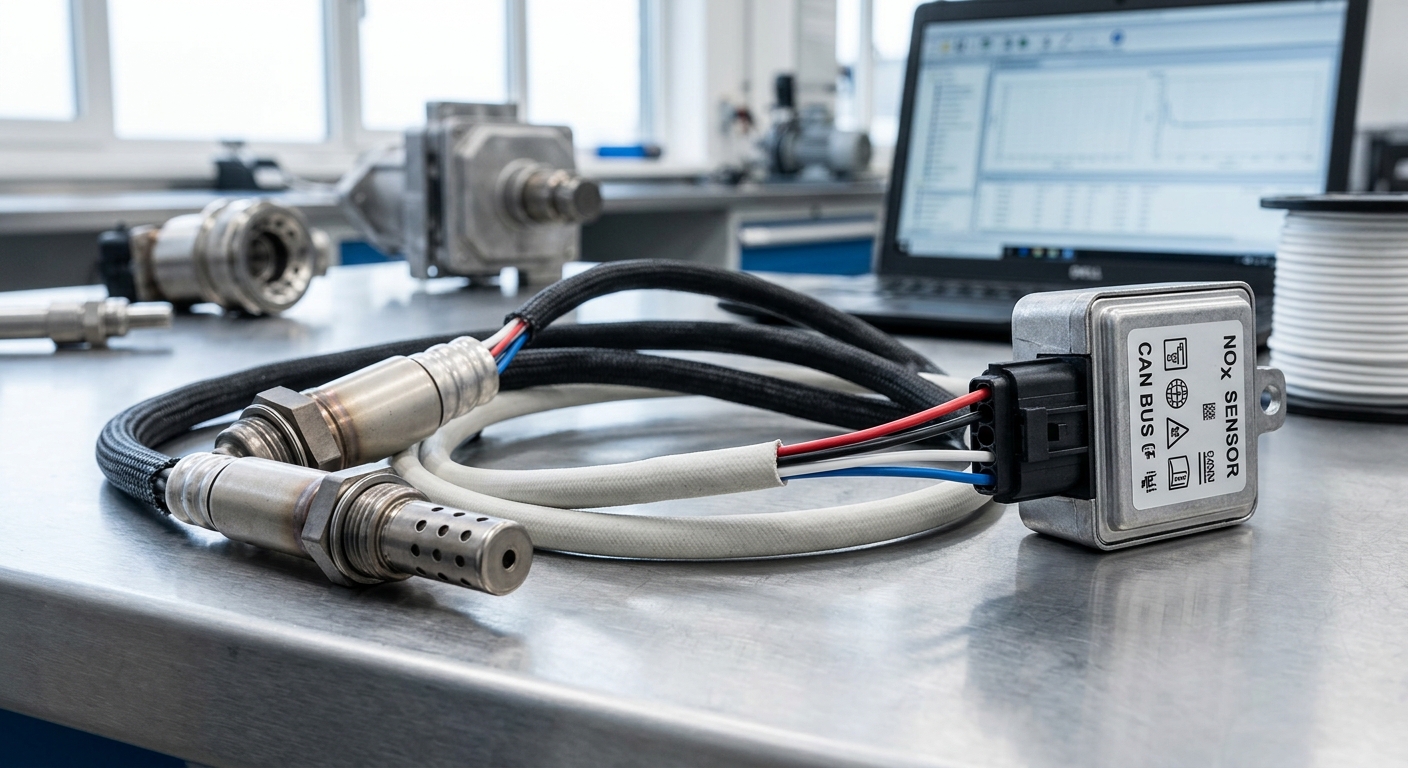
The exhaust pipe oxygen sensor is a precision electronic device mounted directly on the exhaust manifold or the exhaust pipe. Its primary mission is to measure the proportion of unburnt oxygen in the exhaust gases as they exit the engine.
The Role of O2 Sensors in Air-Fuel Ratio (AFR) Optimization
- Detection: As exhaust gases flow past the sensor tip, the internal zirconium dioxide (or titania) ceramic element reacts to the difference in oxygen concentration between the exhaust gas and the outside air.
- Signal Generation: This chemical reaction generates a tiny electrical voltage (typically between 0.1V and 0.9V).
- ECU Processing: The voltage signal is instantly transmitted through the wire harness to the Engine Control Unit (ECU).
- Adjustment: Based on this data, the ECU dynamically adjusts the fuel injection to maintain the stoichiometric mixture (14.7 parts air to 1 part fuel), ensuring maximum engine power, reduced fuel consumption, and compliance with strict emission standards (such as EURO 6 and EPA).

If the wire harness fails to transmit this micro-voltage accurately, the ECU receives corrupted data, leading to poor fuel economy, engine misfires, and a glowing "Check Engine" light.
The Harsh Reality of Exhaust Systems: Why Standard Wiring Fails
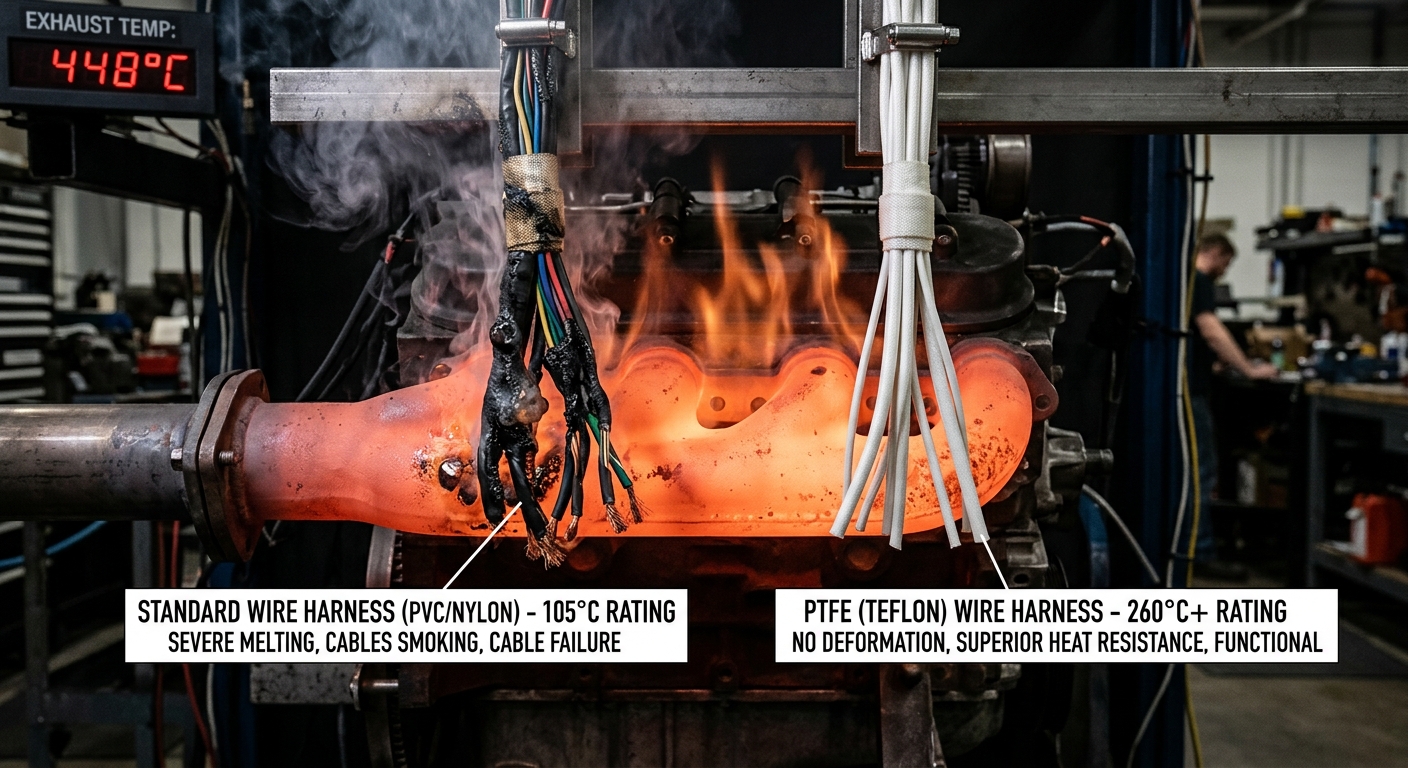
The automotive exhaust system is arguably one of the most brutal environments for electronic components. Standard PVC or cross-linked polyethylene (XLPE) automotive wires are entirely inadequate here.
- Extreme Thermal Stress: The exhaust manifold can reach internal temperatures of 400°C to 900°C. The radiant heat surrounding the oxygen sensor housing regularly exceeds 200°C to 250°C. Standard insulation simply melts, leading to catastrophic short circuits.
- Chemical and Corrosive Attack: The wiring is constantly exposed to corrosive exhaust byproducts (such as sulfur dioxide and nitrogen oxides), oil leaks, unburnt fuel, road salt, and moisture.
- Mechanical Vibration: The exhaust pipe vibrates violently during engine operation, which can cause brittle or stiff wires to fracture over time.
To guarantee flawless signal transmission under these extreme conditions, engineers turn to advanced materials science: Teflon (PTFE and PFA).
The Core Advantages of Teflon (PTFE/PFA) in Oxygen Sensor Wire Harnesses
Teflon, specifically Polytetrafluoroethylene (PTFE) and Perfluoroalkoxy (PFA), is a fluoropolymer renowned for its nearly indestructible molecular structure (strong carbon-fluorine bonds). Here is why it is the non-negotiable standard for high-quality exhaust pipe oxygen sensors:
1. Extreme Heat Resistance (Up to +260°C)
Unlike standard plastics, PTFE and PFA maintain their structural integrity and flexibility in ambient temperatures ranging from -60°C up to +260°C (500°F), with short-term peaks even higher. This prevents the insulation from melting, cracking, or degrading near the scorching exhaust pipe, completely eliminating the risk of thermal short circuits.
2. Superior Chemical Inertness
Teflon is virtually impervious to almost all industrial chemicals. Whether it is splashed with engine oil, brake fluid, acidic condensation from exhaust gases, or winter road de-icers, a PTFE high-temperature wire will not swell, dissolve, or corrode. This chemical barrier protects the fragile copper conductors inside.
3. Ultimate Electrical Insulation & Signal Integrity
Because the O2 sensor generates an extremely weak voltage signal (often under 1 Volt), the wire's dielectric properties are crucial. PTFE has one of the lowest dielectric constants of any solid material. It prevents signal leakage and interference (EMI/RFI), ensuring the ECU receives crystal-clear data for precise air-fuel adjustments.
Technical Specifications: OEM-Grade O2 Sensor Teflon Wire Harness
For professional automotive parts buyers and engineers, raw specifications matter. Our oxygen sensors are equipped with premium PTFE/PFA wiring that meets or exceeds international automotive OEM standards.
- Conductor Material: Stranded Silver-Plated Copper or Nickel-Plated Copper (Prevents high-temperature oxidation that occurs in bare copper).
- Wire Gauge: Typically 18 AWG to 22 AWG, optimized for flexibility and low electrical resistance.
- Insulation Material: High-density extruded PTFE or PFA.
- Temperature Rating: -60°C to +260°C continuous operating temperature.
- Voltage Rating: 300V / 600V.
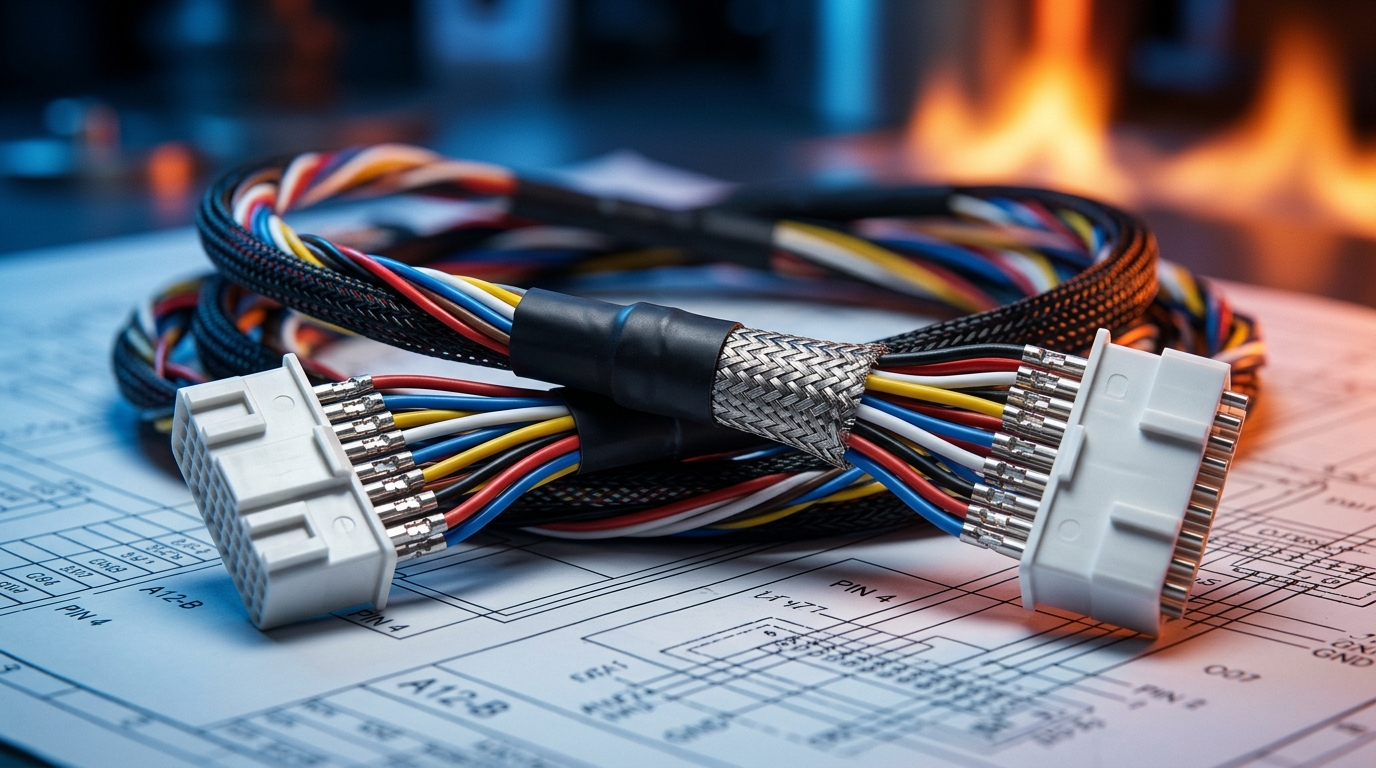
- Shielding (Optional/Application specific): Stainless steel braided mesh or fiberglass sleeving for additional mechanical abrasion protection and thermal reflection.
- Compliance: Fully compliant with RoHS, REACH, and advanced automotive wire standards (e.g., ISO 6722).
Business Benefits: Why Sourcing PTFE O2 Sensors is a Smart Investment
Transitioning from technical specs to commercial realities, choosing exhaust pipe oxygen sensors equipped with Teflon wire harnesses delivers massive benefits for your supply chain and brand reputation:
- Dramatically Reduced Warranty Claims: By eliminating wire melting and corrosion—the leading causes of premature sensor failure—you drastically cut down on customer returns and RMA costs.
- Enhanced Brand Trust: Repair shops and end-users value parts that outlast the competition. Providing OEM-grade PTFE durability builds long-term loyalty in the B2B and B2C markets.
- Global Compliance: High-quality signal transmission ensures vehicles pass strict emission testing (such as California's CARB regulations), making your product highly marketable worldwide.
Upgrade Your Automotive Supply Chain Today
Do not let sub-standard wiring compromise the performance of your automotive electronic parts. Whether you are an auto parts distributor looking for highly reliable exhaust pipe oxygen sensors or an engineering firm requiring custom PTFE/PFA wire harnesses for extreme environments, we have the manufacturing expertise to deliver.
Stop losing money on low-quality sensors. Partner with a supplier who understands the engineering behind the performance.
[ Click Here to Request a Quote] or email our engineering sales team at [vance@ycable-electronics.com] today to get detailed pricing, technical data sheets, and free samples for your evaluation. Let us drive your business forward with uncompromising quality!