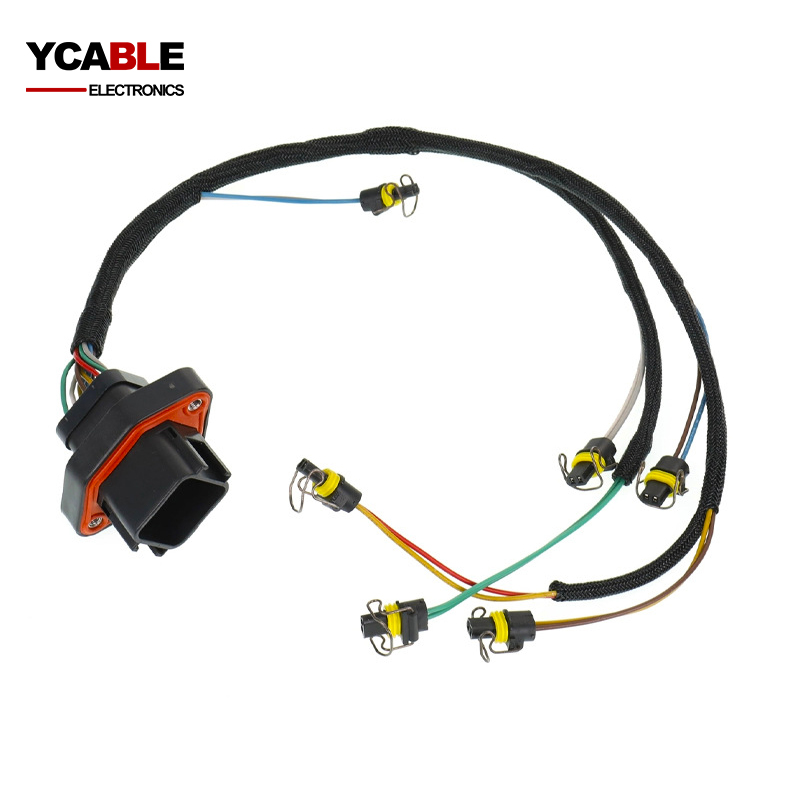
Why Teflon (PTFE) Wire Harnesses Are Essential for NOx Sensors
Why Teflon (PTFE) Wire Harnesses Are Essential for High-Performance NOx Sensors
In the modern automotive and heavy-duty commercial vehicle industry, meeting stringent global emission standards (such as Euro VI, EPA 2010, and China VI) is non-negotiable. At the heart of this emission control system lies the Nitrogen Oxide (NOx) sensor, a critical component responsible for measuring NOx concentrations in diesel exhaust to optimize the SCR (Selective Catalytic Reduction) system.
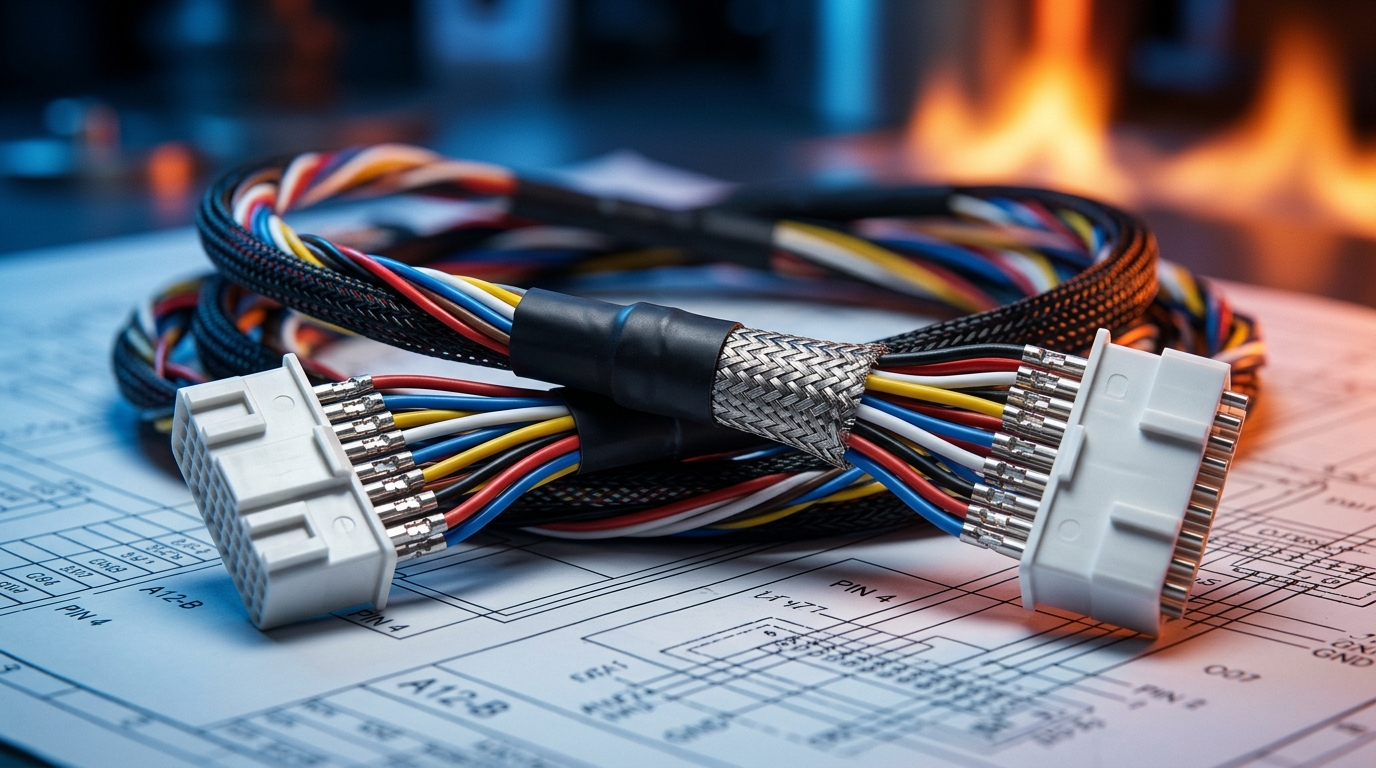
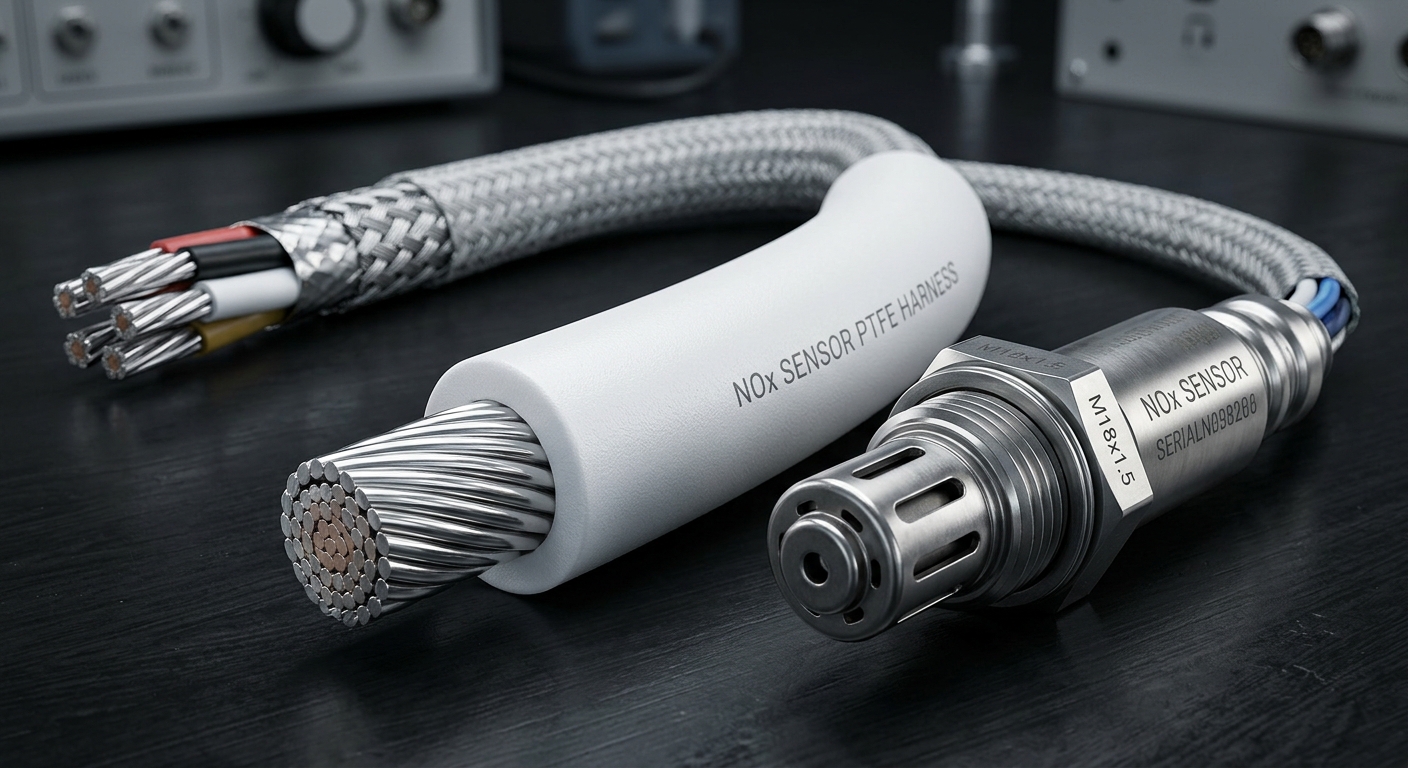
However, a sensor is only as reliable as its weakest link. In B2B engineering and aftermarket supply, we frequently observe that NOx sensor failures are not always caused by the ceramic probe, but by the degradation of the connecting wire harness. To ensure long-term stability in extreme exhaust environments, utilizing a Teflon (PTFE/FEP) wire harness is not just an option—it is an engineering necessity.
The Engineering Challenge: Extreme Exhaust Environments
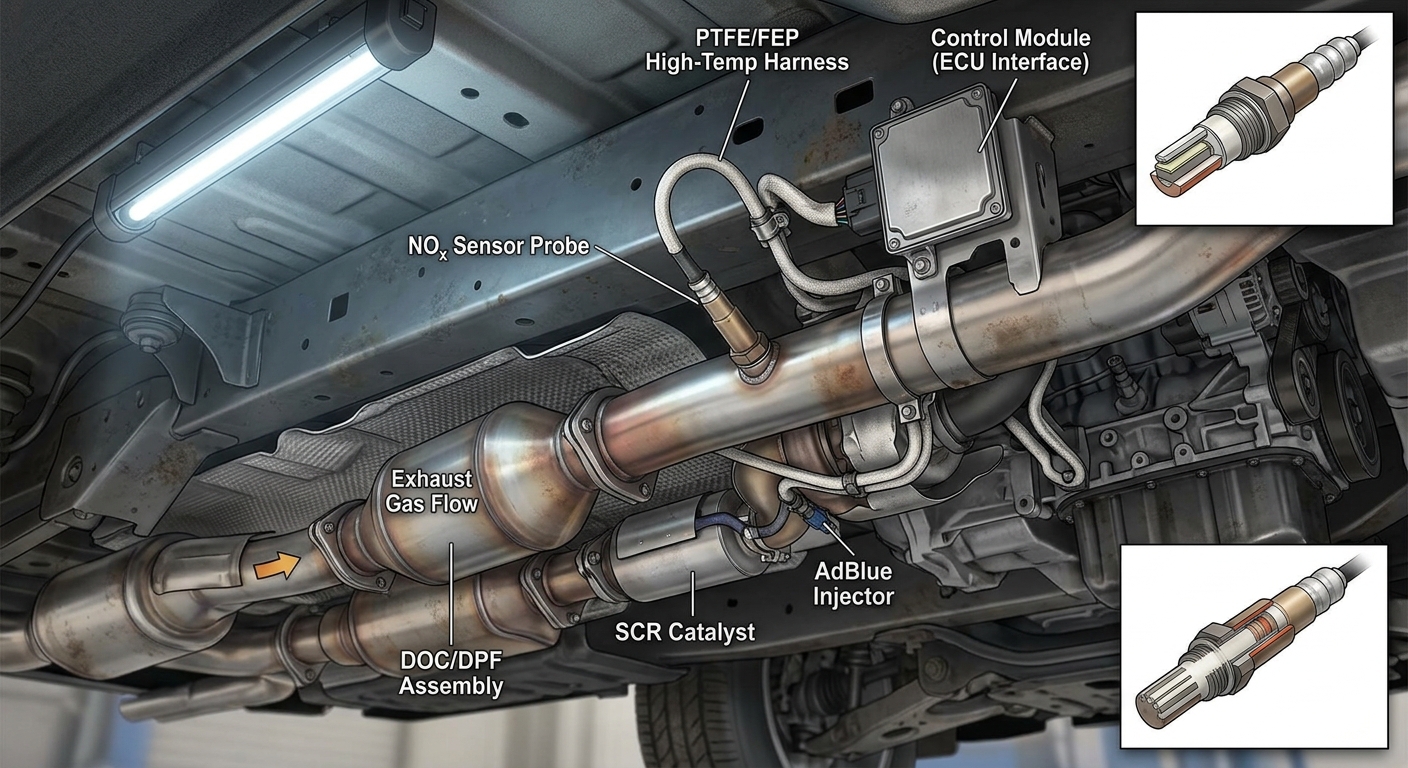
NOx sensors are installed directly into the exhaust pipe, making their operating environment one of the most brutal in any vehicle. The wire harness connecting the sensor probe to the control module (SCM) faces severe physical and chemical challenges.
1. High-Temperature Thermal Stress
While the ceramic sensor probe operates at temperatures up to 800°C, the ambient temperature surrounding the connecting wire harness routinely fluctuates between 150°C and 250°C, with occasional radiant heat spikes. Standard PVC or XLPE wiring will quickly melt, harden, or become brittle under such continuous thermal stress, leading to short circuits and sensor failure.
2. Severe Chemical Corrosion
The exhaust environment exposes the wiring to highly corrosive elements. This includes unburned hydrocarbons, sulfur dioxide (SOx), engine oils, and splashing from AdBlue (urea solution). Prolonged exposure to these chemicals causes standard insulation to swell, crack, and eventually lose its dielectric properties.
3. Mechanical Vibration and Moisture
Heavy-duty trucks and industrial machinery generate constant, high-frequency vibrations. Combined with water ingress from rain, snow, or high-pressure washing, the harness must offer exceptional mechanical toughness and moisture resistance to prevent signal interruption.
Why Teflon (PTFE) is the Ultimate Solution for NOx Sensor Wiring
To combat these extreme conditions, top-tier NOx sensor manufacturers utilize fluoropolymer materials—specifically Teflon (PTFE - Polytetrafluoroethylene)—for wire insulation and jacketing.
Exceptional Thermal Stability
PTFE exhibits an outstanding operating temperature range. It can withstand continuous ambient temperatures of up to 250°C (482°F) and maintain flexibility in sub-zero conditions down to -60°C. This ensures the harness will not degrade, melt, or cause thermal short-circuits, even when routed near the DPF (Diesel Particulate Filter) or SCR catalyst.
Unmatched Chemical Inertness
Teflon is practically inert to all automotive fluids and exhaust gases. It provides a robust barrier against acidic condensation, AdBlue splashes, hydraulic fluids, and diesel fuels. This chemical resistance prevents insulation breakdown and extends the lifespan of the NOx sensor significantly.
Superior Electrical Insulation for Accurate Signal Transmission
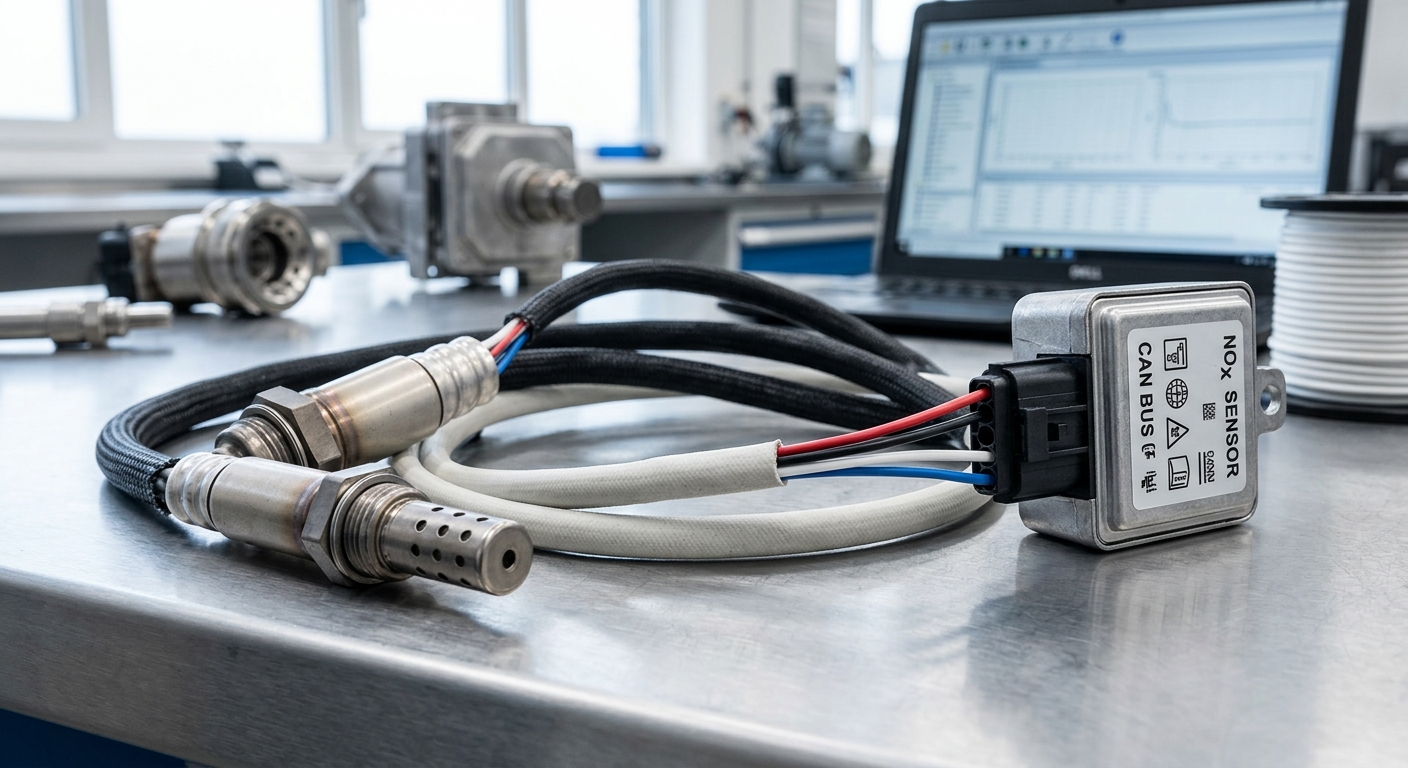
NOx sensors transmit highly sensitive data to the ECU via CAN bus communication. Any electromagnetic interference (EMI) or signal loss can trigger a false "Check Engine" light or derate the engine. PTFE has an incredibly low dielectric constant (2.1), which ensures high-speed, distortion-free signal transmission, guaranteeing the accuracy of the emissions data.
Technical Specifications: Teflon Wire Harness for NOx Sensors
For B2B procurement managers, supply chain experts, and engineers looking to source or specify highly reliable NOx sensors, below are the standard technical specifications of our premium Teflon-coated wire harnesses:
| Parameter | Technical Specification / Material |
|---|---|
| Conductor Material | Nickel-Plated Copper / Silver-Plated Copper (for maximum oxidation resistance at high temps) |
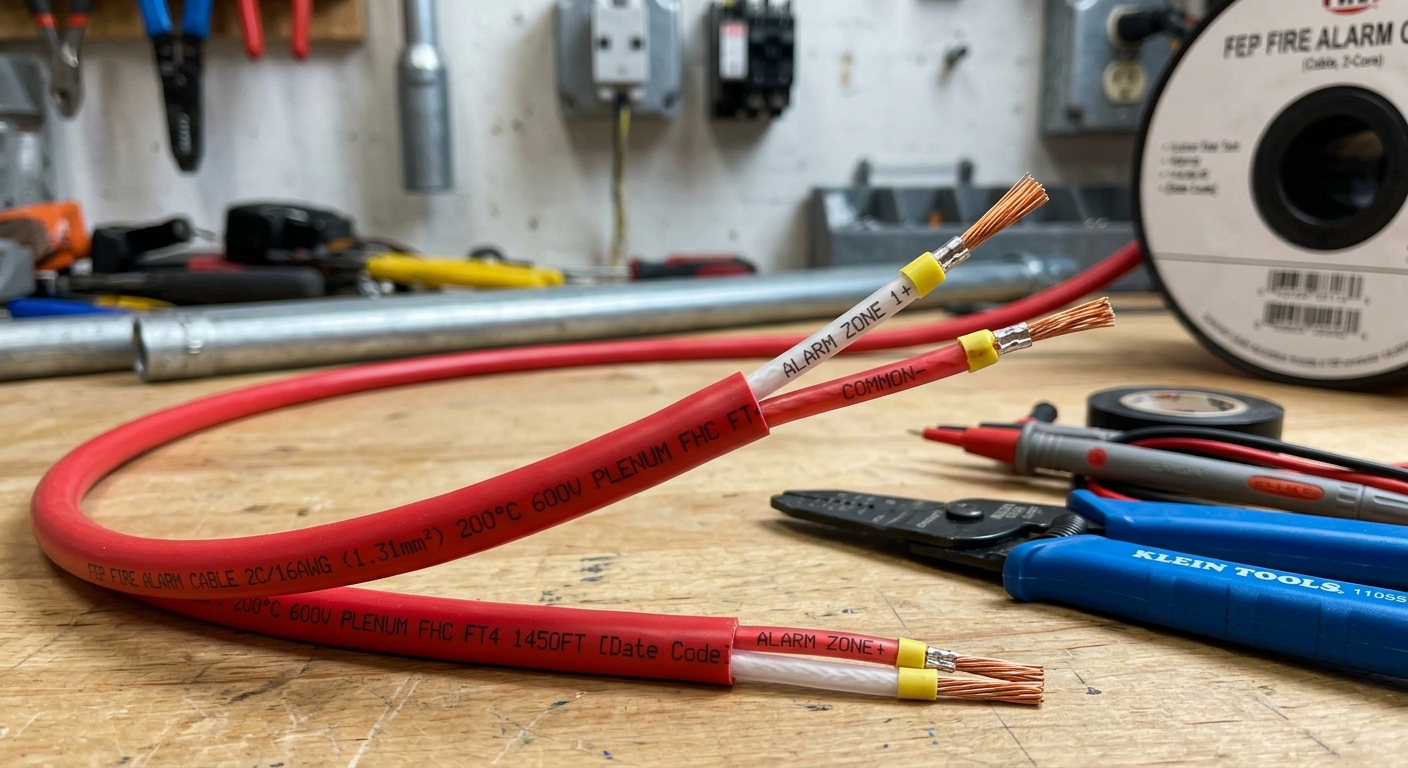
| Insulation Material | Extruded PTFE (Polytetrafluoroethylene) or FEP |
| Continuous Operating Temperature | -60°C to +250°C (Spikes up to 260°C) |
| Voltage Rating | 300V / 600V AC |
| Dielectric Strength | > 2.5 kV (Ensures zero leakage current) |
| Shielding (EMI/RFI) | Tinned Copper or Stainless Steel Braiding (Optional, based on CAN bus requirements) |
| Outer Jacket Protection | High-temperature Silicone coated fiberglass braid or heavy-duty PTFE jacket |
| Chemical Resistance | Excellent (Resistant to AdBlue, Engine Oil, Diesel, Acidic Exhaust Condensate) |
| Bend Radius | 4 x Outer Diameter (Highly flexible for complex engine routing) |
| Compliance & Standards | RoHS, REACH, ISO 6722 / SAE J1128 compliant |
Partner with a Trusted NOx Sensor Manufacturer
In the commercial vehicle sector, vehicle downtime equals lost revenue. Specifying NOx sensors equipped with true PTFE Teflon wire harnesses drastically reduces warranty claims, prevents premature system failures, and ensures compliance with strict emission regulations.
As a professional manufacturer specializing in heavy-duty and automotive emission control solutions, we ensure that every NOx sensor we produce is engineered with premium Teflon wiring and undergoes rigorous thermal shock, vibration, and signal integrity testing.
Looking for reliable OEM/OES or high-quality aftermarket NOx sensors? Whether you need standardized replacement parts or custom-engineered sensor solutions for specific heavy-duty applications, our engineering team is ready to support your supply chain.
[Contact Us Today for a Technical Consultation or to Request a Quote] – Let us provide the robust, high-temperature sensing solutions your business demands.