Top EV Wire Harness Manufacturer: EV vs Traditional Wiring
The Ultimate Guide to EV Wire Harnesses: EV vs. Traditional Wiring & Why Choose a Specialized Manufacturer
As the global transition toward New Energy Vehicles (NEVs) accelerates, automotive engineering is undergoing a radical transformation. At the heart of this revolution lies the vehicle's electrical architecture. If the battery is the heart of an electric vehicle, the EV wire harness is undoubtedly its vascular and nervous system.
For automotive manufacturers and Tier 1 suppliers, sourcing high-quality wiring solutions is no longer just about power transmission—it is a critical matter of safety, vehicle longevity, and brand reputation. As a leading EV wire harness manufacturer, we often receive inquiries from procurement managers asking, "How exactly do electric vehicle wire harnesses differ from traditional internal combustion engine (ICE) cables?"
In this comprehensive guide, we will break down the core technical differences and explain why partnering with a specialized high-voltage (HV) cable manufacturer is essential for your supply chain.
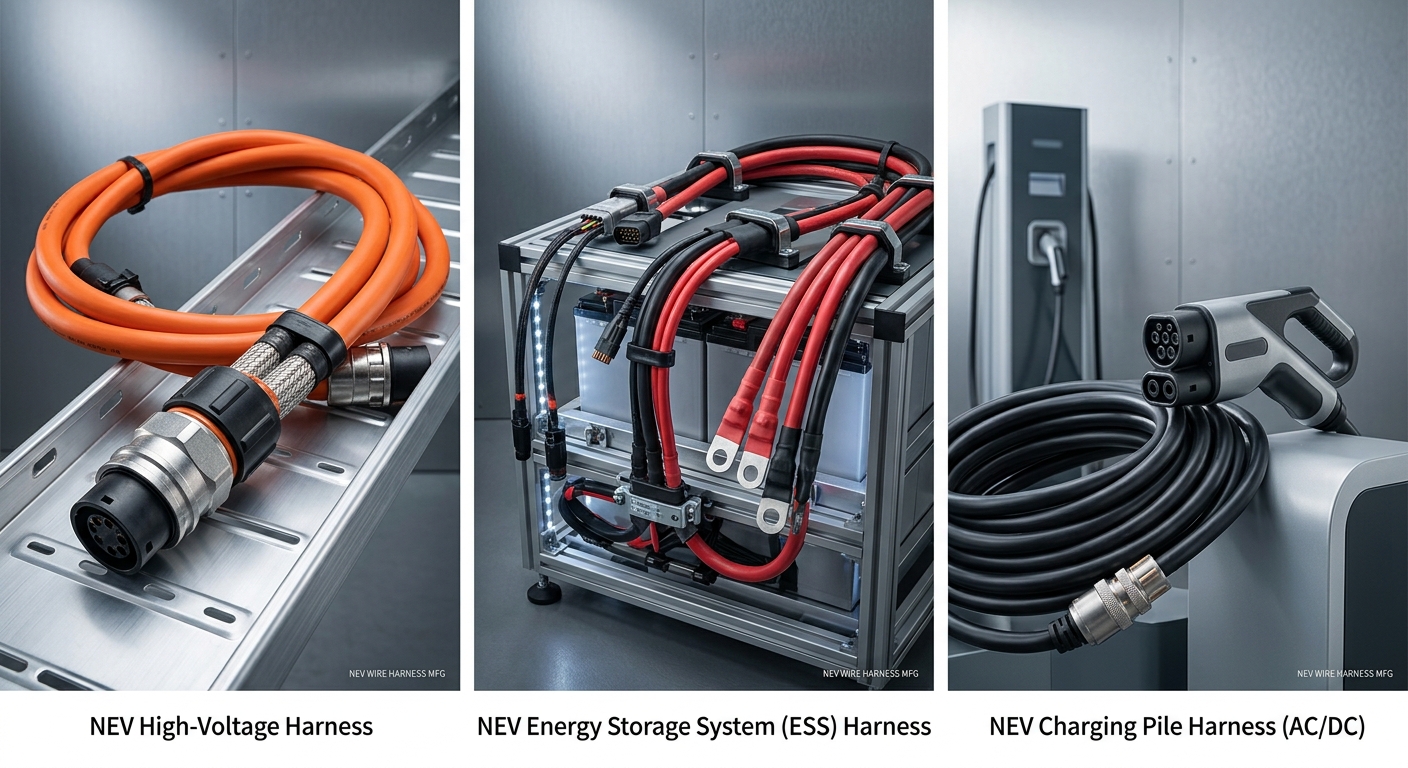
Core Differences: EV Wire Harnesses vs. Traditional Wiring
Traditional automotive wiring was primarily designed for low-voltage applications (typically 12V to 48V) to power lights, infotainment systems, and basic sensors. However, New Energy Vehicles rely on complex powertrains, Battery Management Systems (BMS), and electric motors that demand entirely different specifications.
Here are the three primary technical distinctions:
1. Voltage and Current Capacities (High-Voltage vs. Low-Voltage)
The most prominent difference lies in the electrical load.
- Traditional Harnesses: Operate on low-voltage systems (12V-48V) with relatively low current demands. The copper cross-section is smaller, and standard PVC insulation is usually sufficient.
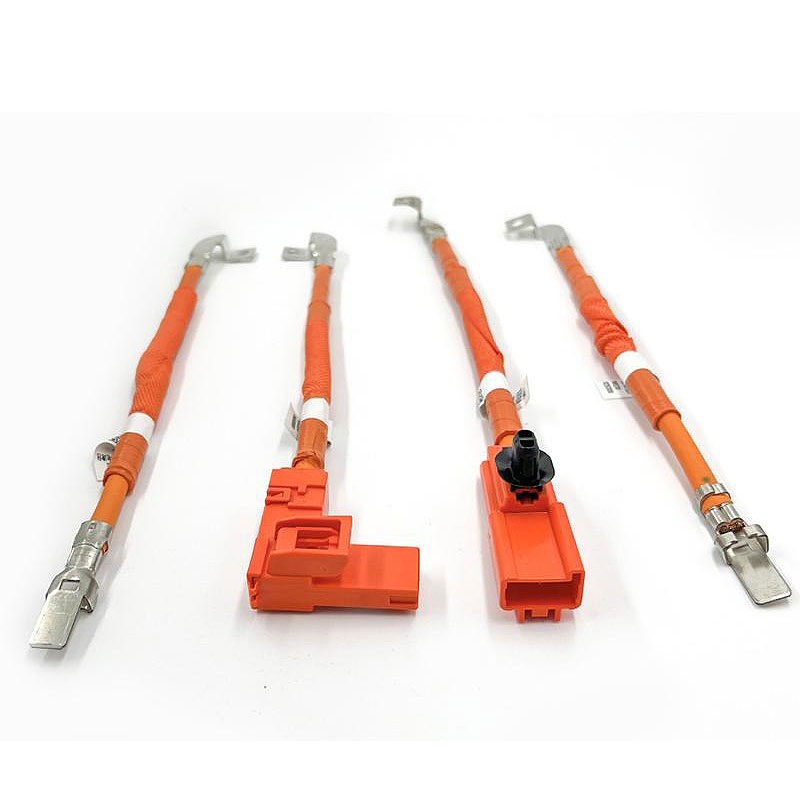
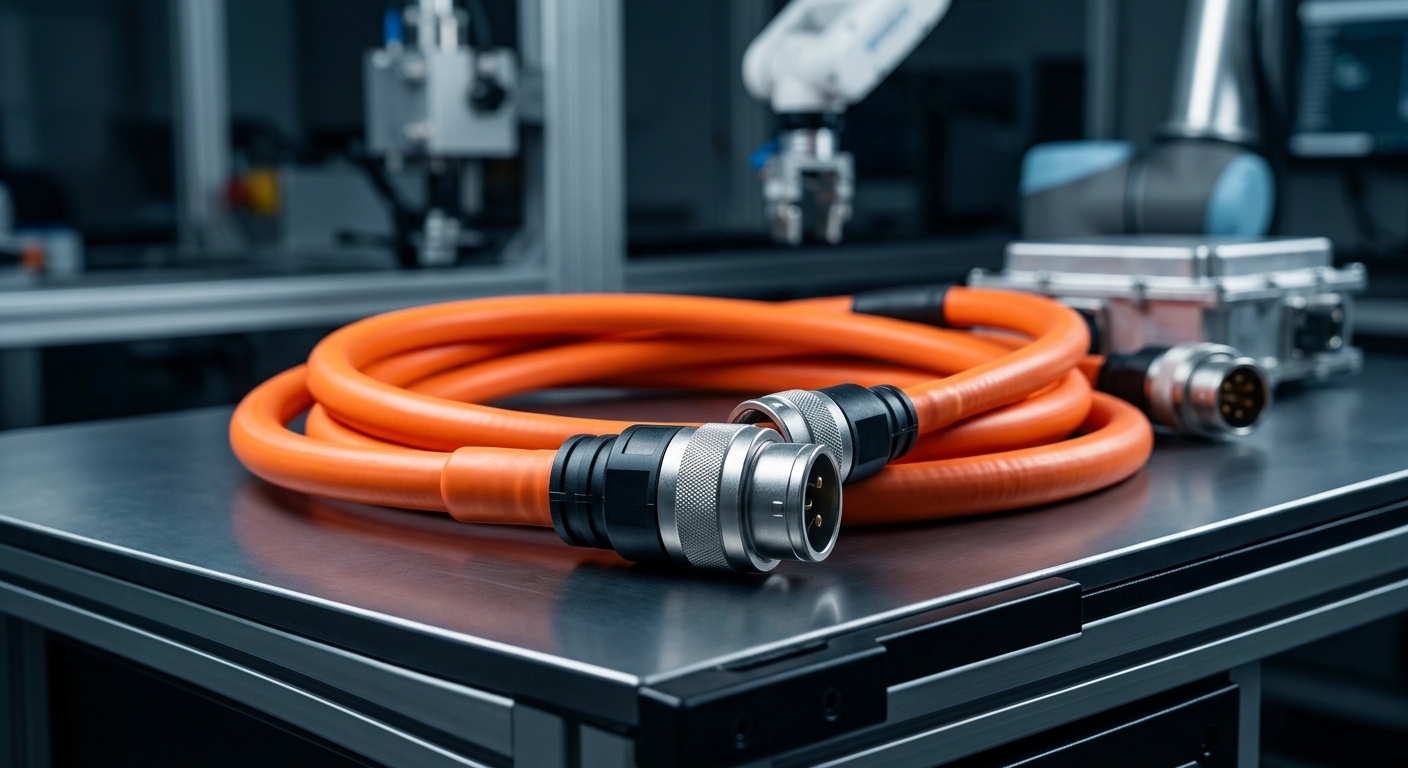
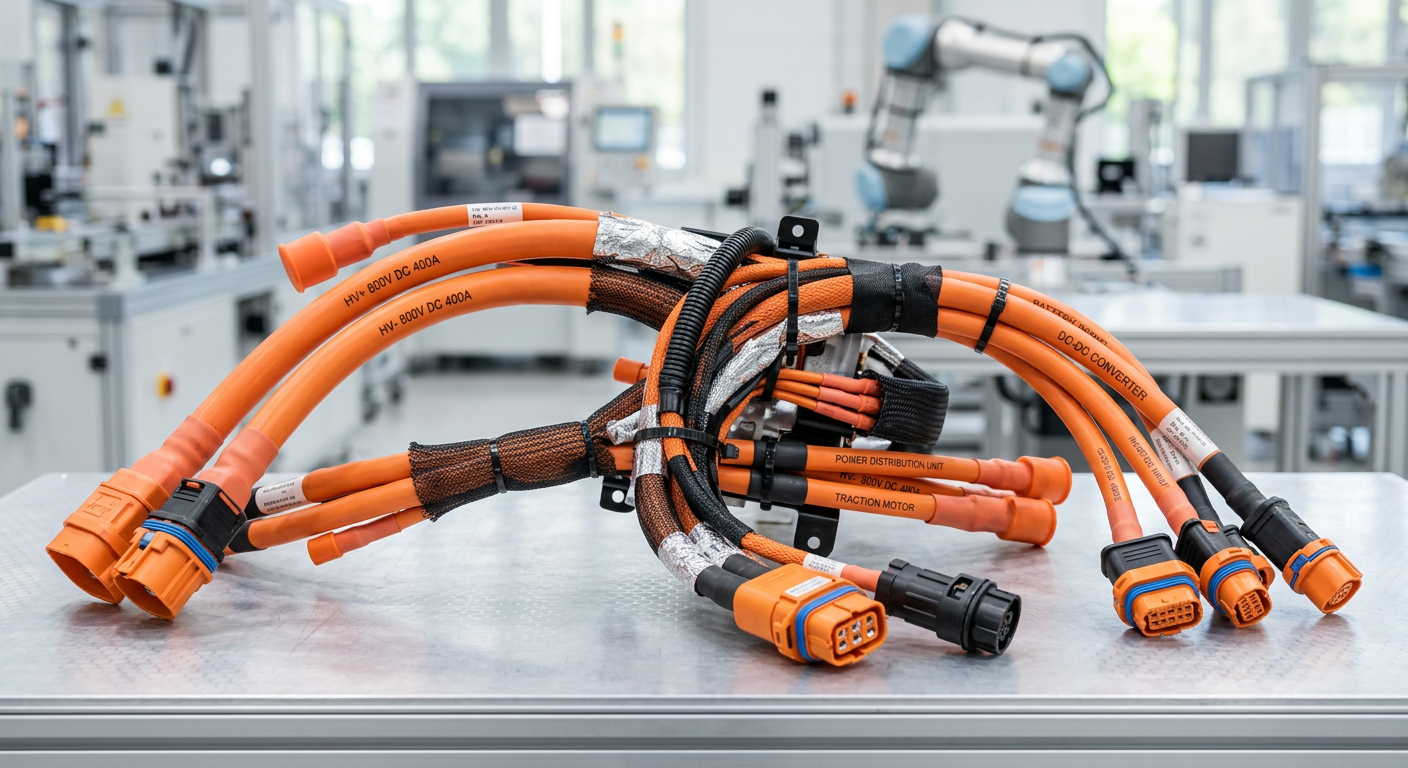
- EV High-Voltage Harnesses: Modern EVs operate on 400V, 800V, and even 1000V architectures. To handle these massive currents (often exceeding hundreds of amps) during rapid acceleration or fast charging, EV harnesses require much thicker copper conductors and specialized insulation materials like XLPE (Cross-linked Polyethylene) or silicone. Using sub-standard cables can lead to catastrophic thermal events or voltage drops.
2. Thermal Resistance and Strict Flame Retardancy
High electrical currents naturally generate intense heat, completely changing the thermal requirements for the wiring.
- Traditional Harnesses: Typically designed to withstand engine bay temperatures ranging from 105°C to 125°C.
- EV Harnesses: Continuous high-power transmission requires the cables connecting the battery pack, inverter, and electric motor to withstand temperatures ranging from -40°C to 200°C. Furthermore, to mitigate the risk of battery fires, an expert EV wire harness manufacturer strictly adheres to the UL94 V-0 flame retardant standard. This ensures that even in the worst-case scenario, the cable will not propagate the flame, giving passengers critical time to evacuate.
3. Electromagnetic Interference (EMI) Shielding
Electric vehicles are massive sources of electromagnetic noise. The high-frequency switching of inverters and the operation of electric motors create significant interference.
- Traditional Harnesses: Generally unshielded or use basic twisted-pair methods for communication lines (like CAN bus).
- EV Harnesses: Unshielded high-voltage cables in an EV would act like giant antennas, disrupting sensitive control signals, radio frequencies, and the BMS. Professional high-voltage EV cables employ robust EMI shielding—often utilizing a combination of braided tinned copper and aluminum foil—to ensure 360-degree electromagnetic compatibility (EMC). Additionally, EV harnesses incorporate High-Voltage Interlock (HVIL) loops to cut power if a connector is compromised instantly.
Why Partner with a Specialized EV Wire Harness Manufacturer?
Understanding the technical complexity of EV cables is only half the battle. Executing the production with zero defects is what separates standard assembly plants from industry-leading manufacturers. Sourcing your components from a specialized EV wire harness manufacturer directly mitigates your commercial and engineering risks.
Here is how our factory delivers unparalleled value to automotive B2B buyers:
IATF16949 Certified Quality Control
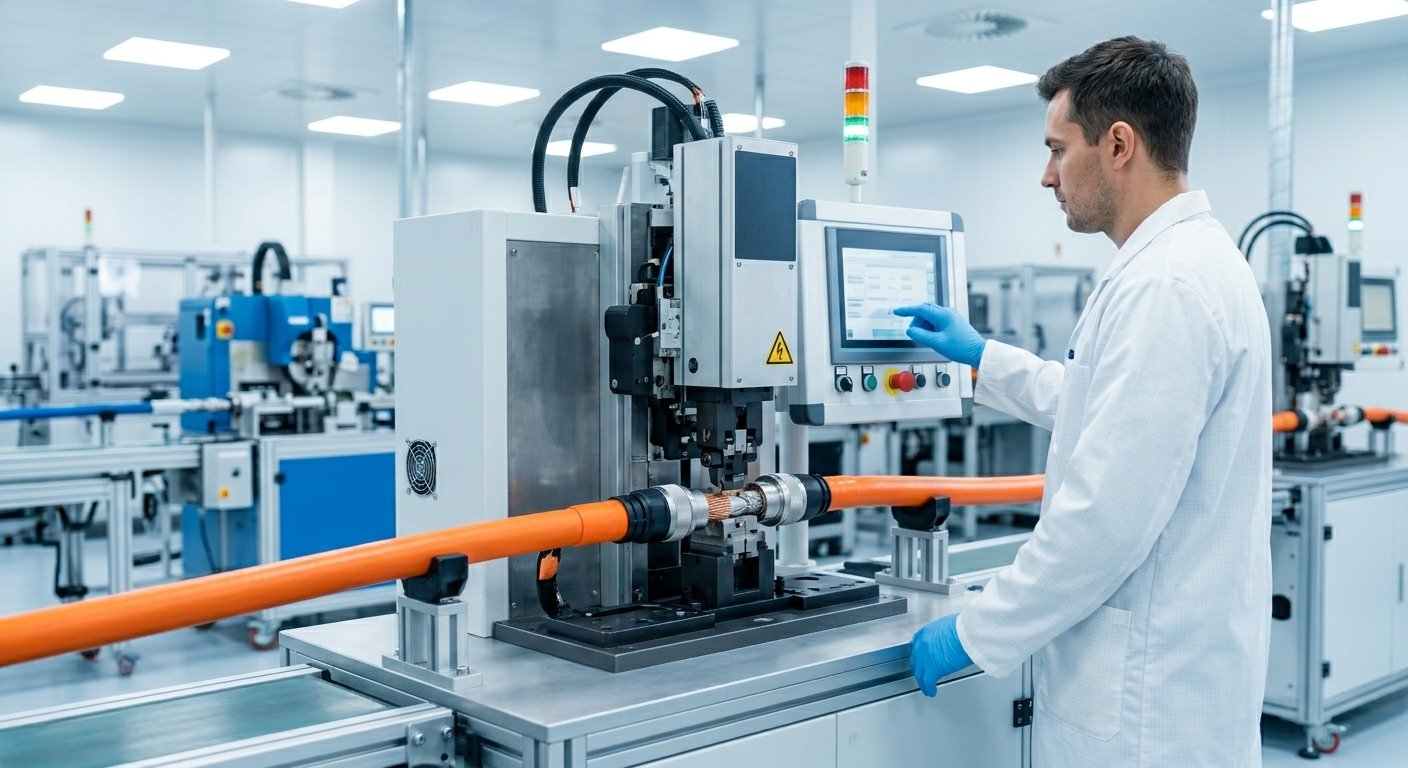
Automotive safety leaves no room for error. Our production facilities are IATF16949 and ISO9001 certified. From raw material inspection to final high-voltage and continuity testing, every single wiring harness undergoes a rigorous 100% quality check. We utilize automated crimping and advanced ultrasonic welding technologies to ensure high-strength, low-resistance connections every time.
Comprehensive R&D and Customization Capabilities
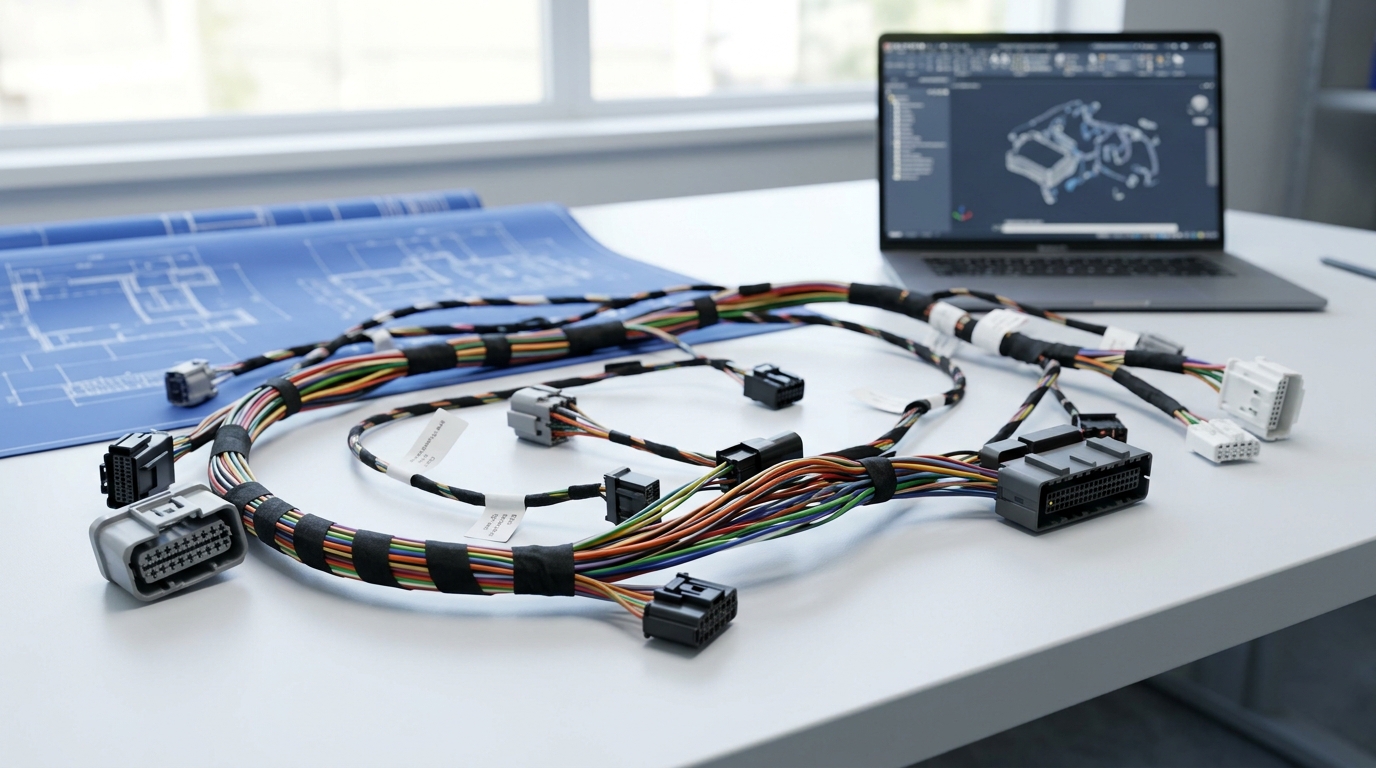
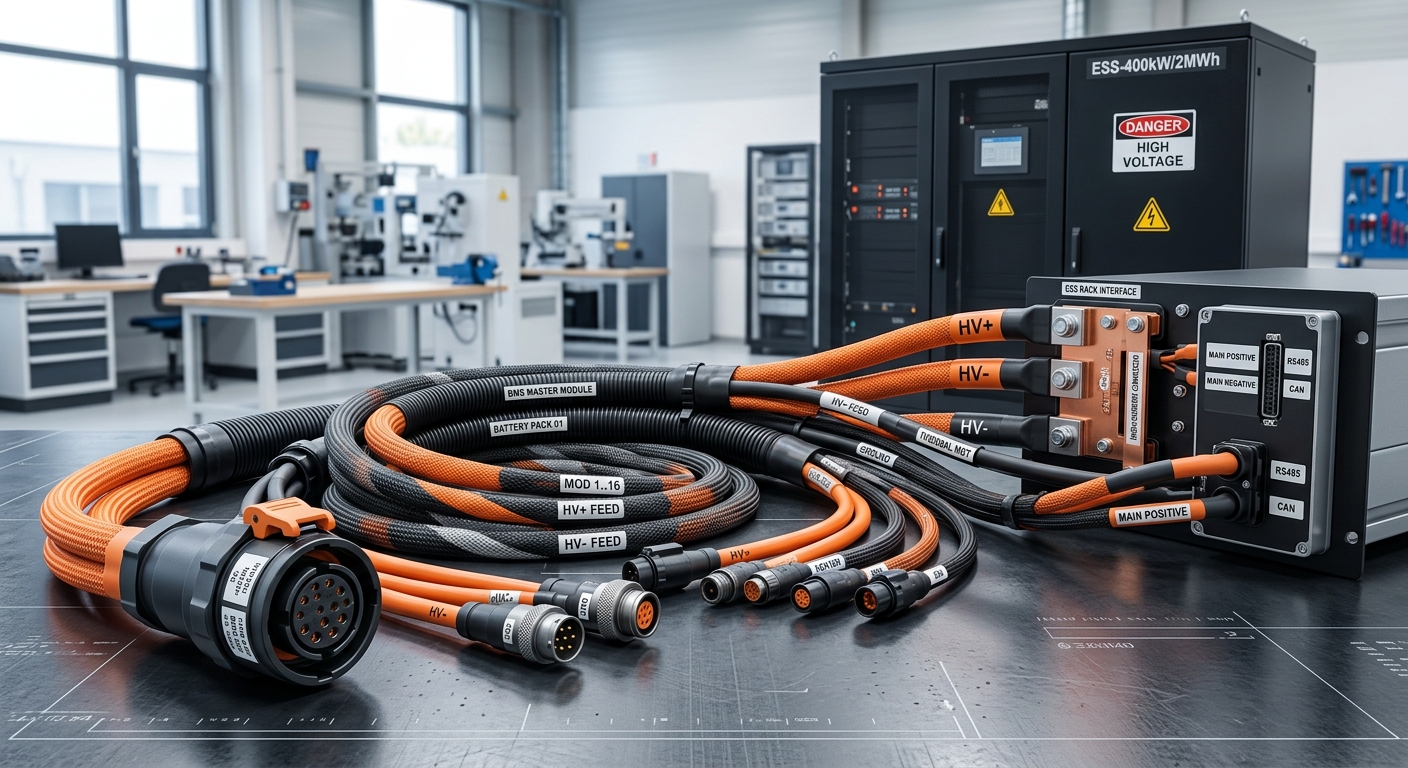
No two EV architectures are the same. Whether you need heavy-duty battery power cables, delicate BMS sensing wires, or complex motor connections, our engineering team provides end-to-end OEM/ODM services. We work directly from your CAD drawings to prototype, optimize, and manufacture custom solutions tailored to your specific spatial and electrical constraints.
Scalable Production & Factory-Direct Pricing
As a true source manufacturer, we eliminate the middlemen. Our extensive cleanroom manufacturing lines and optimized supply chain allow us to scale production rapidly. Whether you need a small prototype batch for a new vehicle platform or mass production of millions of units, we guarantee on-time delivery at highly competitive factory-direct prices.
Secure Your Supply Chain with Superior EV Wiring Solutions
The reliability of your electric vehicle is only as strong as its weakest connection. Don't compromise your brand's safety and performance with sub-standard wiring components. Partner with an EV wire harness manufacturer that truly understands the rigorous demands of high-voltage engineering.
Ready to Upgrade Your EV Electrical Architecture? (CTA)
Take the first step toward a safer, more reliable electric vehicle design. Send us your technical drawings or specifications today, and our automotive engineering experts will provide a Free Technical Evaluation and Custom Quote within 24 hours.
[Contact Us Now / Submit Your RFQ] | Email: [vance@ycable-electronics.com] | Phone: [+86 18767116451]