The Ultimate Guide to Underground Tracer Wire: Types, Specs, & Applications
The Complete Engineering Guide to Underground Tracer Wire: Materials, Applications, and Sourcing
As global infrastructure expands, the intricate web of underground utilities—ranging from telecommunications to gas and water mains—grows denser and more complex. For utility engineering contractors, municipal procurement managers, and civil construction firms, avoiding accidental utility strikes during excavation is a paramount safety and financial concern. The precise location of non-metallic buried infrastructure is an industry-wide pain point that demands an infallible, durable solution.
Enter the underground tracer wire (also widely known as utility tracer wire or locating wire). Installed alongside pipes and conduits during direct burial or trenchless construction, this specialized wire is the literal lifeline for future excavation safety. By transmitting a radio frequency signal from a standard utility locator, tracer wire allows technicians to map buried assets with pinpoint accuracy from the surface.
This comprehensive technical guide explores the working principles, engineering materials, APWA color-coded applications, and sourcing strategies for high-performance tracer wires, ensuring you select the correct specifications for your next infrastructure project.
How Does Underground Tracer Wire Work?
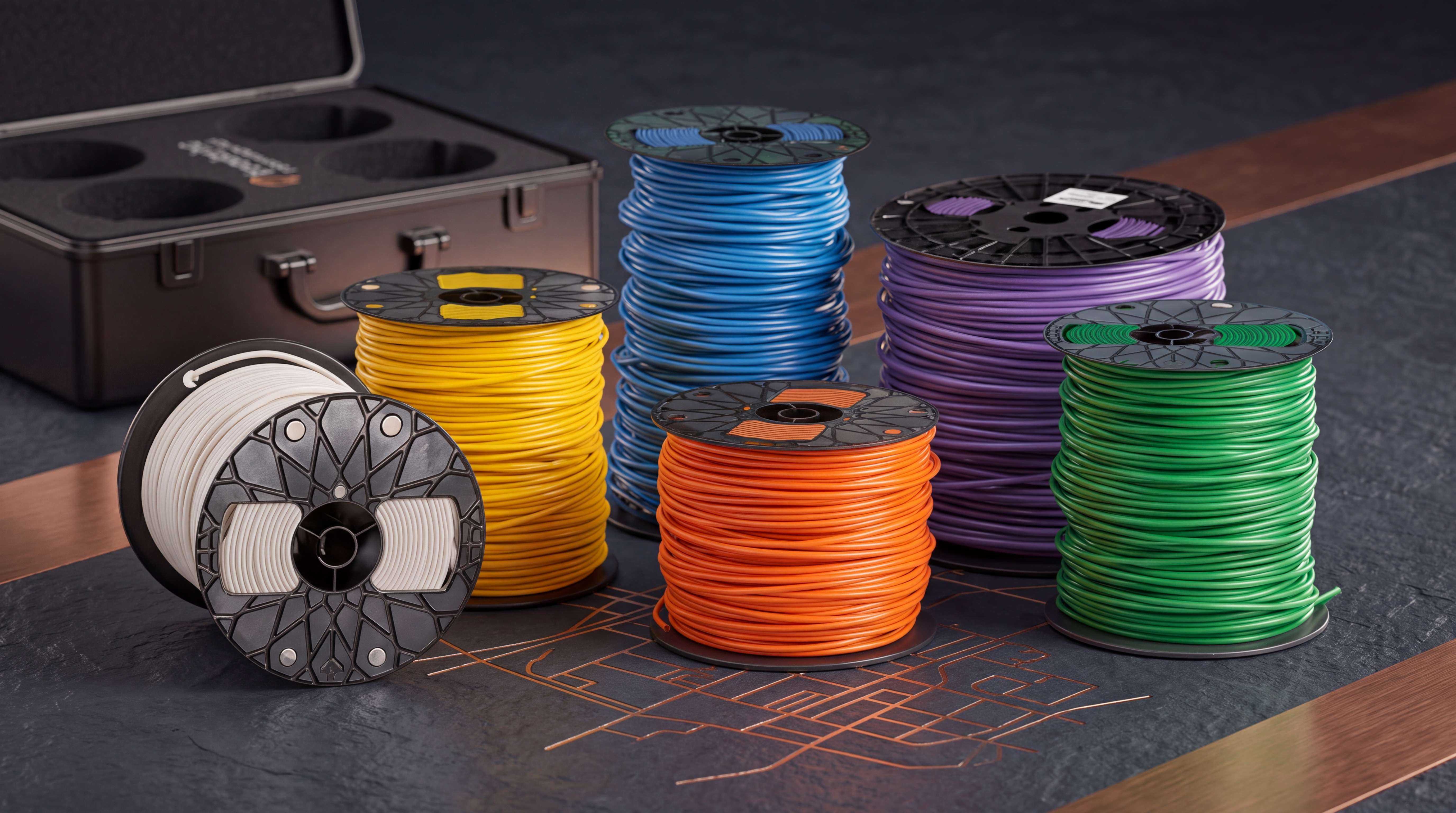
The fundamental principle behind utility tracer wire relies on electromagnetic induction. Because modern utility pipes are predominantly manufactured from non-conductive materials like High-Density Polyethylene (HDPE), PVC, or fiberglass, standard electromagnetic locators cannot detect them.
To solve this, a continuous length of conductive wire is laid parallel to the utility line. When a technician needs to locate the buried pipe, they attach a transmitter to an exposed access point of the wire (such as a tracer wire test station or pedestal). The transmitter sends a specific radio frequency down the line. The locator—a receiver wand swept above the ground—detects this electromagnetic field, allowing the operator to trace the exact path and depth of the utility line without moving a single inch of soil.
4 Main Types of Utility Tracer Wire: Material & Performance Analysis
The core material of a tracer wire dictates its electrical conductivity, tensile strength, and suitability for specific installation methods. Understanding the metallurgical properties of these wires is critical for engineering compliance.
1. Solid Copper Tracer Wire
For decades, traditional copper tracer wire has been the industry standard. Utilizing pure, solid copper, this wire provides exceptional electrical conductivity, ensuring strong signal transmission over long distances.
- Key Advantages: Unmatched conductivity; highly flexible and easy to handle in standard open-trench installations.
- Limitations: Pure copper is incredibly soft, meaning it has a relatively low break load (tensile strength). It is highly susceptible to snapping under ground shifting or heavy backfill stress. Furthermore, copper is subject to raw material price volatility and is frequently targeted for theft on job sites.
2. Copper Clad Steel (CCS) Tracer Wire
CCS tracer wire (Copper Clad Steel) has revolutionized the utility locating industry. It is manufactured by metallurgically bonding a uniform outer layer of pure copper over a high-carbon or low-carbon steel core.
- Key Advantages: It combines the superior signal conductivity of copper with the immense mechanical strength of steel. CCS tracer wire typically offers up to 6 times the breaking strength of solid copper wire, making it highly resistant to damage during installation and soil settlement. Furthermore, because the steel core has zero scrap value, it eliminates the risk of job-site theft.
- Applications: It is the premier choice for modern utility installations, offering lower costs and higher durability than pure copper.
3. Stainless Steel Tracer Wire
In environments with extreme soil acidity, alkalinity, or heavy chemical contamination, standard wires may degrade over time despite robust insulation. Stainless steel locating wire is deployed in these highly corrosive environments.
- Key Advantages: Exceptional resistance to corrosion, rust, and chemical degradation.
- Limitations: Lower conductivity compared to copper or CCS, which may require more frequent test stations to boost locator signals.
4. Copper Clad Aluminum Alloy Tracer Wire
A newer innovation in the utility sector, copper-clad aluminum combines an aluminum alloy core with a copper skin.
- Key Advantages: Extremely lightweight and highly cost-effective while providing excellent signal propagation.
- Limitations: It possesses a lower break load than CCS, limiting its use to strict open-trench direct burial applications where tensile stress is minimal.
HMWPE Insulation: The Standard for Direct Burial
Before examining specific utility applications, it is vital to discuss the wire's jacket. Standard building wires (like THHN) use PVC or Nylon insulation, which quickly degrades when exposed to groundwater, soil alkalis, and subterranean friction.
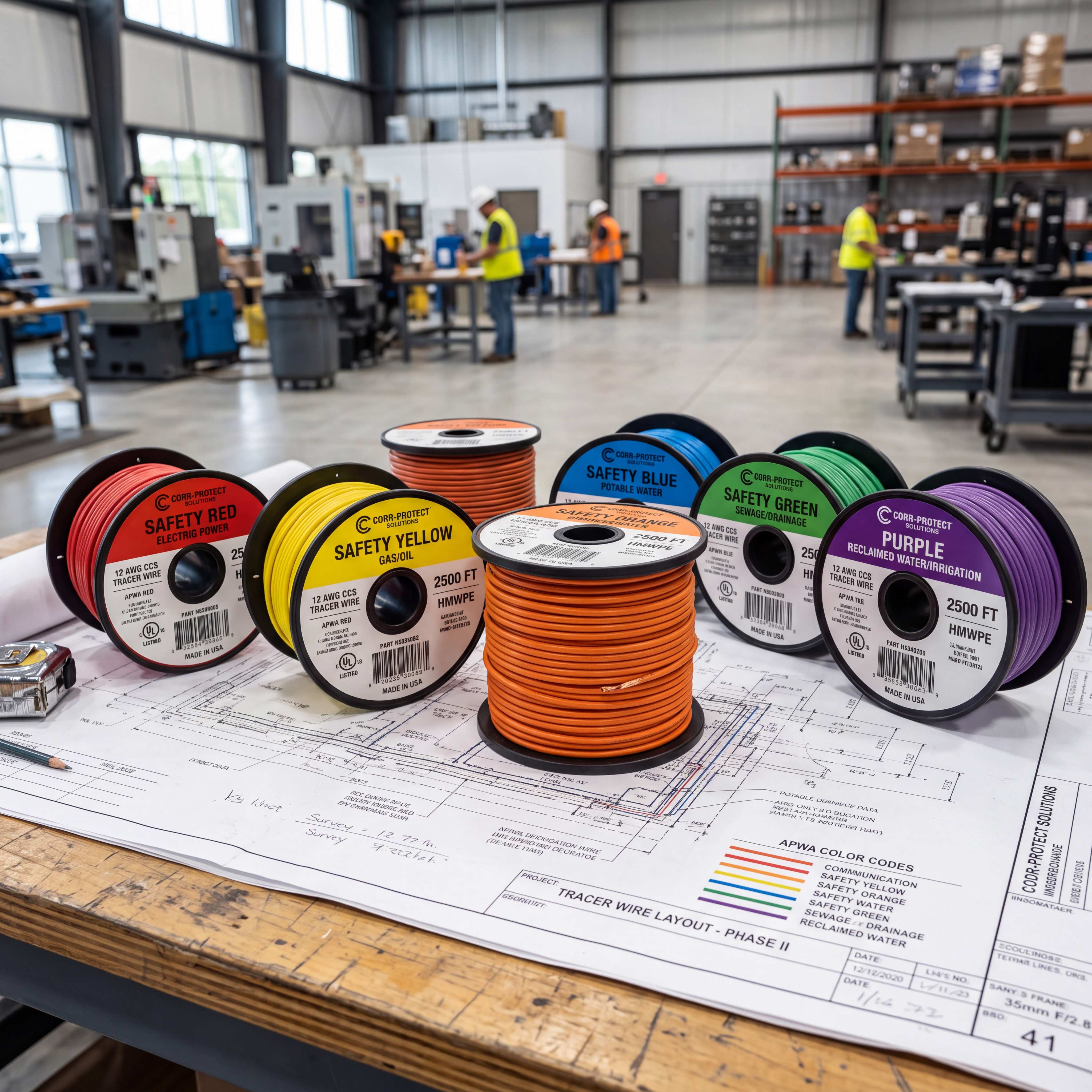
Professional-grade tracer wires utilize HMWPE insulation tracer wire (High Molecular Weight Polyethylene). HMWPE provides outstanding dielectric properties, superior abrasion resistance, and absolute impermeability to moisture. It is specifically engineered for 30 to 50-year underground lifespans, ensuring the conductive core remains isolated from the earth to prevent signal grounding and loss.
6 Critical Application Scenarios and APWA Color Codes
To standardize utility identification, tracer wire insulation is strictly color-coded according to the American Public Works Association (APWA) uniform color code guidelines. Selecting the correct gauge—usually 12 AWG tracer wire or 14 AWG tracer wire—depends heavily on the installation method and required tensile strength.
1. Gas and Oil Distribution (Yellow)
A tracer wire for gas line installation is arguably the most critical application due to the explosive hazards associated with pipeline strikes.
- Color Code: Yellow.
- Specs: Typically utilizes high-strength CCS tracer wire to ensure zero breakage during installation. The wire is laid alongside HDPE gas distribution mains and service lines.
2. Potable Water Systems (Blue)
With aging municipal water grids being replaced by plastic piping, a reliable tracer wire for water line ensures rapid location for leak repairs and tap installations.
- Color Code: Blue.
- Specs: Standard open-trench water lines commonly use 14 AWG tracer wire, providing ample signal strength and durability for direct burial.
3. Sewer and Drain Lines (Green)
Sanitary sewers and storm drainage systems rely on gravity and are often buried much deeper than gas or water lines.
- Color Code: Green.
- Specs: Because of the deeper burial depth, a thicker 12 AWG tracer wire is often specified to ensure a stronger, more detectable electromagnetic field reaches the surface locator.
4. Electrical Power Lines (Red)
Even though primary power lines carry their own electric current, empty conduits or deactivated lines laid for future expansion require locating capabilities.
- Color Code: Red.
- Specs: Tracer wire is pulled through or laid alongside buried electrical conduits to ensure construction crews can map out the grid without risking fatal electrocution from nearby live cables.
5. Telecommunications and Fiber Optics (Orange)
Modern telecom infrastructure relies almost entirely on glass fiber optic cables, which contain zero metallic components and cannot be located electromagnetically.
- Color Code: Orange.
- Specs: A tracer wire must be buried concurrently with fiber optic ducts. High flexibility and consistent conductivity are required to map long-haul telecom networks effectively.
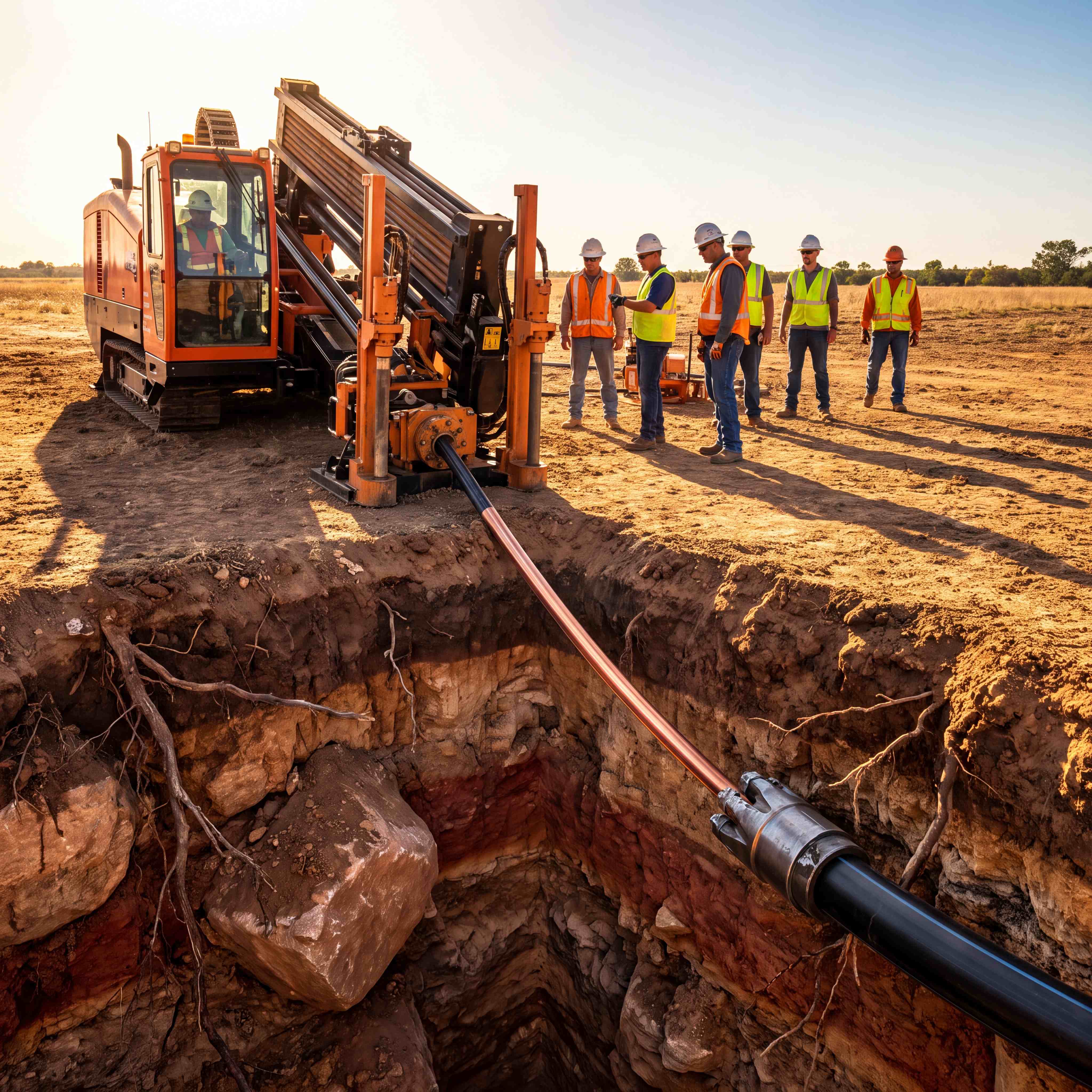
6. Horizontal Directional Drilling (HDD)
Trenchless technology, or Horizontal Directional Drilling (HDD), allows contractors to install utilities under roads, rivers, and existing infrastructure without surface excavation. This process exerts immense pulling tension and severe subterranean abrasion on the wire.
- Specs: A specialized directional drill tracer wire is mandatory. Standard copper will snap instantly under these loads. HDD tracer wires utilize a high-carbon CCS core, delivering a break load exceeding 1,150 lbs. Furthermore, the HMWPE insulation is often applied up to 45 mils thick to withstand the brutal friction of rocks and compacted soil during the pull-back process.
Why Choose Us as Your Custom Tracer Wire Manufacturer?
Procuring high-quality locating wire is not just a matter of purchasing commodities; it is an investment in the safety and longevity of infrastructure projects. As a leading custom Tracer Wire manufacturer, we bridge the gap between rigorous engineering standards and commercial supply chain efficiency.
We understand the precise demands of utility contractors, wholesale distributors, and municipal engineers. Here is why partnering with us guarantees operational excellence:
- ISO9001 Certified Manufacturing: Our production facilities operate under stringent ISO9001 quality management systems. Every spool of wire undergoes rigorous laboratory testing, including tensile strength pulling, copper adhesion testing, and high-voltage spark testing to guarantee 100% pinhole-free HMWPE insulation.
- Comprehensive Customization (OEM/ODM): We do not believe in a one-size-fits-all approach. Whether you require specific break loads for aggressive directional drilling, customized APWA color-matching, custom insulation thicknesses (30 mil, 45 mil), or specific spool lengths, our engineering team can design and manufacture a product that perfectly aligns with your regional municipality specifications.
- Flexible Small Batch Production: Unlike rigid mega-corporations that demand massive Minimum Order Quantities (MOQs), we offer agile manufacturing solutions. We support small batch customization to help regional distributors and specialized contractors procure exactly what they need without locking up excess capital in inventory.
- Global Supply Chain Reliability: With a decade of B2B export experience, we ensure your materials arrive on schedule, complete with full technical data sheets, certifications of compliance, and robust export packaging to prevent spool damage during transit.
Secure Your Infrastructure with the Ultimate Locating Solution
Do not compromise the safety of multi-million-dollar utility projects with sub-standard locating wires. Whether you are laying critical gas mains, updating municipal water grids, or performing complex directional drilling, selecting the exact AWG, metallurgy, and insulation is the key to preventing catastrophic utility strikes.
Ready to upgrade your utility installations? Partner with a trusted, engineering-driven custom Tracer Wire manufacturer. Contact our B2B technical sales team today to request comprehensive product catalogs, engineering spec sheets, or free material samples. Let us build a reliable, custom-manufactured supply chain for your next high-stakes infrastructure project.
[Call to Action: Click Here to Request a Custom Quote and Free Samples Today!]